52 citations
,
June 2009 in “Clinical Toxicology” Polonium poisoning is diagnosed by detecting it in urine and feces, and treated with supportive care, infection prevention, and chelation therapy.
February 2004 in “Frontiers in Ecology and the Environment” Eating too much fish can lead to mercury poisoning.
12 citations
,
May 2024 in “Chemosphere” 7 citations
,
May 2023 in “Nanomaterials” Titanium dioxide nanoparticles may harm the male reproductive system.
July 2025 in “Ecotoxicology and Environmental Safety” Higher levels of molybdenum and lead in hair are linked to increased cholesterol and dyslipidemia risk.
51 citations
,
March 2022 in “Frontiers in Immunology” Alarmin cytokines are key in controlling skin immunity and inflammation.
22 citations
,
January 2020 in “PeerJ” Keratin peptides in hair might help identify gender and ethnicity.
6 citations
,
September 2017 5 citations
,
March 2022 in “Clinical Cosmetic and Investigational Dermatology” The model accurately predicts skin conditions in Korean women using genetic information, aiding personalized skincare.
1 citations
,
January 2018 in “Journal of microscopy and ultrastructure” The method can identify minerals in hair from water, and using coconut oil or conditioner can prevent mineral buildup.
 June 2026 in “International Journal of Molecular Sciences”
 Shallot extracts protect nasal cells from oxidative damage.
May 2026 in “International Journal of Innovative Science and Research Technology (IJISRT)” Herbal hair masks are better than synthetic ones for nourishing and promoting hair health.
 December 2025 in “Zenodo (CERN European Organization for Nuclear Research)”
 Herbal therapies may help with hair loss but need more scientific validation.
December 2025 in “Journal of Inflammation Research” Improving education, training, and access to affordable treatments is crucial for better managing inflammatory skin diseases in Latin America.
November 2025 in “Plant Science Today” Natural anti-aging products from plants may help improve skin health.
 August 2025 in “Deleted Journal”
 Arwa oil promotes healthy hair growth and has antimicrobial benefits.
May 2025 in “Preprints.org” Olive oil byproducts can improve skin and hair care products due to their beneficial compounds.
May 2025 in “Preprints.org” Olive oil byproducts can improve skin and hair care products and help prevent skin cancer.
May 2025 in “Preprints.org” Olive oil byproducts can be used in skincare for their antioxidant and protective benefits.

Deep eutectic solvents can replace toxic solvents in extracting useful compounds for medicines.
 October 2023 in “Dermatological reviews”
 Fibroblast-derived growth factors and exosomes can significantly improve skin aging.
 5 citations
,
April 2020 in “Jinekoloji - obstetrik ve neonatoloji tıp dergisi”
5 citations
,
April 2020 in “Jinekoloji - obstetrik ve neonatoloji tıp dergisi” Some chemicals in cosmetics may harm pregnant individuals, fetuses, and newborns, and should be avoided unless necessary.
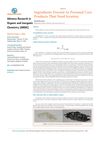
Certain ingredients in personal care products, like formaldehyde, oxidative hair dyes, and sulfates, pose health risks and need careful review.
June 2026 in “Mendeley Data” June 2026 in “Mendeley Data” 31 citations
,
September 2011 in “European journal of pharmaceutics and biopharmaceutics” PLA particles release their contents differently based on the type of fluorochrome used.
1 citations
,
January 2005 in “Research Portal (King's College London)” Finasteride and DEHP exposure during development can change reproductive markers in rats.
November 2025 in “Animals” Exposure to certain chemicals may increase the risk of heart disease in dogs.
 October 2025 in “International Journal of Women’s Dermatology”
 Many women's hair growth products contain harmful ingredients, but eco-friendly options are available.
 7 citations
,
January 1995 in “Journal American Society of Mining and Reclamation”
7 citations
,
January 1995 in “Journal American Society of Mining and Reclamation” Excess selenium and sulfur in plants can harm animals, causing symptoms like hair loss and poor reproduction.