 9 citations
,
March 2016 in “Natural Product Research”
9 citations
,
March 2016 in “Natural Product Research” Some flavonoids may help with hair growth by affecting blood vessel function in hair follicles.
26 citations
,
June 2016 in “Frontiers in Plant Science” Autofluorescence can sort plant cells without labeling.
January 2004 in “Linchuang pifuke zazhi” All-trans retinoic acid helps amelanotic melanocytes in hair follicles develop and produce pigment while reducing their growth.
 July 2025 in “Advanced Science”
 Collagen VI and Semaphorin 3C are important for hair pigmentation and could help treat pigmentation disorders.
The extract of Guazuma ulmifolia Lam. has limited antioxidant properties and cannot prevent uric acid synthesis.
 August 2021 in “Han'gug miyong haghoeji/Journal of the Korean society of cosmetology”
 Using natural polyphenol cross-linkers like tannic acid and green tea extract in perm treatments improves curling and protects hair.
19 citations
,
June 2010 in “Journal of acupuncture and meridian studies” A plant extract was found to effectively block an enzyme related to male hormone-related diseases.
1 citations
,
September 2025 in “Molecules” The conventional extraction method with 50% ethanol was the most effective for antioxidant activity.
March 2017 in “Zenodo (CERN European Organization for Nuclear Research)” L. plantarum MTCC 1325 may help improve memory and cognitive functions in Alzheimer's.
 January 2025 in “Advanced Materials Interfaces”
 Tannic acid can reduce hair loss by 56.2% by coating hair and releasing beneficial molecules.
 32 citations
,
December 2003 in “Planta”
32 citations
,
December 2003 in “Planta” Hypaphorine from a fungus changes the internal structure of Eucalyptus root hairs, stopping their growth.

Nanoformulations improve luteolin's effectiveness as a cancer treatment.
 14 citations
,
December 2013 in “Molecules”
14 citations
,
December 2013 in “Molecules” Two compounds from Asiasarum heterotropoides roots show potential as lung cancer treatments without harming normal cells.
32 citations
,
January 2012 in “Chinese Medicine” Urtica dioica (stinging nettle) is a potential natural antioxidant for medicinal and cosmetic use.
July 2026 in “Macromolecular Bioscience” Sulfated glycosaminoglycans from Acipenser baerii cartilage improve wound healing and fibroblast function.
 October 2009 in “Reactions Weekly”
 A woman developed lupus after taking hydroxyurea for two years.
15 citations
,
November 2024 in “Materials” PHAs are promising biodegradable materials for medical and dental uses.
17 citations
,
October 2023 in “Molecules” Plant-derived PDRN from ginseng roots effectively heals skin and improves its barrier.
7 citations
,
May 2021 in “Animal Genetics” The CORIN gene variant causes the golden color in Siberian cats.
 5 citations
,
April 2018 in “Chem”
5 citations
,
April 2018 in “Chem” Graphene-based hair dye is a safe, durable, and effective alternative to traditional black hair dyes.
 October 2017 in “The Japanese Biochemical Society/The Molecular Biology Society of Japan”
 Some natural compounds might help hair grow.
 March 2024 in “Journal of Experimental & Biomedical Sciences/Biomedical Science Letters”
 BCC can protect heart cells from damage caused by oxidative stress.
April 2025 in “Experimental Eye Research” The Oat mouse model shows mild retinal degeneration, useful for testing treatments.
 1 citations
,
November 2023 in “Rice”
1 citations
,
November 2023 in “Rice” PRX102 is essential for rice root hair growth by helping transport substances to the tips.
6 citations
,
October 1983 in “PubMed” Coenzyme Q10 may protect liver function but doesn't reduce hair loss from anthracycline antibiotics.
 2 citations
,
June 2022 in “Journal of Applied Pharmaceutical Science”
2 citations
,
June 2022 in “Journal of Applied Pharmaceutical Science” 4-O-Methylhonokiol from Magnolia shows promise for hair growth, cancer, diabetes, and more, but needs better absorption.
March 2026 in “Drug Testing and Analysis” PTeCA is a reliable marker for detecting oxidative hair treatments.
 September 2018 in “Epsilon Archive for Student Projects (University of Southampton)”
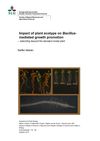
 Bacillus amyloliquefaciens can boost root hair growth in some Arabidopsis plants, potentially improving agriculture.
 19 citations
,
January 2009 in “Journal of Young Pharmacists”
19 citations
,
January 2009 in “Journal of Young Pharmacists” Alcoholic extract of Eclipta alba may help treat allergies and is safe at high doses.
 27 citations
,
September 2015 in “PharmaNutrition”
27 citations
,
September 2015 in “PharmaNutrition” Astaxanthin is a safe antioxidant that may improve heart, skin, eye health, and physical performance, and help manage chronic diseases.