October 2025 in “Medical Journal of Babylon” Higher testosterone and lower Vitamin D levels are linked to hair loss in female COVID-19 patients.
 September 2024 in “Journal of Health and Rehabilitation Research”
 COVID-19 is linked to temporary hair loss, especially in women.
52 citations
,
September 2021 in “Kidney International” COVID-19 vaccination may trigger lupus in some people.
 1 citations
,
August 2022 in “Медицинский совет”
1 citations
,
August 2022 in “Медицинский совет” The treatment with an oral drug and topical lotion is effective and well-tolerated for hair loss after COVID-19.
June 2023 in “Institutional Repositories DataBase (IRDB)” COVID-19 can cause various skin symptoms, with different patterns seen in younger and older patients.
 May 2023 in “British Journal of Dermatology”
 COVID-19 can cause long-term skin problems and has changed how skin doctors work.
January 2023 in “Revista CPAQV - Centro de Pesquisas Avançadas em Qualidade de Vida” COVID-19 can cause intense hair loss in women, usually resolving in 1 to 4 months.
May 2022 in “GLOBAL JOURNAL FOR RESEARCH ANALYSIS” COVID-19 can cause temporary hair loss.
 5 citations
,
January 2022 in “Journal of the European Academy of Dermatology and Venereology”
5 citations
,
January 2022 in “Journal of the European Academy of Dermatology and Venereology” The Covishield COVID-19 vaccine caused skin-related side effects in 1.23% of the people vaccinated in the study from India.
 April 2023 in “Research Square (Research Square)”
 Many healthcare workers who had Covid-19 suffer from long-term symptoms like hair loss and fatigue, especially women.
 January 2023 in “Acta dermatovenerologica Alpina, Pannonica et Adriatica (Tiskana izd.)”
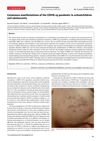
 The article concludes that schoolchildren and adolescents experienced various skin issues during the COVID-19 pandemic, including acne from masks and other skin reactions from the virus and vaccines.

The document says hair loss can happen after recovering from COVID-19 and it can cause psychological discomfort.
 7 citations
,
June 2021 in “JAAD Case Reports”
7 citations
,
June 2021 in “JAAD Case Reports” A woman had hair loss, nail changes, and skin peeling after a COVID-19 infection, which got better on their own.
 September 2023 in “medRxiv (Cold Spring Harbor Laboratory)”
 Long-COVID has diverse, long-term health impacts, especially in young people.
 January 2023 in “International journal of sciences”
 Platelet-Rich Plasma therapy helped significantly in hair recovery for a hair loss condition after infection.
 25 citations
,
August 2021 in “Irish Journal of Medical Science (1971 -)”
25 citations
,
August 2021 in “Irish Journal of Medical Science (1971 -)” COVID-19 infection can significantly cause temporary hair loss.
 June 2022 in “Research, Society and Development”
 COVID-19 may cause increased hair loss, but the exact reason is unclear and standard hair loss treatments are recommended.
May 2022 in “Brazilian Journal of Health Review” COVID-19 infection can cause temporary hair loss due to stress, treatment drugs, psychological impact, and pandemic-related stress.
 4 citations
,
October 2022 in “Journal of family medicine and primary care”
4 citations
,
October 2022 in “Journal of family medicine and primary care” Some people in Saudi Arabia experienced hair loss after the COVID-19 vaccine, more often in women and those without prior hair loss.
Post-COVID-19 patients often experience musculoskeletal issues, fitness decline, behavioral changes, chest pain, cough, hair loss, and nervous system problems.
 1 citations
,
August 2022 in “Rheumatology (Bulgaria)”
1 citations
,
August 2022 in “Rheumatology (Bulgaria)” A woman experienced severe symptoms, including hair loss, after a COVID-19 vaccine, suggesting a possible autoimmune reaction.
 July 2025 in “The Korean Journal of Internal Medicine”
 Certain immune responses may cause ongoing COVID-19 symptoms like fatigue and brain fog.

COVID-19 can cause significant hair loss.
May 2023 in “Zenodo (CERN European Organization for Nuclear Research)” COVID-19 may increase hair loss due to stress and inflammation.
 December 2022 in “Journal of Education, Health and Sport”
 Covid-19 can cause different types of hair loss, which can affect people's mental and social well-being.
April 2021 in “Zenodo (CERN European Organization for Nuclear Research)” Covid-19 may cause hair loss conditions like alopecia areata and telogen effluvium.
 7 citations
,
December 2021 in “Journal of The American Academy of Dermatology”
7 citations
,
December 2021 in “Journal of The American Academy of Dermatology” COVID-19 can cause hair loss starting as early as 18 days after infection.
 March 2026 in “Frontiers in Pediatrics”
 COVID-19 may trigger hair loss conditions like alopecia areata.
October 2022 in “Amplla Editora eBooks” COVID-19 can cause temporary hair loss in some people.
3 citations
,
February 2023 in “Frontiers in Immunology” The IGRA test effectively detects past SARS-CoV-2 exposure, especially using nucleocapsid peptides.