 January 2025 in “Majmaah Journal of Health Sciences”
 Nearly 70% of postmenopausal women in Saudi Arabia experience hair loss, often linked to early menopause, chronic diseases, family history, and stress.
 November 2023 in “JCEM Case Reports”
 A postmenopausal woman's excess male hormone symptoms improved after her ovaries were removed.
Most postmenopausal women experience significant skin changes and various skin conditions.
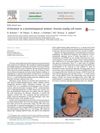 January 2014 in “European Geriatric Medicine”
 A postmenopausal woman's virilization was caused by a rare ovarian tumor that was hard to detect but was successfully treated with surgery.
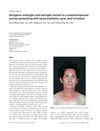 August 2009 in “International Journal of Dermatology”
 A postmenopausal woman's facial redness, acne, and excess hair were caused by too much hormone therapy for insomnia, but improved after stopping the treatment.
6 citations
,
June 2006 in “International Journal of Gynecological Pathology” A postmenopausal woman's hormone imbalance and symptoms improved after removing benign ovarian tumors.
3 citations
,
January 2021 in “touchREVIEWS in Endocrinology” Surgery removed an ovarian tumor, improving her symptoms and normalizing testosterone levels.
 1 citations
,
July 2021 in “Research Square (Research Square)”
1 citations
,
July 2021 in “Research Square (Research Square)” Osteoporotic postmenopausal Sudanese women have a high risk of cardiovascular disease.
 October 2023 in “Journal of the Endocrine Society”
 The document concludes that doctors should thoroughly check postmenopausal women with sudden increased male traits for rare conditions like androgen-producing endometrial cancer.
 November 2022 in “The Journal of Clinical Endocrinology and Metabolism”
 Postmenopausal hyperandrogenism, a condition with symptoms like increased hair growth and acne, is usually caused by PCOS but can also be due to other factors. It's diagnosed by checking testosterone levels and treated either by removing the adrenal tumor or through antiandrogen therapy.
9 citations
,
November 2013 in “Gynecological Endocrinology” A woman had high testosterone due to an ovarian issue, which was fixed with surgery.
3 citations
,
October 2015 in “EFSA supporting publications” Isoflavones may help with menopause symptoms but could be risky for women with hormone-sensitive cancers.
 April 2018 in “Gynäkologische Endokrinologie”
 Testosterone in older women can increase bone density, muscle mass, fat mass, improve memory, and boost libido, but may cause nipple color changes.
 28 citations
,
May 2013 in “The Journal of Steroid Biochemistry and Molecular Biology”
28 citations
,
May 2013 in “The Journal of Steroid Biochemistry and Molecular Biology” Testosterone therapy can improve sexual desire and function in postmenopausal women but should be used cautiously and not based solely on testosterone levels.
 17 citations
,
February 2003 in “Australasian Journal of Dermatology”
17 citations
,
February 2003 in “Australasian Journal of Dermatology” Hair loss in postmenopausal woman caused by ovarian issue.
 4 citations
,
December 2018 in “Case reports in endocrinology”
4 citations
,
December 2018 in “Case reports in endocrinology” A 63-year-old woman's male-like symptoms were caused by a rare testosterone-producing ovarian tumor, treated by removing her ovaries and fallopian tubes.
 2 citations
,
April 2023 in “Pharmaceuticals”
2 citations
,
April 2023 in “Pharmaceuticals” Testosterone therapy for postmenopausal women appears safe and may protect against heart disease, but requires constant monitoring and more research for long-term effects.
June 2023 in “Sri Lanka Journal of Menopause”  27 citations
,
April 2017 in “European journal of endocrinology”
27 citations
,
April 2017 in “European journal of endocrinology” The research found that MRI and certain hormone levels can help tell apart ovarian tumors from hyperthecosis in postmenopausal women, but tissue analysis is still needed for a definite diagnosis.
 22 citations
,
January 2015 in “The Cochrane library”
22 citations
,
January 2015 in “The Cochrane library” DHEA may help with sexual function when used intravaginally by menopausal women but is similar to hormone therapy in other aspects and might cause more side effects like acne and hair loss.
 September 2024 in “Brazilian Journal of Case Reports”
 Clomiphene testing can help find ovarian causes of high testosterone in postmenopausal women.
 January 2024 in “Journal of surgical case reports”
 Removing an adrenal tumor can significantly reduce high androgen levels in postmenopausal women.
 January 2021 in “touchREVIEWS in Endocrinology”
 Surgery successfully treated a hidden ovarian tumor causing hair loss and excess hair growth in a postmenopausal woman.
 November 2022 in “Journal of the Endocrine Society”
 Taking biotin can lead to incorrect low results in free testosterone tests.
 239 citations
,
November 2000 in “Journal of The American Academy of Dermatology”
239 citations
,
November 2000 in “Journal of The American Academy of Dermatology” Finasteride doesn't effectively treat hair loss in postmenopausal women.
 81 citations
,
May 2007 in “Fertility and Sterility”
81 citations
,
May 2007 in “Fertility and Sterility” Testosterone therapy seems safe for postmenopausal women for a few years, but more research is needed for long-term effects.
4 citations
,
February 2009 in “Obstetrical & Gynecological Survey” Testosterone patches can modestly improve sexual function in postmenopausal women not on estrogen therapy.
October 2025 in “Journal of Obstetric and Gynaecological Practices POGS”  October 2023 in “The Journal of clinical endocrinology and metabolism/Journal of clinical endocrinology & metabolism”
 Hyperandrogenism increases heart disease risk in premenopausal women, but this risk is linked to obesity in postmenopausal women.
 46 citations
,
January 2008 in “Climacteric”
46 citations
,
January 2008 in “Climacteric” Testosterone therapy can help improve sexual desire and function in postmenopausal women but may cause side effects and is not FDA-approved for this use.