
COVID-19 patients with hair loss experienced more cognitive issues and these issues were linked to higher levels of depression, anxiety, and stress.
 January 2017 in “Archives of Aesthetic Plastic Surgery”
 Hair care products with placental growth factor can improve hair thickness and density in postpartum hair loss.
 June 2023 in “Benha Journal of Applied Sciences”
 People with chronic hair shedding have lower antioxidant levels in their blood compared to healthy individuals.
 January 2019 in “International Journal of Trichology”
 A woman lost all her hair in one day, was diagnosed with a rare type of hair loss, and regrew it in 12 weeks with treatment.
May 2023 in “Journal of the European Academy of Dermatology and Venereology” Many people experience hair loss after COVID-19 infection.
 September 2012 in “Reactions Weekly”
 Two girls experienced temporary hair loss after getting the HPV vaccine, which may be related to the vaccine.
 January 2026 in “http://isrctn.com/”
 The food supplement may help reduce hair shedding and improve hair growth.
14 citations
,
January 2014 in “Indian Journal of Dermatology Venereology and Leprology” Frontal fibrosing alopecia can affect men's beards and leads to permanent hair loss.
 January 2023 in “Revista Eletrônica Acervo Saúde”
 COVID-19 can cause temporary hair loss.
 May 1992 in “Reactions Weekly”
 Some patients lost hair after taking interferon alpha 2B, but it improved for some while still on the treatment and for others after stopping it.
 1 citations
,
January 2021 in “Our Dermatology Online”
1 citations
,
January 2021 in “Our Dermatology Online” A scalp infection can look like alopecia areata and get worse if treated incorrectly.
 7 citations
,
February 2010 in “Journal of Dermatological Treatment”
7 citations
,
February 2010 in “Journal of Dermatological Treatment” Imiquimod cream can rarely cause temporary hair loss.
 November 2023 in “Stem cells and cloning”
 A new treatment using stem cell-conditioned media significantly improved hair growth in people with temporary hair loss.
 September 2024 in “PubMed”
 Hair loss can be treated based on its type and cause, improving quality of life.
 March 2024 in “Indian Journal of Dermatology”
 Iron supplements may improve hair loss satisfaction even if initial iron levels are normal.
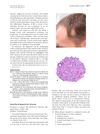
The man has Temporal Triangular Alopecia, a stable, non-scarring hair loss condition best treated with hair transplantation.
 July 2025 in “Journal of Investigative Dermatology”
 Immune system changes may contribute to female pattern hair loss.
 23 citations
,
April 2021 in “Journal of Clinical Medicine”
23 citations
,
April 2021 in “Journal of Clinical Medicine” Frontal Fibrosing Alopecia's cause is unclear, affects mainly postmenopausal women, and current treatments focus on stopping hair loss rather than regrowth.
 1 citations
,
June 2011 in “Journal of The American Academy of Dermatology”
1 citations
,
June 2011 in “Journal of The American Academy of Dermatology” Iron deficiency is common in women regardless of hair loss, and treating it does not usually reverse hair loss.
 20 citations
,
July 2009 in “Journal of Pediatric and Adolescent Gynecology”
20 citations
,
July 2009 in “Journal of Pediatric and Adolescent Gynecology” Quick treatment of hair disorders in teenage girls is important because of the emotional effects.
 17 citations
,
November 2012 in “Maturitas”
17 citations
,
November 2012 in “Maturitas” The conclusion is that proper evaluation and treatment of hair loss in midlife women is important, considering the emotional impact and potential for various treatments.
4 citations
,
January 2010 Low levels of certain trace elements might contribute to hair loss in Egyptian women.
 31 citations
,
October 2010 in “Journal of the European Academy of Dermatology and Venereology”
31 citations
,
October 2010 in “Journal of the European Academy of Dermatology and Venereology” Some people with heavy hair shedding might actually have a hidden form of alopecia, which can be identified by specific hair changes.
 72 citations
,
October 2010 in “Journal of The American Academy of Dermatology”
72 citations
,
October 2010 in “Journal of The American Academy of Dermatology” Iron deficiency common in women, not always linked to hair loss; more research needed.
 6 citations
,
January 2021 in “Journal of Cosmetic Dermatology”
6 citations
,
January 2021 in “Journal of Cosmetic Dermatology” Poor sleep during the pandemic may increase stress and worsen hair loss conditions.

COVID-19 may increase hair loss, and Nourkrin® could help treat it.
 October 2025 in “Journal of Pharmacy And Bioallied Sciences”
 Post-COVID, many patients experience skin issues like hair loss and herpes reactivation, especially in middle-aged women.
 21 citations
,
October 2017 in “Journal of the European Academy of Dermatology and Venereology”
21 citations
,
October 2017 in “Journal of the European Academy of Dermatology and Venereology” Various potential triggers may be causing the rise in frontal fibrosing alopecia, and avoiding these could help stop the disease's increase.
January 2022 in “Clinical Cases in Dermatology” A 47-year-old man was diagnosed with a specific type of hair loss and advised to use certain medications and avoid hair transplants.
 41 citations
,
July 2015 in “Clinical and Experimental Dermatology”
41 citations
,
July 2015 in “Clinical and Experimental Dermatology” Psoriasis can cause temporary or permanent hair loss.