 5 citations
,
October 1984 in “The BMJ”
5 citations
,
October 1984 in “The BMJ” Up to 50% of scalp hair can be lost before it appears thin, and treatment is only needed for hair loss caused by diseases or deficiencies.
December 2021 in “Journal of pharmaceutical research international” Trichoscopic features can help dermatologists distinguish between female pattern hair loss and chronic telogen effluvium.
December 2025 in “JEADV Clinical Practice” A woman with hair loss condition experienced rare hair color return, suggesting it might help diagnose the condition.
 18 citations
,
November 2012 in “Australasian Journal of Dermatology”
18 citations
,
November 2012 in “Australasian Journal of Dermatology” A 66-year-old man with a rare case of male frontal fibrosing alopecia did not regrow hair despite treatment.
 12 citations
,
March 2004 in “International Journal of Dermatology”
12 citations
,
March 2004 in “International Journal of Dermatology” Woman's hair loss diagnosis changed from CTE to AA; multiple biopsies important for accurate diagnosis.
 December 2024 in “Brazilian Journal of Health Review”
 Early diagnosis of alopecia frontal fibrosante is crucial, but treatment remains controversial and varies.
 8 citations
,
January 2012 in “Dermatology”
8 citations
,
January 2012 in “Dermatology” The HPV vaccine may be linked to temporary hair loss in children, but the benefits outweigh the risks.
Early diagnosis and treatment of frontal fibrosing alopecia are crucial to prevent permanent hair loss.
 May 2009 in “Medical and surgical dermatology/Medical & surgical dermatology”
 Hair and nail conditions can stabilize or improve over time, and new treatments show promise.
28 citations
,
May 1998 in “Journal of the American Academy of Dermatology” Scalp inflammation can cause multiple hairs to grow from one follicle.
1 citations
,
January 2010 Many drugs can cause hair loss.
 September 2023 in “Irish Journal of Medical Science (1971 -)”
 About 61% of women who had COVID-19 experienced hair loss afterward.
October 2025 in “Diagnostics” Temporal triangular alopecia is a harmless, non-progressive hair loss condition.
 2 citations
,
July 2022 in “Dermatologic Therapy”
2 citations
,
July 2022 in “Dermatologic Therapy” Both botulinum toxin A and multivitamin mesotherapy effectively treat hair loss, with botulinum toxin A being the better single-session option.
September 2022 in “Health and Medical Journal” Minoxidil and oral antioxidants helped improve hair growth in a patient with hair loss due to lupus.
 October 2024 in “Experimental Dermatology”
 The belief about hair shedding phases is likely incorrect and needs reevaluation.
January 2026 in “Surgical & Cosmetic Dermatology”  January 2023 in “Surgical & Cosmetic Dermatology”
 The patient quickly recovered from hair loss caused by DRESS syndrome using topical minoxidil.
6 citations
,
July 2004 in “JDDG Journal der Deutschen Dermatologischen Gesellschaft” Frontal fibrosing alopecia in postmenopausal women can be managed with early treatment using corticosteroids to stop hair loss.
 16 citations
,
January 2007 in “Actas dermo-sifiliográficas/Actas dermo-sifiliográficas”
16 citations
,
January 2007 in “Actas dermo-sifiliográficas/Actas dermo-sifiliográficas” The document concludes that there are no reliable treatments for frontal fibrosing alopecia, with only temporary benefits from current options.
 1 citations
,
September 2021 in “CRC Press eBooks”
1 citations
,
September 2021 in “CRC Press eBooks” Frontal Fibrosing Alopecia is a hair loss condition mainly affecting postmenopausal women, with unclear causes and various clinical patterns.
 12 citations
,
July 2022 in “Journal of Cosmetic Dermatology”
12 citations
,
July 2022 in “Journal of Cosmetic Dermatology” COVID-19 patients may experience temporary hair loss, mainly in women, which is likely reversible.
 1 citations
,
October 2000 in “Pediatrics in Review”
1 citations
,
October 2000 in “Pediatrics in Review” The document says that hookworms are treated with mebendazole and stress-related hair loss usually gets better in 6 months, while other hair loss types have specific treatments.
 19 citations
,
January 2011 in “Clinics”
19 citations
,
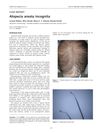
January 2011 in “Clinics” A young woman with a rare hair loss condition improved with steroid and biotin treatment.
 1 citations
,
August 1978 in “Dicp-The annals of pharmacotherapy”
1 citations
,
August 1978 in “Dicp-The annals of pharmacotherapy” A liquid protein diet caused hair loss in a young woman.
 February 2019 in “Trace elements and electrolytes”
 Women with chronic hair loss had lower levels of zinc, copper, and ferritin than healthy women.
 November 2023 in “The journal of investigative dermatology/Journal of investigative dermatology”
 Early treatment and multidisciplinary care are key to managing Frontal Fibrosing Alopecia and preventing further hair loss.
 3 citations
,
May 2019 in “Australasian Journal of Dermatology”
3 citations
,
May 2019 in “Australasian Journal of Dermatology” Hair loss in Cronkhite-Canada syndrome may be caused by autoimmune factors, not just stress or malabsorption.
 July 2025 in “JAAD Case Reports”
 A thorough assessment and combined treatment are crucial for managing complex alopecia, especially in patients with skin of color.
 11 citations
,
July 2010 in “Dermatologic Surgery”
11 citations
,
July 2010 in “Dermatologic Surgery” Postoperative folliculitis after hair transplants is a minor issue that doesn't relate to patient details or how much hair is transplanted.