 61 citations
,
January 2019 in “American Journal of Clinical Dermatology”
61 citations
,
January 2019 in “American Journal of Clinical Dermatology” The cause of Frontal Fibrosing Alopecia is unclear, diagnosis involves clinical evaluation and various treatments exist, but their effectiveness is uncertain.
 23 citations
,
October 2018 in “Australasian Journal of Dermatology”
23 citations
,
October 2018 in “Australasian Journal of Dermatology” The current understanding of frontal fibrosing alopecia involves immune, genetic, hormonal factors, and possibly environmental triggers, but more research is needed for effective treatments.
 14 citations
,
January 2006 in “Australasian journal of dermatology”
14 citations
,
January 2006 in “Australasian journal of dermatology” Alopecia areata can look like frontal fibrosing alopecia, making diagnosis hard.
 5 citations
,
April 2019 in “Journal of The American Academy of Dermatology”
5 citations
,
April 2019 in “Journal of The American Academy of Dermatology” Frontal Fibrosing Alopecia may be a complex condition linked to hormonal changes in women, not just a form of Lichen Planopilaris.
 May 2019 in “Anais brasileiros de dermatologia/Anais Brasileiros de Dermatologia”
 Frontal fibrosing alopecia mostly affects postmenopausal women, with diagnosis often delayed by 3 years.
 26 citations
,
June 2018 in “Australasian Journal of Dermatology”
26 citations
,
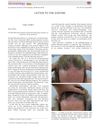
June 2018 in “Australasian Journal of Dermatology” Stopping sunscreen use on the forehead led to hair regrowth in a woman with frontal fibrosing alopecia.
15 citations
,
May 2021 in “Climacteric” Postmenopausal hyperandrogenism involves excess male hormones causing symptoms like hair growth and acne, and requires ruling out tumors and other disorders.
 5 citations
,
August 2014 in “Journal of The American Academy of Dermatology”
5 citations
,
August 2014 in “Journal of The American Academy of Dermatology” Smoking doesn't cause or prevent Frontal Fibrosing Alopecia, hormonal imbalance may be involved, and a combination of antiandrogens and steroids can help stabilize the condition.
 5 citations
,
March 2014 in “Journal of The American Academy of Dermatology”
5 citations
,
March 2014 in “Journal of The American Academy of Dermatology” The study suggests hormonal factors may play a role in Frontal Fibrosing Alopecia and that treatments like oral antiandrogens and steroids could be beneficial.
 4 citations
,
April 2018 in “British Journal of Dermatology”
4 citations
,
April 2018 in “British Journal of Dermatology” Finasteride for female hair loss has low side effects, more research needed.
 3 citations
,
October 2021 in “Journal of Cosmetic Dermatology”
3 citations
,
October 2021 in “Journal of Cosmetic Dermatology” Trichoscopy helps tell apart Frontal Fibrosing Alopecia and Lichen planopilaris by showing different hair and scalp features.
1 citations
,
July 2022 in “BMC Women s Health” An ovarian tumor can cause high male hormones in postmenopausal women.
 1 citations
,
July 2015 in “AACE clinical case reports”
1 citations
,
July 2015 in “AACE clinical case reports” Removing both ovaries treated the woman's excess male hormone symptoms.
June 2026 in “Dermatology” Frontal fibrosing alopecia has a higher remission rate than lichen planopilaris.
June 2026 in “British Journal of Dermatology” Frontal fibrosing alopecia is linked to thyroid disease, lupus, vitiligo, and heart disease.
January 2026 in “JCEM Case Reports” Benign conditions can mimic serious ones in postmenopausal hyperandrogenism, requiring careful diagnosis.
December 2025 in “JEADV Clinical Practice” A woman with hair loss condition experienced rare hair color return, suggesting it might help diagnose the condition.
October 2025 in “Journal of the Endocrine Society” A postmenopausal woman had rare symptoms due to a possible ovarian tumor, needing thorough evaluation.
May 2025 in “Journal of the ASEAN Federation of Endocrine Societies” Postmenopausal women with unusual hair growth should be checked for ovarian tumors.
November 2024 in “Dermatology and Therapy” Dermatologists should carefully choose treatments for FFA to avoid worsening the condition.
 October 2024 in “Journal of the Endocrine Society”
 Rare ovarian tumors can cause hyperandrogenism, even if imaging appears normal.
 October 2024 in “Journal of the Endocrine Society”
 Rare ovarian tumors can cause hyperandrogenism, even if imaging appears normal.
 October 2024 in “Journal of the Endocrine Society”
 Bilateral salpingo-oophorectomy resolved hyperandrogenism in a postmenopausal woman with rare ovarian tumors.
 October 2024 in “Journal of the Endocrine Society”
 A rare ovarian tumor caused high testosterone in a postmenopausal woman, resolved by surgery.
A thorough diagnostic process and teamwork are crucial for managing complex hyperandrogenism in postmenopausal women.
 November 2022 in “Journal of the Endocrine Society”
 Taking biotin can lead to incorrect low results in free testosterone tests.
 January 2022 in “Przegla̧d dermatologiczny”
 The exact cause of frontal fibrosing alopecia is unknown, but it's not likely due to sunscreen.
 September 2021 in “Clinical research in dermatology”
 5-Alpha-Reductase inhibitors might help slow down hair loss in Frontal Fibrosing Alopecia but are not a primary treatment and need more research.
 January 2021 in “Türkiye klinikleri dermatoloji dergisi”
 Eyebrow loss in frontal fibrosing alopecia is common and may be linked to other health issues.
December 2016 in “Anales del sistema sanitario de Navarra” Frontal fibrosing alopecia is increasing, especially in postmenopausal women, and treatment with finasteride can improve it.