31 citations
,
January 2014 in “The Scientific World JOURNAL” Eclipta prostrata extract protects skin cells from UVB damage and has strong antioxidant properties.
July 2025 in “Journal of Investigative Dermatology” AI-09 is safe, effective, and reduces wrinkles for up to 6 months.
7 citations
,
July 2016 in “Journal of Biomedical Materials Research Part A” cGEL hydrogel improves melanin production in skin cells, making it a promising option for skin treatments.
 4 citations
,
April 2018 in “Journal of Investigative Dermatology”
4 citations
,
April 2018 in “Journal of Investigative Dermatology” Hydroxypinacolone retinoate is a potent anti-aging ingredient for skin that is more effective and less irritating than other forms of retinoids.
109 citations
,
April 1997 in “Archives of Dermatological Research” Mast cell and nerve fiber interactions in mouse skin change with the hair cycle.
1 citations
,
December 2011 in “Arzneimittelforschung” The method accurately measures cyproterone acetate in plasma, showing no significant difference between two formulations.
May 2024 in “International Journal of Cosmetic Science” A new method using near-infrared light can effectively detect and analyze internal hair damage.
March 2010 in “European Journal of Cancer Supplements” April 2022 in “DOAJ (DOAJ: Directory of Open Access Journals)” Polygonum multiflorum may treat hair loss by reducing inflammation and stress, and boosting melanin.
 8 citations
,
February 2005 in “British Journal of Haematology”
8 citations
,
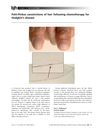
February 2005 in “British Journal of Haematology” Chemotherapy caused the patient's hair to have alternating thick and thin segments.
October 1993 in “The Journal of Clinical Pharmacology” June 2026 in “The Journal of Cosmetic Medicine” Scalp micropigmentation effectively creates the look of fuller hair but requires skilled application and touch-ups.
 13 citations
,
March 2020 in “Frontiers in cell and developmental biology”
13 citations
,
March 2020 in “Frontiers in cell and developmental biology” A substance called TCQA could potentially darken hair by activating certain genes and increasing melanin.
January 2026 in “Microsystems & Nanoengineering” New technologies replicate human skin for testing without animals.
 40 citations
,
February 2020 in “Experimental and Therapeutic Medicine”
40 citations
,
February 2020 in “Experimental and Therapeutic Medicine” PRP injections improve facial skin by reducing wrinkles and pores.
 11 citations
,
April 2013 in “SpringerPlus”
11 citations
,
April 2013 in “SpringerPlus” Human skin's melanocytes respond to light by changing shape, producing pigments and hormones, which may affect sleep patterns.
 November 1999 in “Hair transplant forum international”
 The document could not be understood or processed.
January 2024 in “SSRN Electronic Journal” 1 citations
,
January 2018 10 citations
,
June 2021 in “Journal of Investigative Dermatology” July 2024 in “Journal of Investigative Dermatology” July 2025 in “Journal of Investigative Dermatology” Monocyte-derived dendritic cells play a key role in UVB-induced skin sensitivity and inflammation.
 79 citations
,
September 2018 in “Dermatologic therapy”
79 citations
,
September 2018 in “Dermatologic therapy” Oral tofacitinib can significantly improve recalcitrant lichen planopilaris.
19 citations
,
April 2020 in “Oxidative Medicine and Cellular Longevity” Fernblock® helps protect skin cells from pollution and stress, reducing inflammation and damage.
 September 2016 in “Journal of Dermatological Science”
 Golden oyster mushroom extract may protect skin cells from aging by its antioxidant properties.
1 citations
,
August 2021 in “Journal of Investigative Dermatology” ASLAN004 was safe and well-tolerated, supporting further development for treating certain diseases.
3 citations
,
January 2013 in “Journal of cosmetics, dermatological sciences and applications” HAIRCARECUBE TM (HCC) helps hair products work better by getting active ingredients deeper into the hair.
 28 citations
,
May 2019 in “Life Sciences”
28 citations
,
May 2019 in “Life Sciences” Ginsenoside Rb1 from Panax ginseng helps mink hair grow by activating certain cell signals.
December 2025 in “JURNAL ILMU KEDOKTERAN DAN KESEHATAN” Plum blossom acupuncture and electroacupuncture improved hair growth and quality of life in a woman with chronic hair loss.
9 citations
,
June 2017 in “The journal of allergy and clinical immunology/Journal of allergy and clinical immunology/The journal of allergy and clinical immunology” Local inflammation worsens autoimmune skin conditions by increasing antibody buildup.