 April 2016 in “The journal of investigative dermatology/Journal of investigative dermatology”
 RPGRIP1L helps skin cells stick together by blocking PKCβII, which can prevent skin blistering like in pemphigus.
77 citations
,
April 2005 in “Journal of Investigative Dermatology” Repetin is a protein involved in skin and hair development, binding calcium and compensating for other proteins when needed.
14 citations
,
March 2022 in “Plant Cell & Environment” The protein AtRXR3 limits root hair growth in Arabidopsis, affecting phosphorus uptake.
 23 citations
,
March 2019 in “The journal of investigative dermatology/Journal of investigative dermatology”
23 citations
,
March 2019 in “The journal of investigative dermatology/Journal of investigative dermatology” ATP increases melanin production in skin after UV exposure, with the P2X7 receptor being crucial for this process.
3 citations
,
January 2020 in “Indian Journal of Dermatology” Certain gene variations in the Vitamin D Receptor are linked to higher risk of female hair loss.
 3 citations
,
January 1992 in “Clinical Pediatric Endocrinology”
3 citations
,
January 1992 in “Clinical Pediatric Endocrinology” Patients with the same vitamin D receptor mutation showed different symptoms due to other factors.
34 citations
,
March 2007 in “Biochemical and Biophysical Research Communications” Thioredoxin reductase 1 does not affect glucocorticoid receptor activity in hair follicle cells.
May 2026 in “ACS Catalysis” Efficient enzyme function relies on specific residue interactions and structural coordination.
 11 citations
,
May 1996 in “The Journal of clinical endocrinology and metabolism/Journal of clinical endocrinology & metabolism”
11 citations
,
May 1996 in “The Journal of clinical endocrinology and metabolism/Journal of clinical endocrinology & metabolism” The main enzyme found in pubic skin that could be targeted to treat excessive hair growth is 5 alpha-R2.
7 citations
,
January 2021 in “Frontiers in genetics” Inherited color dilution in rabbits is linked to DNA methylation changes.
39 citations
,
September 2018 in “American Journal of Medical Genetics Part A” A new genetic mutation in the ODC1 gene causes developmental delay and other symptoms in a young girl.
5 citations
,
April 2017 in “The journal of investigative dermatology/Journal of investigative dermatology” The gene therapy showed significant wound healing and was safe for treating severe RDEB.
November 2025 in “Drug Testing and Analysis” Epristeride's metabolism involves key metabolites and proteins, affecting its use in doping tests.
49 citations
,
October 1989 in “Genomics” Type I keratin genes are closely linked to the rex locus on mouse chromosome 11, affecting hair development.
7 citations
,
January 2025 in “Journal of Experimental & Clinical Cancer Research” PRMT5 inhibitors effectively fight adenoid cystic carcinoma in salivary glands.
85 citations
,
March 2008 in “Journal of Cell Science” The mutation causing Hutchinson-Gilford progeria syndrome leads to severe skin problems and early death in mice.
 March 2026 in “Preprints.org”
 Plerixafor may help treat pigmentation disorders by promoting skin repigmentation.
 November 2022 in “Journal of Investigative Dermatology”
 Most Recessive Dystrophic Epidermolysis Bullosa patients with a specific mutation likely have Sephardic ancestry from about 500 years ago.
July 2008 in “VTechWorks (Virginia Tech)” PrPC is important for neural differentiation in cattle and mouse embryonic stem cells.
 January 2020 in “Nihon Yakuri Gakkai nenkai yoshishu”
 Reducing 5α-reductase activity helps endometrial cells differentiate, aiding pregnancy.
4 citations
,
October 2021 in “Journal of Clinical Medicine” Carriers of a specific gene mutation have subtle skin changes without visible symptoms.
April 2025 in “Molecular Biology Reports” DNMT1 may help treat hypospadias by improving cell function and preventing unwanted cell changes.
 June 2024 in “British Journal of Dermatology”
 KRT14 gene variants cause dermatopathia pigmentosa reticularis, affecting nails, teeth, and hair.
 15 citations
,
April 2016 in “Hormones”
15 citations
,
April 2016 in “Hormones” Mutations in the NR3C1 gene cause a rare condition that affects hormone signaling and can lead to various symptoms, with dexamethasone as a treatment option.
 April 2023 in “Research Square (Research Square)”
 Lower GPX4 mRNA levels are linked to higher disease activity and symptoms in lupus patients.
May 2009 in “OPAL (Open@LaTrobe) (La Trobe University)” Suppressing the HGPS mutation may improve symptoms and suggest reversibility.
48 citations
,
April 2008 in “Human Molecular Genetics” Progerin affects cell shape but not hair or skin in mice.
April 1996 in “Journal of Dermatological Science” 210 citations
,
February 2008 in “Nature genetics” Mutations in the P2RY5 gene cause autosomal recessive woolly hair.
 23 citations
,
December 2013 in “British Journal of Dermatology”
23 citations
,
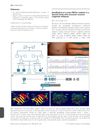
December 2013 in “British Journal of Dermatology” A new gene mutation linked to a skin condition was found in a Spanish family.