13 citations
,
April 1982 in “The Journal of Dermatology” Poly(ADP-ribose) synthesis is linked to skin cell differentiation.
 June 2023 in “NILES Journal forGeriatric and Gerontology/NILES Journal for Geriatric and Gerontology”
 Oral tranexamic acid is a safe and effective treatment for melasma.
June 2004 in “Journal of Investigative Dermatology” Increased pigmentation may protect skin from UVB, new targets for skin disease treatments were identified, sunscreen ingredients don't affect hormones, TNF-α inhibitors may help diabetic wounds, and certain treatments could prevent chemotherapy-induced hair loss.
33 citations
,
April 2003 in “Oncogene” April 2023 in “International Journal of Pharmaceutics” Melatonin in a special emulsion can help treat hair loss more effectively.
11 citations
,
August 1986 in “Archives of Dermatology” Vitamin B12 deficiency can cause skin and hair color changes, which can be reversed with treatment.
 1 citations
,
February 2023 in “International Journal of Molecular Sciences”
1 citations
,
February 2023 in “International Journal of Molecular Sciences” Melatonin, the sleep hormone, can help treat skin conditions like dermatitis, hyperpigmentation, and scalp disorders, and may also aid in skin aging prevention and regeneration. However, it's not recommended for asthma due to its pro-inflammatory effect.
8 citations
,
March 2015 in “Molecular Medicine Reports” Hair dye ingredient PPD causes cell death and aging in human hair cells by altering microRNA levels.
June 2025 in “Academic Medical Journal” Vitiligo treatments are improving but relapses are common.
10 citations
,
January 2016 in “ACG Case Reports Journal” Long-term Cape Aloe use causes harmless colon pigmentation that can help detect polyps.
 August 2022 in “Turkish journal of veterinary research”
 Demodicosis causes significant oxidative stress in dogs.
48 citations
,
September 2020 in “Frontiers in Immunology” Loss of OGG1 increases skin inflammation and auto-antibodies in lupus.
July 1974 in “Archives of Dermatology” Ultraviolet light treatment with trioxsalen was ineffective for vitiligo in the cases described.
4 citations
,
April 2025 in “Antioxidants” Alpha-ketoglutarate protects rabbit skin cells from oxidative damage by activating a specific cell pathway.
 April 2023 in “The journal of investigative dermatology/Journal of investigative dermatology”
 The protein p21 is more abundant in normal skin cells than in melanoma cells and may help protect against melanoma, with UVB light affecting its levels.
 April 2017 in “Journal of Dermatological Science”
 Certain flavonoids can improve the growth of pigmented hair in mice.
January 2006 in “Linchuang pifuke zazhi” Stem cell factor and certain proteins help melanocytes from hair follicles move and attach better, aiding vitiligo repigmentation.
November 2022 in “Indian Journal of Dermatology/Indian journal of dermatology” Valproic acid can cause dark lines on nails.
15 citations
,
August 2014 in “Journal of dermatological science” Pueraria thunbergiana extract may help prevent hair from turning gray.
 1 citations
,
March 2022 in “Journal of burn care & research”
1 citations
,
March 2022 in “Journal of burn care & research” Eyebrow tinting can cause chemical burns and increased awareness of its risks is needed.
1 citations
,
December 2024 in “Case Reports in Dermatology” Cyclophosphamide likely causes skin darkening by affecting hair follicles.
1 citations
,
March 2025 in “Portuguese Journal of Dermatology and Venereology” Many women with melasma also have metabolic syndrome.
 April 2023 in “Dermatology practical & conceptual”
 Lenalidomide helps hair follicle stem cells turn into melanocytes, which may improve repigmentation in vitiligo.
 May 2026 in “Archives of Dermatological Research”
 Genetics likely cause premature graying hair, not vitamin levels.
1 citations
,
February 2025 in “Photodermatology Photoimmunology & Photomedicine” 830 nm LED light effectively treats and prevents skin redness and dark spots, while 590 nm LED light only helps prevent them.
 9 citations
,
July 2016 in “The Journal of Dermatology”
9 citations
,
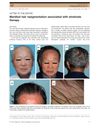
July 2016 in “The Journal of Dermatology” An 82-year-old man's white hair regained color after taking etretinate for psoriasis.
4 citations
,
February 2023 in “International Journal of Stem Cells” The FTO gene hinders stem cells in hair follicles from becoming pigment cells.
4 citations
,
July 2021 in “Skin Appendage Disorders” Sudden hair whitening may be linked to immune system activity.
 7 citations
,
May 2010 in “JEADV. Journal of the European Academy of Dermatology and Venereology/Journal of the European Academy of Dermatology and Venereology”
7 citations
,
May 2010 in “JEADV. Journal of the European Academy of Dermatology and Venereology/Journal of the European Academy of Dermatology and Venereology” White hair follicles in vitiligo have fewer and less functional melanocytes.
November 2011 in “Journal of Investigative Dermatology” TRH in hair follicles can influence hair color by increasing melanin.