12 citations
,
March 2022 in “Antioxidants” Encapsulated tamarillo polyphenols in cubosomes improve yoghurt's nutrition and stability.
2 citations
,
October 2024 in “Phytochemistry Reviews” Abrus precatorius has medicinal benefits but can be toxic.
 August 2023 in “Processes”
 Fermenting Dendrobium officinale with Lactobacillus reuteri CCFM8631 increases its skin care benefits.
January 2021 in “The Korea Journal of Herbology” Achyranthis Radix extract may help hair growth like minoxidil.
 2 citations
,
January 2018 in “International Journal of ChemTech Research”
2 citations
,
January 2018 in “International Journal of ChemTech Research” The two Eclipta alba varieties can be distinguished by their chemical differences.
 4 citations
,
August 2018 in “International Journal of Current Microbiology and Applied Sciences”
4 citations
,
August 2018 in “International Journal of Current Microbiology and Applied Sciences” Eclipta prostrata leaves contain various compounds with medicinal properties.
The treatment was not recommended due to limited effectiveness and significant side effects.
6 citations
,
November 2022 in “Antioxidants” OR2AT4 helps reduce aging and cell damage in human skin cells.
 5 citations
,
September 2021 in “Journal of Medical Biochemistry”
5 citations
,
September 2021 in “Journal of Medical Biochemistry” wAMD patients have higher oxidative stress, suggesting antioxidant treatment may help.
 6 citations
,
January 2021 in “Cellular and Molecular Biology”
6 citations
,
January 2021 in “Cellular and Molecular Biology” Grape pomace can be used to make valuable products with antioxidants and tocopherols.
2 citations
,
February 2021 in “IOP Conference Series Earth and Environmental Science” Mangkokan leaf contains various beneficial compounds like alkaloids, flavonoids, and steroids.
June 2023 in “CRC Press eBooks” Acorus calamus has potential health benefits but needs more safety research.
 3 citations
,
January 2016 in “Chemical sciences journal”
3 citations
,
January 2016 in “Chemical sciences journal” Tridax procumbens plant extracts, especially from ethanol, have strong antibacterial effects and contain beneficial compounds like flavonoids and tannins.
 1 citations
,
December 2022 in “BMC Plant Biology”
1 citations
,
December 2022 in “BMC Plant Biology” The black orchid Brasiliorchis schunkeana produces chemicals that attract certain insects and have potential antimicrobial properties.
20 citations
,
December 2021 in “Plants” Tamarix aphylla may be effective for various medical conditions, but more research is needed to confirm its safety and effectiveness.
June 2021 in “F1000Research” Plant-based compounds may offer safer prostate cancer treatment with fewer side effects.
 9 citations
,
September 2017 in “Journal of Investigative Dermatology Symposium Proceedings”
9 citations
,
September 2017 in “Journal of Investigative Dermatology Symposium Proceedings” Prostaglandin D2 increases testosterone production in skin cells through a process involving reactive oxygen species, and antioxidants may help treat hair loss.
 134 citations
,
February 2005 in “Neuropsychopharmacology”
134 citations
,
February 2005 in “Neuropsychopharmacology” GABRA2 gene variations impact alcohol response, and hair loss medication finasteride reduces some effects.
 1 citations
,
October 2025 in “Frontiers in Immunology”
1 citations
,
October 2025 in “Frontiers in Immunology” Avacopan is generally safe, with some minor side effects like nausea and fatigue.
 4 citations
,
April 2023 in “JURNAL FARMASI DAN ILMU KEFARMASIAN INDONESIA”
4 citations
,
April 2023 in “JURNAL FARMASI DAN ILMU KEFARMASIAN INDONESIA” The spanlastic system effectively delivers green tea extract for skincare.
January 2026 in “Molecules” Dihydroartemisinin could be a versatile cosmetic ingredient but needs more research and development.
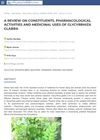 9 citations
,
May 2017 in “Universal journal of pharmaceutical research”
9 citations
,
May 2017 in “Universal journal of pharmaceutical research” Glycyrrhiza glabra has various medicinal properties, including antibacterial and antioxidant effects.
28 citations
,
March 2020 in “Journal of ethnopharmacology” Ginsenoside Rb1 slows down aging in mice by affecting cell growth, cell death, and metabolism.
 February 2025 in “Intisari Sains Medis”
 PDRN from salmon may slow skin aging by improving skin quality and reducing inflammation.
September 2025 in “Radboud University Press eBooks” AHR ligands could treat inflammatory skin diseases.
 May 2026 in “Archives of Dermatological Research”
 Genetics likely cause premature graying hair, not vitamin levels.
4 citations
,
October 2024 in “International Journal of Molecular Sciences” Naringin may help treat atopic dermatitis by reducing inflammation and improving the skin barrier.
 4 citations
,
February 2022 in “Nutrients”
4 citations
,
February 2022 in “Nutrients” Korean Red Ginseng saponins may protect skin from inflammation and darkening caused by air pollution.
7 citations
,
March 2025 in “Cytotechnology”  3 citations
,
January 2018 in “Biomedical dermatology”
3 citations
,
January 2018 in “Biomedical dermatology” Green tea extract helps prevent cell death and supports cell survival in hair cells exposed to a chemotherapy drug.