 January 1994 in “European Journal of Cancer”
 The European School of Oncology organized various educational events in 1994, highlighting important cancer research findings.
91 citations
,
May 2023 in “Journal of Cutaneous Medicine and Surgery” Alopecia Areata affects 2% globally, with treatments like essential oils, garlic, and JAK inhibitors showing promise, but more research is needed.
50 citations
,
September 2023 in “Biomarker Research” S100A6 is important for cell functions and can help diagnose and treat diseases.
48 citations
,
December 2019 in “Reproductive Biology and Endocrinology” More research is needed to confirm sperm DNA fragmentation as a reliable tool for diagnosing male infertility.
 13 citations
,
August 1980 in “Cancer”
13 citations
,
August 1980 in “Cancer” Multimodal primary treatment improves survival in premenopausal breast cancer patients and is also beneficial for postmenopausal women.
 11 citations
,
November 2015 in “Skin Research and Technology”
11 citations
,
November 2015 in “Skin Research and Technology” Women's hair grows faster and thicker than men's, but hair growth slows for both genders with pattern hair loss.
 7 citations
,
September 2014 in “European Journal of Dermatology”
7 citations
,
September 2014 in “European Journal of Dermatology” Thicker hair grows faster; hair loss patients have slower growth.
 2 citations
,
February 2021 in “International Journal of Environmental Research and Public Health”
2 citations
,
February 2021 in “International Journal of Environmental Research and Public Health” Women with PCOS tend to be less optimistic than those without it.
1 citations
,
April 2024 in “Russian Journal of Clinical Dermatology and Venereology” Atopic diseases worsen alopecia areata, leading to earlier onset and more severe forms.
1 citations
,
October 2022 in “Zenodo (CERN European Organization for Nuclear Research)” Low serum ferritin levels are linked to more severe and longer-lasting alopecia areata in children.
 1 citations
,
July 2012 in “British Journal of Dermatology”
1 citations
,
July 2012 in “British Journal of Dermatology” New treatments and management strategies for skin conditions like melanoma and Spitz naevi were discussed at the dermatologists' meeting.
 1 citations
,
December 2018 in “Journal of Pakistan Association of Dermatology”
1 citations
,
December 2018 in “Journal of Pakistan Association of Dermatology” Dermoscopy is useful for diagnosing different types of hair loss.
 December 2017 in “Journal of The American Academy of Dermatology”
 The document explains how to claim CME credit by diagnosing and treating hair loss conditions in two patient cases.
 32 citations
,
September 1989 in “Medical Clinics of North America”
32 citations
,
September 1989 in “Medical Clinics of North America” Skin problems are common in lupus, important for diagnosis, and can be triggered by sunlight.
 37 citations
,
May 2016 in “Deutsches Arzteblatt International”
37 citations
,
May 2016 in “Deutsches Arzteblatt International” Hair loss requires customized treatments based on its various causes and types.
 48 citations
,
September 2009 in “Dermato-endocrinology”
48 citations
,
September 2009 in “Dermato-endocrinology” Anorexia nervosa can cause skin problems, which may help with early diagnosis and usually improve with treatment.
31 citations
,
December 2023 in “Middle East Fertility Society Journal” PCOS is linked to inflammation, and certain markers could help in its treatment.
 7 citations
,
July 1999 in “In Practice”
7 citations
,
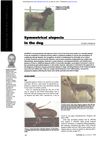
July 1999 in “In Practice” The conclusion is that a systematic approach is key for treating symmetrical alopecia in dogs, but treatment may not always be necessary.
3 citations
,
May 2014 in “Urologia Journal” 5ARIs lower PSA levels, but other tests are needed to avoid missing aggressive prostate cancer.
2 citations
,
June 2017 in “Journal of Evidence Based Medicine and Healthcare” Skin and mucous symptoms are key for diagnosing autoimmune connective tissue diseases.
 1 citations
,
August 2022 in “Piel”
1 citations
,
August 2022 in “Piel” Certain skin symptoms in COVID-19 patients may indicate a more severe illness.
1 citations
,
March 2022 in “Irish Journal of Medical Science” Men with androgenetic alopecia and hypertension may experience more severe COVID-19.
 1 citations
,
May 2017 in “Journal of The American Academy of Dermatology”
1 citations
,
May 2017 in “Journal of The American Academy of Dermatology” A woman's hair grew back after stopping acitretin for psoriasis and getting steroid treatment, and low vitamin D might be linked to alopecia severity.
 1 citations
,
December 2010 in “InnovAiT”
1 citations
,
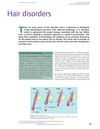
December 2010 in “InnovAiT” The document concludes that accurate diagnosis and appropriate management are crucial for treating various hair disorders, which have significant psychological impacts.
 1 citations
,
January 2006 in “Elsevier eBooks”
1 citations
,
January 2006 in “Elsevier eBooks” Cats lose fur due to various reasons, including allergies, infections, genetics, hormones, diet, cancer, stress, and some conditions are treatable while others are not.
 May 2023 in “Clinical and Experimental Dermatology”
 Alopecia areata has a high chance of persisting and relapsing, with a significant risk of total hair loss, especially if it starts in childhood.
January 2023 in “Al-Azhar International Medical Journal /Al-Azhar International Medical Journal” Treating eye issues can help manage alopecia areata better.
 October 2022 in “Medical Clinical Update Journal”
 Early diagnosis and treatment with Leuprolide are key for children with precocious puberty.
January 2022 in “Clinical Cases in Dermatology” A 22-year-old man has alopecia areata, an autoimmune hair loss condition, with various treatments available.
 July 2018 in “Elsevier eBooks”
 Acne keloidalis nuchae is a chronic skin condition more common in African men, causing itchy or painful bumps and can lead to permanent hair loss if not treated early.