 March 2025 in “Nature Communications”
 NSC167409 can effectively inhibit the virus causing hand, foot, and mouth disease.
Mealworm protein helps fat cell development and may aid in metabolic health and hair growth.
January 2025 in “Pharmaceuticals” Peptide-based hydrogels are promising for healing chronic wounds effectively.
January 2025 in “Biomaterials Research” The new zinc peroxide hydrogel speeds up wound healing and tissue regeneration effectively.
 November 2024 in “The Journal of Cell Biology”
 Basement membrane changes are crucial for hair follicle development.
 October 2024 in “International Journal of Ayurveda Research”
 Emblica officinalis and Eclipta alba may help treat hair loss naturally.
 April 2024 in “Human genomics”
 Identified genes linked to male-pattern baldness may help develop new treatments.
 March 2024 in “BMC cancer”
 High levels of ST14 and TMEFF1 proteins in ovarian cancer are linked to worse patient outcomes and may be a new treatment target.
 January 2024 in “Journal of lipid research”
 Finasteride may lower cholesterol and slow heart disease progression.
 December 2023 in “The journal of cell biology/The Journal of cell biology”
 The mTurq2-Col4a1 mouse model shows how the basement membrane develops in live mammals.
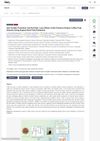
Arabica coffee pulp extract may help prevent hair loss and promote hair growth.
 July 2023 in “International Journal of Cosmetic Science”
 Biopolymers are increasingly used in cosmetics for their non-toxicity and skin benefits, with future biotech advancements likely to expand their applications.
 June 2023 in “Frontiers in Bioengineering and Biotechnology”
 The conclusion is that accurately replicating the complexity of the extracellular matrix in the lab is crucial for creating realistic human tissue models.
November 2022 in “IntechOpen eBooks” Nanotechnology can improve wound healing by enhancing treatments and dressings.
January 2022 in “Faculty of 1000 Research Ltd” Understanding molecular mediators can improve skin healing treatments.
January 2019 in “International Journal of Plant Animal and Environmental Sciences” The extract from marine green alga Chlamydomonas sp. W80 has antioxidant, anti-inflammatory, anti-aging, hair growth, immune-boosting, and skin lightening effects.
January 2016 in “Faculty of 1000 Research Ltd” Glycans play a crucial role in regulating hair growth and follicle balance.
January 2016 in “Faculty of 1000 Research Ltd” Glycans play a crucial role in regulating hair growth and follicle balance.
4 citations
,
March 2023 in “Molecules/Molecules online/Molecules annual” Gallic acid and ferulic acid can be sustainably extracted for hair supplements with high efficiency and stability.
 41 citations
,
February 2021 in “Cureus”
41 citations
,
February 2021 in “Cureus” Proxalutamide helps COVID-19 patients get rid of the virus faster and recover quicker.
38 citations
,
May 2021 in “International Journal of Infectious Diseases” Low testosterone may indicate severe COVID-19 in men.
 29 citations
,
March 2021 in “Frontiers in Endocrinology”
29 citations
,
March 2021 in “Frontiers in Endocrinology” Testosterone may influence COVID-19 severity and outcomes.
16 citations
,
August 2021 in “Tumor Biology” TMPRSS2 helps viruses enter cells and protects the prostate from inflammation-related cancer.
7 citations
,
June 2022 in “Biology” Men with more CAG repeats in the androgen receptor gene and lower testosterone levels may experience more severe COVID-19.
 3 citations
,
September 2021 in “International Journal of Molecular Sciences”
3 citations
,
September 2021 in “International Journal of Molecular Sciences” Androgens and a high-fat diet may increase the risk of severe COVID-19 in women with PCOS by upregulating certain proteins in the heart and kidneys.
November 2025 in “Photochemistry and Photobiology” Standardizing light therapy methods could improve spinal cord injury treatment.
 February 2023 in “Vaccines”
 COVID-19 may harm male reproductive health and lower testosterone levels, potentially affecting fertility and causing erectile dysfunction. More research is needed.
 October 2020 in “Проблемы эндокринологии”
 Men with higher androgen levels may have severe COVID-19 symptoms, but those on antiandrogen therapy are less likely to contract the virus and have milder symptoms. Anti-androgen drugs could potentially treat COVID-19, but more research is needed.
1425 citations
,
September 2020 in “Open Biology” Better understanding of wound healing is needed to develop effective treatments for chronic wounds.