 63 citations
,
November 2009 in “British journal of dermatology/British journal of dermatology, Supplement”
63 citations
,
November 2009 in “British journal of dermatology/British journal of dermatology, Supplement” Sub3 is essential for fungus adherence but not for skin invasion.
 48 citations
,
May 1991 in “The journal of investigative dermatology/Journal of investigative dermatology”
48 citations
,
May 1991 in “The journal of investigative dermatology/Journal of investigative dermatology” Trichohyalin is also found in the outer layers of normal human skin.
 18 citations
,
May 2020 in “Biomolecules”
18 citations
,
May 2020 in “Biomolecules” Spironolactone, a heart and liver drug, has new uses including cancer treatment, viral infection prevention, and skin condition improvement.
 8 citations
,
August 2020 in “Experimental dermatology”
8 citations
,
August 2020 in “Experimental dermatology” PRP therapy for alopecia shows inconsistent results due to natural variability in growth factor secretion by platelets.
 8 citations
,
January 2000
8 citations
,
January 2000 Terbinafine effectively stops fungal invasion of human keratin.
 5 citations
,
November 2024 in “Journal of Clinical Immunology”
5 citations
,
November 2024 in “Journal of Clinical Immunology” Dupilumab effectively controls symptoms in infants with Netherton syndrome.
 5 citations
,
December 2020 in “Wound Repair and Regeneration”
5 citations
,
December 2020 in “Wound Repair and Regeneration” PRP's effectiveness in wound healing is unclear due to varying compositions and methods.
 2 citations
,
April 2016 in “Medical Hypotheses”
2 citations
,
April 2016 in “Medical Hypotheses” Antioxidants might help prevent pressure ulcers, but more research is needed to find effective ones.
 June 2026 in “International Journal of Drug Delivery Technology”
 The developed aloe vera gel with green tea and fenugreek extracts may effectively treat hair loss.
 January 2026 in “American Journal of Medical and Clinical Research & Reviews”
 Different wavelengths of LED light are needed to treat different types of hair loss effectively.
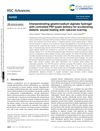 January 2026 in “RSC Advances”
 The hydrogel speeds up diabetic wound healing and reduces scarring.
 January 2015 in “Elsevier eBooks”
 Nanocarriers like liposomes and cyclodextrins improve how angiotensin-(1-7) is delivered in the body.
 December 2013 in “Research Portal (King's College London)”
 Hair loss in Lichen Planopilaris is caused by immune system issues damaging hair follicles and stem cells.
 3 citations
,
January 2021 in “ScienceAsia”
3 citations
,
January 2021 in “ScienceAsia” Using an enzyme and keratin treatment can significantly repair and strengthen damaged hair.
32 citations
,
May 1999 in “Biochemical and Biophysical Research Communications” A new enzyme, BSSP, is found in high amounts in the hair follicles of nude mice.
6 citations
,
January 2018 in “Advances in experimental medicine and biology” 6 citations
,
March 2007 in “BioTechniques” PCR genotyping in cre-loxP mice can be inaccurate due to unintended gene deletions in non-target tissues.
9 citations
,
January 1981 Nucleophilic reagents break down hair keratin, forming more lanthionine and lysinoalanine than in wool.
16 citations
,
June 1992 in “Journal of Investigative Dermatology” ANE syndrome is caused by a mutation in the RBM28 protein that disrupts ribosome assembly.
March 2026 in “International Journal of Cosmetic Science” Pal-KCV peptide strengthens hair and reduces breakage by up to 52%.
40 citations
,
September 2004 in “Biomacromolecules” The Glu413Lys mutation in keratin affects hair stability, while Glu413Asp does not.
 3 citations
,
October 2018 in “Archives of Dermatological Research”
3 citations
,
October 2018 in “Archives of Dermatological Research” Applying InlB321/15 to wounds sped up healing in mice.
 May 2022 in “Acta scientific dental sciences”
 Platelet concentrates are useful for tissue repair in medicine and dentistry, with L-PRF showing promising results in various treatments.
January 1995 in “Journal of the Society of Cosmetic Chemists” Transglutaminase does not modify human hair.
January 2008 in “Chinese Journal of Spectroscopy Laboratory” Cysteine formation on hair indicates damage, best detected at pH 4.5.
 3 citations
,
April 2012 in “Bioinformation”
3 citations
,
April 2012 in “Bioinformation” Two specific SNPs in the TRPS1 gene cause excessive hair growth by altering the protein's structure.
30 citations
,
April 2009 in “Mycoses” Microsporum gypseum fungus breaks down keratin in hair by digesting it enzymatically, starting with less keratinized parts.