December 1951 in “Journal of the American Medical Association” Propylthiouracil treatment can cause hair loss.
RNA-based treatments show promise for managing Hutchinson-Gilford Progeria Syndrome.
 April 2012 in “The Journal of Urology”
 Early baldness increases prostate cancer risk, radiotherapy and surgery have similar second cancer rates, and ALA may reduce prostate cancer risk.
March 2026 in “Bioconjugate Chemistry” Peptide-based PROTACs show promise in targeting hard-to-treat proteins, especially for cancer therapy.
 12 citations
,
March 1995 in “Journal of the American Chemical Society”
12 citations
,
March 1995 in “Journal of the American Chemical Society” Finasteride modifies 5-alpha-reductases through a two-step process, affecting inhibitor potency and possibly causing side effects.
2 citations
,
January 2023 in “Frontiers in Oncology” Mild oxidative stress can prevent hair loss from chemotherapy.
December 2022 in “IntechOpen eBooks” 308 excimer phototherapy is a safe and effective way to treat hair loss from Alopecia Areata.
22 citations
,
July 2024 in “Frontiers in Oncology” FLASH radiation reduces tissue damage more than conventional radiation.
6 citations
,
December 2021 in “Journal of Cancer Research and Therapeutics” The treatment improved survival and controlled cancer spread but required managing side effects like rashes.
January 2009 in “Journal watch” The treatment helped some patients with severe hair loss regrow hair.
Injecting patients' own PRP into their thyroid improved thyroid function and symptoms in most hypothyroidism cases.
9 citations
,
April 2009 in “Dermatologic surgery” Infrared light might help treat stubborn alopecia areata.
July 2025 in “Journal of Investigative Dermatology” High-dose UVA-1 therapy improves symptoms and skin condition in sclerosing skin disease.
 3 citations
,
October 2020 in “International journal of radiation research”
3 citations
,
October 2020 in “International journal of radiation research” Feeding rats gamma-irradiated flour with pests affects the pests and does not significantly harm the rats.
9 citations
,
October 2025 in “MedComm” PROTACs offer new ways to treat hard-to-target diseases, with promising drugs for cancer in advanced trials.
8 citations
,
January 2024 in “Journal of Materials Chemistry B” ADM hydrogels help heal radiation skin injuries.
25 citations
,
April 2012 in “Veterinary and comparative oncology” Megavoltage radiation therapy extended survival in rabbits with thymomas, especially in those weighing more than 1.57 kg.
September 2017 in “Journal of Investigative Dermatology” Photodynamic therapy can potentially remove nonpigmented hair by damaging hair follicles.
2 citations
,
July 2024 in “Bioengineering” PRF lysates reduce inflammation in cancer cells and boost immune response in healthy oral cells.
78 citations
,
January 2013 in “Brachytherapy” HDR electronic brachytherapy effectively treats nonmelanoma skin cancer with good cosmetic results and minimal side effects.
 264 citations
,
January 2008 in “Journal of biomedical optics”
264 citations
,
January 2008 in “Journal of biomedical optics” Zinc oxide nanoparticles in sunscreen do not penetrate deep into the skin.
 102 citations
,
October 1996 in “Dermatologic Clinics”
102 citations
,
October 1996 in “Dermatologic Clinics” Photographic documentation crucial for evaluating hair growth in androgenetic alopecia.
 66 citations
,
March 2019 in “Cellular and Molecular Life Sciences”
66 citations
,
March 2019 in “Cellular and Molecular Life Sciences” Melanocyte development from neural crest cells is complex and influenced by many factors, and better understanding could help treat skin disorders.
 64 citations
,
November 2012 in “EMBO reports”
64 citations
,
November 2012 in “EMBO reports” Lamins are vital for cell survival, organ development, and preventing premature aging.
 30 citations
,
April 2020 in “Stem Cell Research & Therapy”
30 citations
,
April 2020 in “Stem Cell Research & Therapy” PI3K/Akt pathway is crucial for hair growth and regeneration.
 26 citations
,
January 1994 in “Hormone and Metabolic Research”
26 citations
,
January 1994 in “Hormone and Metabolic Research” Taking spironolactone and linestrenol for androgen excess can lead to lower bone density in young women.
 22 citations
,
June 1993 in “Calcified Tissue International”
22 citations
,
June 1993 in “Calcified Tissue International” Women with hyperandrogenic amenorrhea have similar bone density to healthy women but lower than androgenized women without amenorrhea, and high DHEAS levels might affect bone density.
 21 citations
,
March 2019 in “Critical Reviews in Clinical Laboratory Sciences”
21 citations
,
March 2019 in “Critical Reviews in Clinical Laboratory Sciences” The androgen receptor is a promising target for breast cancer treatment, especially in triple-negative cases, but more research is needed for personalized therapies.
 21 citations
,
January 2019 in “Elsevier eBooks”
21 citations
,
January 2019 in “Elsevier eBooks” Green-synthesized nanoparticles can effectively target cancer cells, reducing side effects and improving treatment.
 18 citations
,
April 2001 in “Bioorganic & Medicinal Chemistry Letters”
18 citations
,
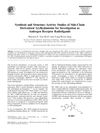
April 2001 in “Bioorganic & Medicinal Chemistry Letters” The nature of the side chain in RU 58841 derivatives greatly affects its AR affinity, with the N-(iodopropenyl) derivative 13 showing the highest AR binding affinity, suggesting its potential for developing high-affinity radioiodinated AR radioligands.