56 citations
,
January 2014 in “Journal of Investigative Dermatology” Olmsted syndrome can be inherited as an autosomal recessive trait due to a rare TRPV3 gene mutation.
May 2024 in “Open Access Journal of Disease and Global Health” PRP injections improve skin and hair quality, boost self-esteem, and are safe and satisfying for patients.

The study aims to find the best PRP dose for treating moderate carpal tunnel syndrome.
135 citations
,
May 2002 in “Anesthesiology” CRPS type I is a complex pain condition with no proven cure, requiring personalized treatment.
5 citations
,
February 2008 in “Histopathology” 75 citations
,
March 2007 in “Journal of Biological Chemistry” QSOX enzymes help form protein bonds in cells, especially in tissues with high secretory activity.
1 citations
,
January 2021 PRP is a safe, effective treatment for tissue regeneration and various skin conditions.
24 citations
,
October 2019 in “Genes” A new sheep gene, KRTAP36-1, may help breed sheep with better wool by reducing prickle factor.
25 citations
,
June 2017 in “Neuropharmacology” Increasing TSPO in the brain reduces anxiety and depression.
11 citations
,
March 2006 in “Journal of medical ethics” PRP injections may be an effective treatment for severe hair loss.

PRP therapy safely stimulates hair growth using the body's healing processes.
June 2023 in “Journal of Face Aesthetics” PRF is promising for dental and aesthetic uses but needs more research.
23 citations
,
October 2008 in “Journal of medicinal chemistry” PF-998425 is a new, effective, and non-phototoxic treatment for skin conditions related to androgens.
 January 2021 in “Hair transplant forum international”
 The document's content could not be processed.
March 2023 in “The Journal of Urology” Higher SRD5A2 expression predicts better response to finasteride in treating urinary symptoms.
 1 citations
,
November 2024 in “Diabetes Metabolic Syndrome and Obesity”
1 citations
,
November 2024 in “Diabetes Metabolic Syndrome and Obesity” A specific gene variant is linked to severe insulin resistance and hormone imbalance in a teenage girl.
June 2026 in “ACS Applied Polymer Materials” New polymer fibers can produce proteins and have potential uses in masks and swabs.
 4 citations
,
December 2013 in “British Journal of Dermatology”
4 citations
,
December 2013 in “British Journal of Dermatology” ESR2 gene linked to female-pattern hair loss.
28 citations
,
June 1998 in “Clinical Genetics” Ambras syndrome's genetic cause is unknown, as it isn't linked to androgen levels.
2 citations
,
January 2021 in “Springer eBooks” PRP is useful for hair restoration, facial rejuvenation, and wound healing.
October 2022 in “Hair Transplantation” PRP is a promising, cost-effective treatment for hair loss by stimulating hair growth.
 April 2026 in “Diagnostics”
 PRP treatment improves chronic tendinopathy, and imaging biomarkers can track tendon changes.
PRP therapy shows promise in skin treatment but needs more research for consistent results.
 May 2017 in “bioRxiv (Cold Spring Harbor Laboratory)”
 The peach gene pCTG134 helps control the interaction between auxin and ethylene hormones during fruit ripening.
21 citations
,
December 2020 in “Journal of the European Academy of Dermatology and Venereology” 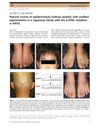 3 citations
,
January 2019 in “Journal of Dermatology”
3 citations
,
January 2019 in “Journal of Dermatology” The p.P25L mutation in the KRT5 gene causes a rare skin condition that worsens over time and may lead to hair loss starting in young adulthood.
848 citations
,
October 2020 in “International Journal of Molecular Sciences” PRP shows promise in treating joint and spine issues, but translating lab results to humans is challenging.
70 citations
,
February 2016 in “EMBO reports” Scientists found a specific group of itch-sensing nerve cells in mice important for feeling itch but not for sensing heat or touch.
Pvalb8 is essential for zebrafish hearing and hair cell development, and its mutation causes hearing loss.
 37 citations
,
August 2014 in “Journal of experimental botany”
37 citations
,
August 2014 in “Journal of experimental botany” A gene in Arabidopsis thaliana, AtPRPL1, affects root hair length but not cell wall composition.