 1 citations
,
May 2010 in “Nursing Standard”
1 citations
,
May 2010 in “Nursing Standard” Treatments for autoimmune hair loss have limited success and patients need emotional support and self-acceptance.
 1 citations
,
February 2004 in “Journal of The European Academy of Dermatology and Venereology”
1 citations
,
February 2004 in “Journal of The European Academy of Dermatology and Venereology” Hair loss improved with treatment and successful transplant.
 May 2026 in “Aesthetic Cosmetology and Medicine”
 Effective scalp problem treatment needs a comprehensive approach.
 March 2026 in “International Journal of Dermatology Venereology and Leprosy Sciences”
 Vitiligo treatment requires a personalized mix of therapies to restore skin color and improve life quality.
 February 2026 in “Chinese Medicine”
 Natural products might help treat hair greying.
 January 2026 in “Nanoscale Advances”
 Microneedles combined with light therapy can improve skin disease diagnosis and treatment.
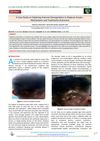 July 2025 in “International Journal of Pharmaceutical Sciences Review and Research”
 Individualized treatment and psychological support improved the patient's quality of life and appearance despite medication side effects.
 January 2025 in “International Journal of Dermatology Venereology and Leprosy Sciences”
 Current treatments for alopecia areata can help hair grow but don't cure the disease.
 October 2024 in “Journal of Education Health and Sport”
 Alopecia areata treatment should be personalized, using topical or systemic therapies based on severity, with promising options like JAK inhibitors needing more research.
 September 2024 in “Cureus”
 A 10-year-old boy's nail condition is mainly cosmetic and improves over time with treatment.
 August 2024 in “Bioscience of Microbiota Food and Health”
 Microbes might play a role in vitiligo.
 April 2024 in “DergiPark (Istanbul University)”
 Phototherapy is often used for psoriasis in children, but it has low success rates.
 February 2024 in “Sohag Medical Journal”
 Various local treatments for alopecia areata show promise, but individualized plans and more research are needed.
 February 2024 in “PloS one”
 Tofacitinib and adalimumab are promising treatments for cicatricial alopecia with few side effects.
 December 2023 in “PubMed”
 Homemade skin products can cause allergic reactions, so use registered products if you have allergies.
 December 2023 in “Aesthetic Cosmetology and Medicine”
 COVID-19 can cause hair loss, but specialists can help treat it.
 July 2023 in “Indian Journal of Postgraduate Dermatology”
 Postgraduate dermatology students should focus on practical training, core dermatology, and systematic learning, especially in their second and third years.
 January 2022 in “Dermatology Review”
 Higher IL-31 levels are linked to worse itching in chronic kidney disease patients.
Alopecia Areata has no cure, treatments are limited, and the condition often recurs, but new therapies like JAK inhibitors show promise.
The document is a detailed guide on skin conditions and treatments for dermatologists.
 June 2019 in “Journal of evolution of medical and dental sciences”
 Dermoscopy is useful for tracking alopecia areata treatment, with yellow dots and new vellus hairs being good indicators of hair regrowth.
Alopecia Areata is treated with drugs and therapies to reduce inflammation and immune response.
 January 2018 in “Elsevier eBooks”
 Topical imiquimod is as effective as 5-fluorouracil for treating actinic keratosis, with about a 5% risk of it turning into squamous cell carcinoma.
 January 2017 in “Dermatology Review”
 Skin issues from chronic graft-versus-host disease greatly affect daily life, needing teamwork between blood and skin doctors.
 October 2016 in “Elsevier eBooks”
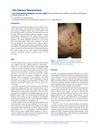
 Common noncancerous skin diseases have various treatments, including topical applications, light therapy, surgery, and medications, with psychological support being important.
 January 2016 in “Journal of The Korean Medical Association”
 The document says how to diagnose and treat hair loss from alopecia areata, but there's no cure and treatments vary.
 November 2013 in “John Wiley & Sons, Ltd eBooks”
 Skin symptoms can indicate endocrine disorders and have various treatments.
Use the least toxic, most specific treatments for skin diseases, considering side effects and individual patient needs.
 September 2009 in “Pediatric Dermatology”
 UVB is good for a skin condition in Asian kids, a lotion works for head lice, a drug helps with a skin blistering disorder, a foam reduces itchiness in skin inflammation, birthmarks can be more widespread, and criteria for a neurocutaneous disorder were agreed upon.
 January 2007 in “Elsevier eBooks”
 Alopecia areata is a reversible, autoimmune-related hair loss that can have significant emotional impact and uncertain treatment effectiveness.