 4 citations
,
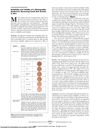
November 2011 in “Archives of Dermatology”
4 citations
,
November 2011 in “Archives of Dermatology” The photographic method for measuring facial hair density is reliable and valid but needs further testing on different hair densities and skin colors.
 September 1997 in “Journal of The European Academy of Dermatology and Venereology”
 Alopecia linked to higher anxiety and personality disorders.
 29 citations
,
March 2008 in “Dermatologic Surgery”
29 citations
,
March 2008 in “Dermatologic Surgery” The Cross-section Trichometer is a new tool that can measure hair quantity and detect hair loss and growth.
1 citations
,
June 2024 in “Rehabilitation Medicine” Higher cortisol and cortisone levels in hair may predict mood disorders after a stroke.
March 2026 in “Pediatric Dermatology” Generative AI tools can accurately score alopecia areata, reducing subjectivity in evaluations.
 36 citations
,
July 2016 in “Scientific reports”
36 citations
,
July 2016 in “Scientific reports” People's decision-making can be influenced by their internal biological clocks, as shown by gene expression, not just self-reported preferences for morning or evening.
The method effectively measures hair elasticity and could be useful in forensics.
2 citations
,
January 1988 in “Deep Blue (University of Michigan)” Early puberty in girls leads to intense moods, restlessness, and greater self-certainty.
 10 citations
,
June 2010 in “Fertility and Sterility”
10 citations
,
June 2010 in “Fertility and Sterility” Patients with PCOS tend to score their hirsutism higher than clinicians, making self-scoring less useful for diagnosis.
 4 citations
,
July 2001 in “Personality and Individual Differences”
4 citations
,
July 2001 in “Personality and Individual Differences” Men with moderate hair loss had the best spatial thinking, and long-term DHT might affect cognition.
 May 2023 in “GSC biological and pharmaceutical sciences”
 Forensic DNA phenotyping is becoming useful for predicting physical traits in criminal investigations but is limited by ethical concerns and incomplete genetic understanding.
 July 2024 in “Occupational Medicine”
 Higher cortisol levels are linked to poor coping, while higher DHEA levels are linked to job confidence.
14 citations
,
January 2003 in “Skin Research and Technology” The new scalp coverage scoring method accurately measures hair loss and growth in men.
The tool accurately measures hair count and size on scalps with 79.45% and 68.19% accuracy, respectively.
 6 citations
,
June 2021 in “Journal of health psychology”
6 citations
,
June 2021 in “Journal of health psychology” The article suggests that the view of male baldness as a medical issue is influenced by commercial bias and calls for more unbiased research.

Women with polycystic ovary syndrome (PCOS) show higher levels of hope, judgement, perspective, and transcendence, and could benefit from positive psychology therapy.
September 2025 in “Journal of Intellectual Disability Research” Measuring hair glucocorticoids for stress is moderately feasible, especially in females and those with moderate intellectual disabilities.

COVID-19 patients with hair loss experienced more cognitive issues and these issues were linked to higher levels of depression, anxiety, and stress.
The trial aims to understand how obesity and lifestyle affect circadian rhythms in people with schizophrenia and bipolar disorder.
February 2017 in “Faculty Opinions – Post-Publication Peer Review of the Biomedical Literature” Hair cortisol measurement is a promising, non-invasive tool for monitoring cortisol exposure over time.
 April 2023 in “JMIR Research Protocols”
 The study aims to create a model to predict health attributes using diverse health data from Japanese adults.
May 2023 in “Zenodo (CERN European Organization for Nuclear Research)” Forensic DNA phenotyping can predict physical traits from DNA but faces challenges in knowledge and ethics.
50 citations
,
June 2014 in “Experimental and Clinical Endocrinology & Diabetes” Hair hormone levels can indicate obesity-related changes and are useful for research and clinical practice.
5 citations
,
October 2017 in “Journal of Mind and Medical Sciences” Finasteride treatment should be personalized to individual mental profiles.
 1 citations
,
January 1987 in “Journal of Society of Cosmetic Chemists of Japan”
1 citations
,
January 1987 in “Journal of Society of Cosmetic Chemists of Japan” The method accurately measures hair damage and strength, revealing effects of cosmetics and metal correlations.

Current methods can't accurately predict which long-form answers people prefer; evaluations should consider different answer qualities separately.
 4 citations
,
March 2015 in “Skin Research and Technology”
4 citations
,
March 2015 in “Skin Research and Technology” Trichotillometry is a reliable method to measure hair strength and assess hair loss treatments.
November 2025 in “Anxiety Stress & Coping” Higher anxiety symptoms and social behavior affect stress levels in hair.
2 citations
,
January 2009 The procedure reliably measures cortisol in rhesus macaque hair.
 5 citations
,
April 2016 in “PubMed”
5 citations
,
April 2016 in “PubMed” Young men with mild hair loss who experience significant social and emotional distress are more likely to have sexual problems.