44 citations
,
May 2023 in “MedComm” PROTAC technology shows promise for cancer treatment but needs more effective E3 ligase recruiters.
February 2024 in “Frontiers in Cell and Developmental Biology” Eribulin-based chemotherapy is more effective and has fewer side effects for advanced triple-negative breast cancer.
2 citations
,
June 2003 in “PubMed” The two finasteride formulations are bioequivalent.
June 2026 in “Biomolecules and Biomedicine” Phoenixin levels are higher in PCOS patients and may help in diagnosis.
 25 citations
,
January 2005 in “Pediatric Dermatology”
25 citations
,
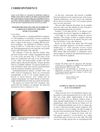
January 2005 in “Pediatric Dermatology” Methotrexate effectively treated a 2-year-old's generalized pustular psoriasis without side effects.
 34 citations
,
August 2002 in “British Journal of Dermatology”
34 citations
,
August 2002 in “British Journal of Dermatology” ALA-PDT is effective and safe for chronic X-ray dermatitis, providing complete or partial remission.
 November 2024 in “Rheumatology Advances in Practice”
 Monitor for early signs of azathioprine toxicity and check blood counts regularly.
 21 citations
,
November 2010 in “Talanta”
21 citations
,
November 2010 in “Talanta” Researchers developed a reliable method to measure testosterone and epitestosterone in urine for medical and anti-doping use.
 18 citations
,
August 1985 in “European journal of endocrinology”
18 citations
,
August 1985 in “European journal of endocrinology” Cyproterone acetate is effective for treating hirsutism, but some patients may feel worse on low-dose maintenance therapy.
 March 2026 in “Zenodo (CERN European Organization for Nuclear Research)”
 The N-K GM Series offers a free, effective solution to eliminate aflatoxin and cancer, improving health and life expectancy.
May 2025 in “Reactions Weekly” January 2012 in “Chinese Clinical Oncology” Disodium folinate can safely and effectively replace calcium folinate in colorectal cancer treatment.
 October 2024 in “Internal Medicine”
 Stopping nalfurafine reversed hair loss in a hemodialysis patient.
January 2016 in “Huanjing yu Jiankang Zazhi”  5 citations
,
March 2016 in “Drug Development and Industrial Pharmacy”
5 citations
,
March 2016 in “Drug Development and Industrial Pharmacy” New drug delivery systems improve treatment effectiveness and patient experience.
33 citations
,
January 1979 in “Acta obstetricia et gynecologica Scandinavica” Diane® is an effective contraceptive that also helps treat acne and mild hair growth issues.

Optimized liposomes can improve drug delivery and effectiveness.
January 2026 in “Dermatologic Therapy” Ritlecitinib is effective and safe for treating severe alopecia areata, showing significant hair regrowth and improved mental health.
April 2026 in “Case Reports in Dermatology” Tofacitinib effectively treated a woman's complex autoimmune and autoinflammatory disorders.
 January 2023 in “National journal of physiology, pharmacy and pharmacology”
 Low-dose methotrexate is generally safe but can cause mild to severe side effects, and folic acid can reduce these risks.
 20 citations
,
September 2005 in “Endocrinology”
20 citations
,
September 2005 in “Endocrinology” Certain changes to the B-ring of androgen receptor ligands can increase their effectiveness for potential treatments of muscle and bone conditions.
49 citations
,
February 2022 in “Drug Design Development and Therapy” Ritlecitinib shows promise for hair regrowth in alopecia areata patients.
February 2026 in “International Journal of Dermatology” Ritlecitinib shows promise in improving hair regrowth in adolescents with alopecia areata.
June 2026 in “British Journal of Dermatology” Ritlecitinib was approved for severe alopecia areata (AA) by NICE in March 2024, with additional guidance from BHNS and BAD. A retrospective audit across six regional dermatology centers assessed adherence to these guidelines. The study included 57 patients, all with severe AA, with some reclassified from moderate AA due to additional factors. The mean treatment duration was 12.6 months, and 47% had prior systemic therapy. Psychological assessments were documented in 58% of cases. After 36 weeks, 21 out of 41 patients had not achieved the desired SALT score, yet some continued treatment beyond guidelines. Most patients reported no adverse events. The audit found regional prescribing largely aligned with national guidance but highlighted the need for better psychological assessments and consistent SALT scoring to guide treatment continuation.
 December 2025 in “Journal of Pakistan Association of Dermatologists”
 Stopping afatinib improved a rare scalp condition in a patient.
6 citations
,
May 2013 in “Journal of Clinical Oncology” Combining Ficlatuzumab and Gefitinib can cause severe hair loss.
5 citations
,
May 2024 in “Journal of Allergy and Clinical Immunology Global” Upadacitinib effectively improved severe atopic dermatitis and alopecia universalis in a 29-year-old man.
18 citations
,
January 2015 in “Experimental Dermatology” New mutations in KRT83 and KRT86 are linked to the hair disorder monilethrix.
 29 citations
,
February 1996 in “Journal of Chromatography B: Biomedical Sciences and Applications”
29 citations
,
February 1996 in “Journal of Chromatography B: Biomedical Sciences and Applications” New method detects finasteride in plasma quickly and accurately without clean-up.
 1 citations
,
January 2024 in “Curēus”
1 citations
,
January 2024 in “Curēus” Upadacitinib significantly improved a man's severe scalp condition when other treatments failed.