1 citations
,
April 2010 in “Digital WPI” CLK1 is needed for skin cells to become epidermal cells but not sebocytes.
 28 citations
,
December 2018 in “Plant, cell & environment/Plant, cell and environment”
28 citations
,
December 2018 in “Plant, cell & environment/Plant, cell and environment” A protein called PLC2 is important for the growth and development of plant roots influenced by auxin.
 25 citations
,
May 1994 in “Journal of Investigative Dermatology”
25 citations
,
May 1994 in “Journal of Investigative Dermatology” Researchers found a new gene, hacl-1, that is active in mouse hair follicles during hair growth and may be important for hair biology.
5 citations
,
June 2008 in “British Journal of Dermatology”  February 2025 in “Biomolecules”
 RORA boosts autophagy in hair follicle stem cells, potentially aiding hair growth.
80 citations
,
November 2017 in “New Phytologist” Roots adapt to uneven environments by changing growth and gene expression.
15 citations
,
July 2015 in “Developmental Dynamics” Orai1 protein is crucial for tooth development and affects enamel thickness and mineralization.
 97 citations
,
March 2002 in “Molecular and cellular biology”
97 citations
,
March 2002 in “Molecular and cellular biology” Mutant CDP/Cux protein causes hair defects and reduced male fertility in mice.
 54 citations
,
July 2017 in “Scientific Reports”
54 citations
,
July 2017 in “Scientific Reports” JMJD3 and NF-κB activate Notch1, which is essential for skin cell movement and wound healing.
RNase L hinders hair follicle regeneration by altering immune signals.
7 citations
,
January 2025 in “Journal of Experimental & Clinical Cancer Research” PRMT5 inhibitors effectively fight adenoid cystic carcinoma in salivary glands.
13 citations
,
December 2009 in “Journal of the Peripheral Nervous System” TRPA1 and TRPV1 channels don't affect mechanotransduction in rat sinus hair follicles.
 February 2024 in “Plant Cell Reports”
 AtVPS29 is essential for proper plant growth by regulating gibberellin signaling.
3 citations
,
October 2019 in “EMBO molecular medicine” Targeting NCoR1 can help treat heart enlargement and dysfunction.
66 citations
,
February 2013 in “PeerJ” Activating cannabinoid receptor 1 reduces certain keratin levels, potentially aiding psoriasis treatment.
 January 2013 in “International Journal of Trichology”
 A new mutation in the TRPS1 gene was found in a Ukrainian girl with Trichorhinophalangeal syndrome type I.
20 citations
,
December 2013 in “PLoS ONE” β1 integrin is essential for the survival, growth, and movement of human epithelial progenitor cells.
 August 2016 in “Journal of Investigative Dermatology”
 Blocking the CCR5 receptor may be a new way to treat hair loss from alopecia areata.
 March 2010 in “Ejc Supplements”
 ROR-alpha may increase the growth of certain breast cancer cells by boosting aromatase, which could affect breast cancer prognosis.
January 2015 in “DukeSpace (Duke University)” Transferrin receptor 1 is essential for normal function in the intestines, pancreas, and skin.
 January 2024 in “OPAL (Open@LaTrobe) (La Trobe University)”
 TRPV3 channels are involved in skin processes and are affected by shear stress, influencing itch and mechanotransduction.
January 2026 in “Journal of Dermatological Science” DcR3 helps heal wounds and regrow hair by changing macrophages to a repair-focused type.

Inhibiting AP-1 changes skin tumor types and affects tumor cell identity.
July 2025 in “Journal of Investigative Dermatology” Ritlecitinib reduces alopecia areata symptoms by blocking JAK3/TEC signaling and T-cell activity.
 4 citations
,
February 2012 in “Chinese Science Bulletin”
4 citations
,
February 2012 in “Chinese Science Bulletin” The MtAnn3 gene affects root hair growth and is influenced by cytokinin.
 24 citations
,
July 2017 in “Structure”
24 citations
,
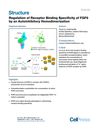
July 2017 in “Structure” FGF9 controls which receptors it binds to through a process where two FGF9 molecules join, and changes in FGF9 can lead to incorrect receptor activation.
29 citations
,
December 2004 in “Developmental biology” cDermo-1 causes dense skin, feathers, and scales in chickens.
60 citations
,
October 2020 in “Nature Communications” AP-1 and TGFß work together to drive resistance in basal cell carcinoma, suggesting new treatment options.
January 2013 in “Scholarworks (University of Massachusetts Amherst)” FERONIA regulates plant growth, pollen interactions, and sugar signaling.
January 2022 in “Mammalian Genome” The wavy coat in NCT mice is caused by multiple genes, including a mutation in the Prss53 gene.