 3 citations
,
February 2022 in “Frontiers in cell and developmental biology”
3 citations
,
February 2022 in “Frontiers in cell and developmental biology” A specific RNA molecule, circCOL1A1, affects the growth and quality of goat hair by interacting with miR-149-5p and influencing cell growth pathways.
1 citations
,
September 2023 in “Frontiers in Genetics” A heterozygous mutation in HTRA1 can cause severe CARASIL symptoms.
9 citations
,
May 2014 in “BMC medical genetics” A woman with a unique syndrome similar to TRPS has a genetic change near the TRPS1 gene, affecting its regulation.
15 citations
,
December 2020 in “The Journal of General Physiology” Acid can block TRPV3 from outside the cell but boost its function from inside.
 11 citations
,
August 2019 in “Journal of Molecular Histology”
11 citations
,
August 2019 in “Journal of Molecular Histology” NFIC helps rat dental cells grow and turn into bone-like cells.
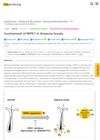
RIPK1 inhibitors might help prevent alopecia areata.
17 citations
,
May 2013 in “Journal of Investigative Dermatology” Mutations in β1 integrins cause embryonic death but have milder effects on skin.
38 citations
,
April 2016 in “The Journal of Pathology” Alkaline ceramidase 1 is crucial for healthy skin and energy balance.
39 citations
,
August 1998 in “FEBS Letters” Two new enzymes, PAD-R11 and PAD-R4, were cloned and showed activity, with PAD-R11 resembling epidermal enzymes.
6 citations
,
March 1996 in “Journal of Investigative Dermatology” 
Inhibiting AP-1 changes skin tumor types and affects tumor cell identity.
March 2026 in “Microchemical Journal” January 2024 in “Animals” Circular RNA ERCC6 helps activate stem cells important for cashmere goat hair growth by interacting with specific molecules in an m6A modification-dependent way.
 178 citations
,
October 2001 in “Genes & Development”
178 citations
,
October 2001 in “Genes & Development” The mutated hairless gene causes hair loss by acting as a new type of corepressor affecting thyroid hormone receptors.
March 2026 in “Tissue Engineering and Regenerative Medicine”  April 2018 in “bioRxiv (Cold Spring Harbor Laboratory)”
 A gene variant causes patched hair loss in mice, similar to alopecia areata in humans.
12 citations
,
July 2004 in “Molecular genetics and genomics” A new mouse mutation causes skin and hair defects due to a gene change.
9 citations
,
January 2015 in “Medical hypotheses” TCDD disrupts skin stem cells, causing skin issues like chloracne.
 60 citations
,
August 2008 in “Human molecular genetics online/Human molecular genetics”
60 citations
,
August 2008 in “Human molecular genetics online/Human molecular genetics” A position effect on the TRPS1 gene causes excessive hair growth in humans and mice.
47 citations
,
September 2004 in “Journal of Biological Chemistry” Hoxc13 regulates specific hair protein genes on mouse chromosome 16.
8 citations
,
June 2023 in “Acta Biochimica et Biophysica Sinica” rRSPO1 protein boosts hair growth by activating a key signaling pathway.
7 citations
,
October 2023 in “BMC Genomics” Noncoding RNAs help determine cashmere quality in goats.
37 citations
,
August 2011 in “Journal of Bone and Mineral Research” A girl had rickets due to a gene mutation affecting vitamin D response.
 February 2019 in “bioRxiv (Cold Spring Harbor Laboratory)”
 The gene Prss53 affects hair shape and bone development in rabbits.
41 citations
,
October 2019 in “Biomolecules” Retinoic acid can either maintain stem cells or make them specialize, depending on the cell type.
The trichohyalin gene is located at chromosomal region 1q21 with other skin-related protein genes.
20 citations
,
October 2017 in “Stem Cell Reports” Alkaline Ceramidase 1 prevents early hair loss in mice by keeping hair follicle stem cells balanced.
46 citations
,
September 2007 in “Journal of Investigative Dermatology” January 2026 in “Advanced Science” Increasing XIAP and DDRGK1 can help prevent hearing loss from loud noise.
 17 citations
,
February 2015 in “Cell Death and Disease”
17 citations
,
February 2015 in “Cell Death and Disease” Inhibiting AP1 in mice skin causes structural changes and weakens the skin barrier.