15 citations
,
January 1954 in “Endocrinology” Iodine in rat hair is linked to hair growth.
227 citations
,
April 2023 in “The Lancet” Ritlecitinib effectively treats alopecia areata and is well-tolerated.
 1 citations
,
June 2023 in “Radiation oncology journal”
1 citations
,
June 2023 in “Radiation oncology journal” Low-dose radiation therapy may improve brain function in some Alzheimer's patients and is generally well-tolerated.
March 2015 in “Oncology Times” Extending androgen suppression before radiotherapy offers no extra survival benefit for intermediate-risk prostate cancer.
 November 2019 in “Neuro-oncology”
 Rind-based techniques can lower scalp radiation dose and reduce hair loss in brain cancer treatment.
March 2026 in “Journal of Clinical Oncology” Using 5-α-reductase inhibitors before treatment improves outcomes for patients with metastatic renal cell carcinoma.
 1 citations
,
April 1953 in “Acta Radiologica”
1 citations
,
April 1953 in “Acta Radiologica” Irradiating the whole central nervous system can lead to over 50% of patients with cerebellar medulloblastoma surviving three years.
3 citations
,
March 2025 in “Journal of Clinical Medicine” Ritlecitinib effectively treats alopecia areata with manageable side effects.
4 citations
,
July 2024 in “Pharmacology Research & Perspectives” Ritlecitinib is safe and may effectively treat alopecia areata.
 June 2025 in “Clinical Cosmetic and Investigational Dermatology”
 There's an urgent need for better treatments for hair loss caused by radiation therapy.
 163 citations
,
April 1953 in “Acta radiologica”
163 citations
,
April 1953 in “Acta radiologica” Radiation therapy with a higher dose for the brain improves survival in cerebellar medulloblastoma.
37 citations
,
February 2008 in “PubMed” Keeping radiation doses under 16 Gy may reduce permanent hair loss.
 9 citations
,
July 2022 in “EMBO molecular medicine”
9 citations
,
July 2022 in “EMBO molecular medicine” Blocking certain immune signals can reduce skin damage from radiation therapy.
2 citations
,
July 2023 in “International Journal of Clinical and Experimental Medicine Research” Combining CAF regimen with fufangbanmao capsules improves thyroid cancer treatment outcomes and reduces side effects.
 1 citations
,
March 2026 in “American Journal of Clinical Dermatology”
1 citations
,
March 2026 in “American Journal of Clinical Dermatology” Ritlecitinib effectively regrows hair in severe alopecia areata, especially in adolescents.
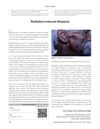 17 citations
,
January 2010 in “International journal of trichology”
17 citations
,
January 2010 in “International journal of trichology” A man experienced hair loss from radiotherapy, which can be temporary or permanent depending on radiation dose, with potential treatments available.
May 2016 in “International Society of Hair Restoration Surgery” Careful planning and technique are crucial for successful hair transplants on irradiated scalps.
 8 citations
,
December 2008 in “Clinical and Experimental Dermatology”
8 citations
,
December 2008 in “Clinical and Experimental Dermatology” Radiotherapy was effective for treating a large scalp plaque of Bowen's disease when other treatments failed.
November 2022 in “bioRxiv (Cold Spring Harbor Laboratory)” Prostaglandin E2 helps prevent hair loss from radiotherapy by protecting hair cells.
December 2011 in “Thorax” People from iodine-deficient areas are more likely to develop hypothyroidism when treated for multi-drug resistant tuberculosis.
 3 citations
,
September 2024 in “Dermatology and Therapy”
3 citations
,
September 2024 in “Dermatology and Therapy” Previous alopecia areata treatments do not affect the long-term effectiveness of ritlecitinib.
November 2024 in “Skin Appendage Disorders” Clinicians should consider individual factors and communicate risks and benefits when prescribing ritlecitinib for adolescent alopecia areata.
July 2025 in “Zenodo (CERN European Organization for Nuclear Research)” Ritlecitinib helps regrow hair in alopecia areata and is safe for long-term use.
 September 2024 in “Drugs & Therapy Perspectives”
 Ritlecitinib effectively regrows hair in severe alopecia areata and is well tolerated.
July 2025 in “Zenodo (CERN European Organization for Nuclear Research)” Ritlecitinib helps regrow hair in alopecia areata and is safe for long-term use.
Hair transplant is effective for treating hair loss caused by radiation and improves patients' quality of life.
1 citations
,
January 2025 in “CPT Pharmacometrics & Systems Pharmacology” Ritlecitinib effectively regrows eyebrow and eyelash hair in alopecia areata, with 50 mg being the best dose.
23 citations
,
October 2024 in “British Journal of Dermatology” Ritlecitinib effectively treats alopecia areata and is safe for long-term use in people 12 and older.
June 2026 in “EJC Paediatric Oncology” High-dose thiotepa and twice-daily treatments increase the risk of permanent hair loss in children receiving craniospinal irradiation.
20 citations
,
December 2021 in “Journal of the American Academy of Dermatology” Continuous treatment with ritlecitinib and brepocitinib is needed to maintain hair regrowth in alopecia areata.