 15 citations
,
February 2003 in “British Journal of Dermatology”
15 citations
,
February 2003 in “British Journal of Dermatology” The study suggests computer-assisted analysis of scalp biopsies could improve hair loss diagnosis but needs more validation.
57 citations
,
January 2022 in “Biomedicines” Curcumin may improve cancer radiotherapy by making cancer cells more sensitive to radiation and protecting normal cells.
 April 2023 in “Journal of Investigative Dermatology”
 An automated system can predict death risk in thin melanoma by analyzing immune cells.
 April 2026 in “Biosensors”
 Red light increases hair follicles and ATP in mouse skin.
 1 citations
,
September 2024 in “arXiv (Cornell University)”
1 citations
,
September 2024 in “arXiv (Cornell University)” Reliable machine learning in medical imaging needs bias checks and data drift detection for consistent performance.
 November 2020 in “Journal of The American Academy of Dermatology”
 Certain immune markers may predict chemotherapy response in mesothelioma, and nivolumab is a tolerable and effective treatment for advanced non-small cell lung cancer.
Developing microRNA-based treatments is hard but has potential.
8 citations
,
September 2011 in “Scanning” Multiphoton microscopy effectively images mouse skin layers and structures.
 December 2020 in “Nippon Laser Igakkaishi”
 Photobiomodulation therapy is beneficial in plastic surgery and dermatology.
July 2025 in “Journal of Investigative Dermatology” Three molecular subtypes of advanced skin T-cell lymphoma were identified, with potential biomarkers for predicting treatment response and disease progression.
June 2013 in “The mental health clinician” Large data can lead to new medical discoveries and personalized medicine.
14 citations
,
September 2006 in “OMICS A Journal of Integrative Biology” DNA microarrays help study skin diseases and biology, leading to advancements in understanding and treatment.
1 citations
,
September 2021 in “Journal of Cosmetic Dermatology” B-mode ultrasonography and shear-wave elastography can help predict androgenetic alopecia early.
16 citations
,
April 2025 in “Journal of the American Academy of Dermatology” Photobiomodulation is safe and effective for treating certain conditions like nerve pain and hair loss.
2 citations
,
September 2022 in “Annals of Oncology” Mirvetuximab soravtansine improves quality of life and reduces symptoms more than standard chemotherapy in ovarian cancer patients.
15 citations
,
November 2018 in “Current radiopharmaceuticals” Melatonin can help prevent and treat skin damage caused by gamma rays.
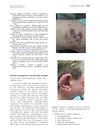
A 72-year-old man was diagnosed with a rare skin form of Rosai-Dorfman disease after years of misdiagnosis.
14 citations
,
June 2021 in “British Journal of Dermatology” The BIOMAP glossary standardizes data to improve research on atopic dermatitis and psoriasis.
2 citations
,
November 2024 in “In Silico Pharmacology”  January 2026 in “Dermatology and Therapy”
 UVFD can help doctors better identify harmful skin lesions on the face, reducing unnecessary biopsies.
 39 citations
,
July 2013 in “Journal of dermatological science”
39 citations
,
July 2013 in “Journal of dermatological science” Hair microRNAs could be effective biomarkers for diagnosing scleroderma.
 1 citations
,
June 2023 in “Radiation oncology journal”
1 citations
,
June 2023 in “Radiation oncology journal” Low-dose radiation therapy may improve brain function in some Alzheimer's patients and is generally well-tolerated.
6 citations
,
July 2020 in “The Kaohsiung Journal of Medical Sciences” Inhibiting the PI3K/Akt pathway may help prevent radiation-induced liver injury.
July 2025 in “Journal of Investigative Dermatology”  April 2018 in “Journal of Investigative Dermatology”
 The new protocol using Cellutome™ and RCM safely assesses wound healing in detail.
January 2017 in “Elsevier eBooks” Radiation therapy for cancer often causes skin problems like redness, dryness, and pain.
22 citations
,
April 2017 in “Journal of Investigative Dermatology” Non-coding RNAs are crucial for skin development and health.
January 2011 in “Junshi yixue” Longer exposure to high-power millimeter wave radiation causes more severe skin damage in mice.
1 citations
,
January 2010 in “Biophysical journal” Hair fluorescence intensity can measure radiation exposure effectively.
1 citations
,
July 2025 in “MedComm – Biomaterials and Applications” Microneedles show promise for cancer diagnosis and treatment due to their minimally invasive nature and effective drug delivery.