20 citations
,
January 2002 in “Laboratory Animals” Mutations in the hairless gene cause hair loss and skin cysts in rhesus macaques.
November 2021 in “Research Square (Research Square)” 4-aminopyridine speeds up and improves skin wound healing.
 13 citations
,
January 2019 in “Skin appendage disorders”
13 citations
,
January 2019 in “Skin appendage disorders” FAPD is a possible diagnosis for hair loss in patients of color and requires multiple evaluations for accurate diagnosis.
 January 2022 in “International journal of Ayurveda and pharma research”
 Premature graying of hair is linked to an imbalance of body energies in Ayurveda and treatment varies based on the specific imbalance.
 March 2024 in “Jordan Journal of Biological Sciences”
 The Pamona community uses 21 types of mushrooms for food, medicine, and other needs, highlighting the importance of conserving these resources.
The document describes a rare case of IFAP syndrome, a genetic condition with symptoms of hair loss, light sensitivity, and scaly skin.
7 citations
,
July 2019 in “Animals” The KRTAP21-1 gene affects wool yield and can help improve wool production.
1 citations
,
January 2015 The gel with apigenin and celery juice promotes hair growth without causing skin irritation.
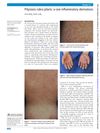 February 2018 in “BMJ case reports”
 An 18-year-old woman was diagnosed with a rare skin condition called Pityriasis rubra pilaris.
13 citations
,
July 2016 in “Indian Journal of Dermatology” DPR can show different hair characteristics, as seen in two brothers with normal hair.
Pilomatricoma is a rare, harmless skin lump that needs accurate diagnosis and timely treatment.
1 citations
,
July 2019 in “Small ruminant research” Nerve growth factor helps cashmere goat hair cells grow by activating a specific protein.
 September 2025 in “Cureus”
 Early recognition and multidisciplinary management are crucial for improving outcomes in Parry-Romberg syndrome.
14 citations
,
June 2021 in “British Journal of Dermatology” The BIOMAP glossary standardizes data to improve research on atopic dermatitis and psoriasis.
January 2010 in “BMC Genomics” Key genes influence cashmere growth cycles, aiding goat breeding.
November 2025 in “Contribuciones a las Ciencias Sociales” PRP is a safe and versatile treatment option, but more standardized clinical trials are needed to confirm its effectiveness.
 March 2010 in “Ejc Supplements”
 ROR-alpha may increase the growth of certain breast cancer cells by boosting aromatase, which could affect breast cancer prognosis.
1 citations
,
December 2016 in “Revista română de medicină de laborator” The NIPAL4 mutation c.527C>A is common in Romanian patients with autosomal recessive congenital ichthyosis.
 June 2026 in “Zenodo (CERN European Organization for Nuclear Research)”
 Rice and guava leaf extracts can improve hair and scalp health.
12 citations
,
January 2013 in “Indian dermatology online journal” Dermatopathia pigmentosa reticularis causes skin discoloration, hair loss, and nail problems.
 9 citations
,
May 2019 in “Journal of dermatological treatment”
9 citations
,
May 2019 in “Journal of dermatological treatment” Apremilast helps regrow hair in hard-to-treat alopecia areata.
 1 citations
,
May 2019 in “Journal of The American Academy of Dermatology”
1 citations
,
May 2019 in “Journal of The American Academy of Dermatology” Mobile app ImageMeter calculates scalp area faster and reliably for alopecia treatment.
1 citations
,
September 2021 Many people don't know what's in their hair products, and most haven't tried ginger hair masks.
December 2021 in “International Journal of Research in Dermatology” PRP shows promise for treating hair loss but needs standardized methods to confirm its effectiveness.
December 2018 in “Bioscience Journal” Leporacarus gibbus mite was found in a domestic rabbit in Espírito Santo, Brazil, for the first time.
3 citations
,
June 2017 in “Journal of Physiology & Pathology in Korean Medicine” Puerariae Radix extract may help hair growth by increasing cell activity.
76 citations
,
February 1993 in “Journal of Biological Chemistry” KAP6 genes are conserved across species and active in hair follicles.
 September 2021 in “CRC Press eBooks”
 Fibrosing alopecia in a pattern distribution is a type of hair loss that may often be overlooked, especially in men.
13 citations
,
April 1982 in “The Journal of Dermatology” Poly(ADP-ribose) synthesis is linked to skin cell differentiation.
Valproic acid and rapamycin protect hair follicle stem cells from damage by activating a protective pathway.