Alopecia areata patients show increased inflammation and OX40 activation, suggesting a new treatment target.
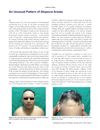 January 2014 in “International Journal of Trichology”
 A man had an unusual type of hair loss that didn't match known patterns and didn't improve with treatment.
October 2022 in “Zenodo (CERN European Organization for Nuclear Research)”  November 2023 in “Bioorganic Chemistry”
 Drugs targeting the Androgen Receptor are effective for treating prostate cancer and other androgen-related conditions.
 July 2022 in “Media Dermato Venereologica Indonesiana”
 The combination of PRP and triamcinolone injections improved hair growth in a man with alopecia areata.
January 2025 in “Mansoura Medical Journal” Age and androgen levels significantly affect meibomian gland structure and function.
11 citations
,
May 2012 in “Genesis” Bmpr2 and Acvr2a receptors are crucial for hair retention and color.
 6 citations
,
April 1996 in “Journal of histochemistry and cytochemistry/The journal of histochemistry and cytochemistry”
6 citations
,
April 1996 in “Journal of histochemistry and cytochemistry/The journal of histochemistry and cytochemistry” TGF-alpha is present in sheep and ferret skin and may affect hair growth without directly stimulating cell proliferation.
January 2026 in “AIP conference proceedings”  September 2023 in “Dermatology and therapy”
 Ritlecitinib effectively improves hair growth in alopecia areata patients, regardless of hair loss pattern.
 January 2007 in “Elsevier eBooks”
 Alopecia areata is a reversible, autoimmune-related hair loss that can have significant emotional impact and uncertain treatment effectiveness.
September 2025 in “e-space (Manchester Metropolitan University)” Blocking androgen receptors helps immune cells better fight certain bacteria.
15 citations
,
March 2015 in “PloS one” Scientists restored fertility in male mice lacking a key fertility gene by using a modified gene.
January 2026 in “International Journal of Biological Macromolecules” Keratin in people with androgenetic alopecia shows specific changes that could help develop new treatments.
January 2021 in “Deep Blue (University of Michigan)” Androgen receptors in the brain affect metabolism and reproduction differently in males and females, and may help manage PCOS symptoms in females.
3 citations
,
July 2025 in “Clinical and Experimental Dermatology” Ritlecitinib may be more effective for severe alopecia areata than conventional treatments.
5 citations
,
April 2024 in “JAAD International” AI can accurately measure hair loss severity in alopecia areata.
 October 2023 in “International Journal of Dermatology and Venereology”
 Platelet-rich plasma may help with hair loss from androgenetic alopecia.
 December 2023 in “Research Square (Research Square)”
 12-Methoxy carnosic acid from rosemary might be a good natural treatment for hair loss.
1 citations
,
October 2008 in “Urology” PSA levels help determine prostate size and guide treatment choices for benign prostatic hyperplasia.
 35 citations
,
May 2019 in “Frontiers in genetics”
35 citations
,
May 2019 in “Frontiers in genetics” Non-coding RNAs play key roles in the hair growth cycle of Angora rabbits.
 7 citations
,
January 1994 in “Annual Reports in Medicinal Chemistry”
7 citations
,
January 1994 in “Annual Reports in Medicinal Chemistry” Understanding how androgens work is key for creating new treatments for prostate issues and hair/skin conditions.
 2 citations
,
December 2019 in “Journal of The European Academy of Dermatology and Venereology”
2 citations
,
December 2019 in “Journal of The European Academy of Dermatology and Venereology” Differences in gene expression and methylation patterns found in AGA patients suggest potential targets for future treatments.
 July 2022 in “The journal of investigative dermatology/Journal of investigative dermatology”
 Scientists created a detailed map of gene activity in different parts of human hair follicles.
 July 2020 in “Bioinformatics and Bioengineering”
 Found key genes affecting hair loss, immune response, and skin development; more research needed for better treatments.
 November 2023 in “ACS Omega”
 New liposome treatment successfully delivers CRISPR to deactivate a key enzyme in androgen-related disorders.
25 citations
,
December 2013 in “Journal of Investigative Dermatology Symposium Proceedings” A new mouse model helps understand and find treatments for alopecia areata.
72 citations
,
November 2002 in “Journal of Investigative Dermatology” Estrogen receptor α controls hair growth cycles and skin thickness in male mice.
2 citations
,
October 1990 in “PubMed” Severe alopecia areata involves higher levels of certain immune cells, which can be normalized with betamethasone.
 2 citations
,
January 2005
2 citations
,
January 2005 Men with a certain type of hair loss (vertex type AGA) may have higher levels of bad fats (triglycerides) and lower levels of good cholesterol (HDL), suggesting they could be at risk for high fat levels in the blood (hyperlipidemia).