Search
for
Sort by
Research
330-360 / 1000+ results
research Exome-wide age-of-onset analysis reveals exonic variants in ERN1, TACR3 and SPPL2C associated with Alzheimer’s disease
Certain genetic variants in ERN1, TACR3, and SPPL2C are linked to when Alzheimer's disease starts.
research What’s new in Birt–Hogg–Dubé syndrome?
New findings suggest the protein linked to Birt–Hogg–Dubé syndrome is important in cell signaling and could affect treatment understanding.
research Compound Heterozygous Mutations in Forkhead Box N1 (FOXN1) Lead to a Severe Immunodeficiency but Normal Hair and Nail Development in Patients
Mutations in the FOXN1 gene cause severe immune issues but don't affect hair and nails.
research Atrichia with papular lesions in two Pakistani consanguineous families resulting from mutations in the human hairless gene
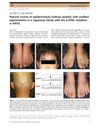
research Natural course of epidermolysis bullosa simplex with mottled pigmentation in a Japanese family with the p.P25L mutation in KRT 5
The p.P25L mutation in the KRT5 gene causes a rare skin condition that worsens over time and may lead to hair loss starting in young adulthood.
research Lamellar ichthyosis with pseudoexon activation in the transglutaminase 1 gene
The boy's severe skin disorder is caused by two new mutations in his TGM1 gene.

research Characterization of novel TMEM173 mutation with additive IFIH1 risk allele
A new mutation in the TMEM173 gene and a risk allele in IFIH1 cause a unique set of immune-related symptoms.

research An autosomal recessive nonsense variant in the EGFR gene induces perinatal lethality in “Blonde d'Aquitaine” calves
A genetic variant in "Blonde d'Aquitaine" calves causes death at birth due to a missing protein.

research Regulation of Mitochondrial Oxidative Metabolism by Tumor Suppressor FLCN
The tumor suppressor gene FLCN affects mitochondrial function and energy use in cells.
research Deregulated expression of E2F1 induces hyperplasia and cooperates with ras in skin tumor development
Overexpression of E2F1 can lead to skin tumors and disrupt hair growth.
research A rare LMNA missense mutation causing a severe phenotype of mandibuloacral dysplasia type A: a case report
A rare genetic mutation caused severe symptoms in a 6-year-old girl with mandibuloacral dysplasia type A.
research CRISPR/Cas9-mediated Generation ofCOL7A1-deficient Keratinocyte Model of Recessive Dystrophic Epidermolysis Bullosa
Scientists created cell lines to study a genetic skin disorder using CRISPR technology.
research Risk of autoimmune diseases in patients with RASopathies: systematic study of humoral and cellular immunity
Patients with RASopathies have a higher risk of autoimmune disorders and should be routinely screened.
research A Missense Mutation within the Helix Termination Motif of KRT25 Causes Autosomal Dominant Woolly Hair/Hypotrichosis
A mutation in the KRT25 gene causes woolly hair and hair loss.
research A case report of a novel homozygote mutation causing severe Leydig cell hypoplasia: insights in the coexistence of nonsense mutation and polymorphism in the same LHCGR gene locus
A new genetic mutation causes severe Leydig cell hypoplasia, affecting sexual development.
research HR Gene Variants Identified in Mexican Patients with Alopecia Areata
A specific gene variant may increase the risk of developing Alopecia Areata.
research Decision letter: Interplay of opposing fate choices stalls oncogenic growth in murine skin epithelium
Skin cells can naturally limit the growth of cancerous changes by balancing cell renewal and differentiation.
research 461 Identification of a Novel Pathogenic XPC:c.2420+1G>C Variant in a Patient with Xeroderma Pigmentosum
A new genetic mutation causing Xeroderma Pigmentosum was found in an 8-year-old girl, affecting her DNA repair.
research An Autosomal Recessive Form of Monilethrix Is Caused by Mutations in DSG4: Clinical Overlap with Localized Autosomal Recessive Hypotrichosis
Mutations in the DSG4 gene cause a severe form of brittle hair and skin issues.
research Commentary on BRCA1-Associated Protein-1 Tumor Predisposition Syndrome in a Patient With Numerous Basal Cell Carcinomas
research 312 CRISPR/Cas9-based targeted genome editing for correction of recessive dystrophic epidermolysis bullosa using iPS cells
The research showed that CRISPR/Cas9 can fix mutations causing a skin disease in stem cells, which then improved skin grafts in mice, but more work on safety and efficiency is needed.
research GJB6 missense variant in a Labrador Retriever with paw pad hyperkeratosis
A genetic variant in the GJB6 gene likely caused the Labrador's paw pad condition.
research Increased retinol‐binding protein (RBP) 4 and anti‐RBP4 antibody in alopecia areata
People with alopecia areata have higher levels of RBP4 protein and antibodies against it.
research A novel mutation in the FERMT1 gene in a Spanish family with Kindler’s syndrome
Researchers found a new mutation in the FERMT1 gene in a Spanish family with Kindler syndrome.
research 302 Availability of mRNA Obtained from Peripheral Blood Mononuclear Cells for Mutational Analysis in Dystrophic Epidermolysis Bullosa
Scientists developed a new way to study mutations in a skin condition using blood cells, which may help diagnose and treat the disease.
research SRD5A3 Is Required for Converting Polyprenol to Dolichol and Is Mutated in a Congenital Glycosylation Disorder
Mutations in the SRD5A3 gene cause a new type of glycosylation disorder by blocking the production of a molecule necessary for protein glycosylation.

research Identification and characterization of genes for skin and hair disorders
New gene variants were found for rare skin and hair disorders, improving understanding and treatment.
research Curly bare (cub), a new mouse mutation on chromosome 11 causing skin and hair abnormalities, and a modifier gene (mcub) on chromosome 5
A new mouse mutation causes skin and hair issues, influenced by another gene.
research C2orf37 mutational spectrum in Woodhouse–Sakati syndrome patients
Truncating mutations in the C2orf37 gene cause Woodhouse–Sakati syndrome.