Frontal Fibrosing Alopecia mainly affects postmenopausal women and is linked to thyroid disease, hyperlipidemia, and anemia.
7 citations
,
August 2019 in “Anais Brasileiros de Dermatologia” More research is needed to understand and treat frontal fibrosing alopecia.

Women with a certain type of hair loss have more copper in the back of their head than the front, and treatment can normalize hair but not copper levels.
 2 citations
,
March 2009 in “Hair transplant forum international”
2 citations
,
March 2009 in “Hair transplant forum international” Men generally have a certain thickness of hair at their hairline.
16 citations
,
April 2020 in “JAMA dermatology” More inflammation leads to faster and worse hair loss in women with frontal fibrosing alopecia.
21 citations
,
March 2018 in “JEADV. Journal of the European Academy of Dermatology and Venereology/Journal of the European Academy of Dermatology and Venereology” 5-alpha-reductase inhibitors may help stabilize or slow down hair loss in some frontal fibrosing alopecia patients, but more research is needed to confirm their effectiveness and safety.
 November 2016 in “Der Hautarzt”
 Hair thinning on top of the head is common in female androgenetic alopecia.
 2 citations
,
January 2014 in “Archives of Aesthetic Plastic Surgery”
2 citations
,
January 2014 in “Archives of Aesthetic Plastic Surgery” The procedure effectively created natural-looking hairlines and improved facial balance in female patients.
A man regrew hair after using a specific cream for skin treatment.
23 citations
,
December 1991 in “Annals of the New York Academy of Sciences” Balding scalps slow down hair growth.
 November 2014 in “Prescriber”
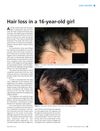
 The 16-year-old girl with hair loss was successfully treated for alopecia areata, leading to significant hair regrowth.
 January 2022 in “Przegla̧d dermatologiczny”
 The exact cause of frontal fibrosing alopecia is unknown, but it's not likely due to sunscreen.
 October 2020 in “Clinical and Experimental Dermatology”
 Hair loss improved after removing pituitary tumor.
 1 citations
,
March 2020 in “Australasian Journal of Dermatology”
1 citations
,
March 2020 in “Australasian Journal of Dermatology” The paper concludes that recognizing bitemporal alopecia areata is important for early treatment and preventing its progression.
 1 citations
,
June 2022 in “PubMed”
1 citations
,
June 2022 in “PubMed” Alopecia causes hair loss and should be treated early, especially scarring types where hair cannot regrow.
 9 citations
,
June 2014 in “British Journal of Dermatology”
9 citations
,
June 2014 in “British Journal of Dermatology” The study found that balding scalps have more thin hairs and larger oil glands, which might contribute to skin conditions related to hair loss.
 1 citations
,
February 2004 in “Medical Hypotheses”
1 citations
,
February 2004 in “Medical Hypotheses” Certain cultural hair practices might cause baldness by affecting natural hair oils and stem cell delivery to hair follicles.
3 citations
,
June 2015 in “CRC Press eBooks” Male pattern hair loss affects up to 80% of men due to genetics and hormone sensitivity.

The hairline can reliably guide neurosurgical planning.
8 citations
,
February 1982 in “Plastic & Reconstructive Surgery” Scalp reduction can effectively treat male pattern baldness, especially when combined with hair transplants.
January 2020 in “JAAD case reports” Hair loss condition FFA was seen before the appearance of skin depigmentation vitiligo in a patient.
2 citations
,
February 2023 in “International Journal of Cosmetic Science” Hair loss is more common in areas with multiple hair strands, especially in men.
May 2016 in “DOAJ (DOAJ: Directory of Open Access Journals)” Asian women often experience distinct hair thinning at the top of the head.
 1 citations
,
April 2021 in “Journal of The American Academy of Dermatology”
1 citations
,
April 2021 in “Journal of The American Academy of Dermatology” Some overweight or obese men with long-term frontal fibrosing alopecia may have abnormal sex hormone levels.
 September 2025 in “Dermatology Online Journal”
 Biopsy is crucial for diagnosing unusual hair loss causes like lymphoma.
 12 citations
,
January 2016 in “Skin appendage disorders”
12 citations
,
January 2016 in “Skin appendage disorders” Repeated botulinum toxin injections for forehead wrinkles may cause hairline recession in some women.
 April 2016 in “Expert opinion on orphan drugs”
 There are various treatment options for frontal fibrosing alopecia.
2 citations
,
January 2010 20 citations
,
February 2012 in “Archives of dermatology” Leg hair transplants can create a natural-looking hairline and show successful growth over several years.
45 citations
,
April 2013 in “Dermatologic surgery” Hair transplantation might work for some people with frontal fibrosing alopecia, but more research is needed.