25 citations
,
April 2008 in “Clinical and experimental dermatology” EFFC might be common but underreported.
 18 citations
,
May 2013 in “Journal of The American Academy of Dermatology”
18 citations
,
May 2013 in “Journal of The American Academy of Dermatology” EVG staining is the most reliable method for diagnosing alopecia.
28 citations
,
December 2002 in “Der Hautarzt” TrichoScan accurately measures hair growth and loss, showing increased hair counts and thickness with treatment.
January 1994 in “Journal of the society of cosmetic chemists” December 2025 in “JEADV Clinical Practice” A woman with hair loss condition experienced rare hair color return, suggesting it might help diagnose the condition.
A new 3D breast tumor model helps test drug effects more accurately than traditional methods.
February 2025 in “Journal of the European Academy of Dermatology and Venereology” UVFD helps detect hair follicles in alopecia areata better than traditional methods.
 November 2022 in “The journal of investigative dermatology/Journal of investigative dermatology”
 Researchers made a detailed map of gene activity for different parts of human hair follicles to help create targeted hair disorder treatments.
13 citations
,
August 2000 in “Blood” Measuring minimal residual disease on day 15 helps identify high-risk leukemia patients.
27 citations
,
January 2016 in “Indian Dermatology Online Journal” Dermoscopy is better than a magnifying lens for examining skin because it shows deeper details.
 52 citations
,
January 2001 in “Eye”
52 citations
,
January 2001 in “Eye” Treating cystoid macular oedema in uveitis is difficult and risky.
 39 citations
,
June 2017 in “Scientific Reports”
39 citations
,
June 2017 in “Scientific Reports” Different lab conditions and light treatment methods change how human skin cells respond to light therapy.
1 citations
,
November 2003 in “Humana Press eBooks” AFM helps study hair surfaces for dermatology, cosmetics, and forensics.
November 2019 in “Journal of Vertebrate Biology” QIA-64 software can measure straight wire lengths accurately but needs improvement for curved wires and width measurements.
June 2026 in “Frontiers in Medicine” The excimer laser is a promising and safe treatment for frontal fibrosing alopecia.
 6 citations
,
July 2005 in “Farmaco”
6 citations
,
July 2005 in “Farmaco” A quick and simple method was created to identify minoxidil in hair-growth products using micellar electrokinetic capillary chromatography.
September 2023 in “Journal of the American Academy of Dermatology” Patients often overestimate their skin type, affecting sun protection and treatment plans.
5 citations
,
October 2020 in “Bioengineering & translational medicine” Researchers used a laser to create advanced skin models with hair-like structures.
July 2024 in “Journal of Investigative Dermatology” RXR and RAR proteins in skin may help with cell growth, hair growth, and gland function.
 4 citations
,
May 2013 in “Dermatologic Surgery”
4 citations
,
May 2013 in “Dermatologic Surgery” Three new techniques simplify and improve the preparation of tissue samples for skin cancer surgery.
6 citations
,
August 2024 in “Biomacromolecules” The model helps test drugs for clubfoot fibrosis by mimicking cell environments and shows minoxidil reduces harmful collagen links.
20 citations
,
January 2013 in “Plastic & Reconstructive Surgery” The new device safely and effectively rejuvenates skin, making it thicker and healthier.
 2 citations
,
December 2021
2 citations
,
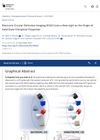
December 2021 The research found that the properties of solid-state Electronic Circular Dichroism (ss-ECD) are influenced by the orientation of local crystals, which could help in examining and mapping chiral materials like pharmaceutical ingredients.
 April 2023 in “The journal of investigative dermatology/Journal of investigative dermatology”
 Folliculotropic mycosis fungoides has unique molecular features and cell interactions that could guide targeted therapy.
6 citations
,
March 2018 in “The American journal of dermatopathology/American journal of dermatopathology” BerEP4 and CD34 staining can help tell apart tricholemmoma from basal cell carcinoma.
January 2014 in “cIRcle (University of British Columbia)” Photoacoustic imaging can detect prostate brachytherapy seeds better with enhanced contrast methods, but depth limits remain.
15 citations
,
May 2009 in “Chemical Physics Letters” A new method accurately measures molecular movement without complex modeling.
32 citations
,
July 2003 in “Histochemistry and Cell Biology” April 2014 in “Investigative Ophthalmology & Visual Science”