July 2026 in “Frontiers in Immunology” New hair follicles can form in wounds through immune and skin cell interactions, offering potential treatments for hair loss and scarless healing.
 July 2026 in “Plastic & Reconstructive Surgery Global Open”
 Plant exosome injections may help regrow hair and reduce inflammation.
 June 2026 in “bioRxiv (Cold Spring Harbor Laboratory)”
 The ointment with copper improves wound healing and reduces scarring.
May 2026 in “Current Medicinal Chemistry” Placental extracts may help with aging and some chronic diseases, but more research is needed.
 March 2026 in “Biomolecules”
 MicroRNAs play a key role in controlling hair growth and quality in sheep and goats.
 January 2026 in “Frontiers in Pharmacology”
 Personalized medicine and new technologies offer promising strategies for better skin disease treatments.
October 2025 in “Journal of Ethnopharmacology” Andrographolide from Andrographis paniculata promotes hair growth and could be a natural treatment for hair loss.
August 2025 in “Journal of Polymer Science” AcD scaffolds improve tissue repair and regeneration by combining stem cells with a supportive matrix.
 July 2025 in “International Journal of Dermatology Venereology and Leprosy Sciences”
 The human amniotic membrane is a promising material for skin treatments and hair growth.
May 2025 in “Medicine and ecology” The effectiveness of platelet-rich plasma is unclear due to inconsistent preparation methods.
 February 2025 in “Biomolecules”
 Melatonin can help or hinder hair growth depending on the dose.
 January 2025 in “bioRxiv (Cold Spring Harbor Laboratory)”
 Rhamnose may help hair growth and pigmentation, making it a potential treatment for hair loss.
 December 2024 in “Molecules”
 Bovine milk-derived exosomes may improve skin, hair, gut, brain, and bone health.
 August 2024 in “International Journal of Dermatology”
 Exosomes show promise for treating hair loss and need more research.
July 2024 in “Journal of Investigative Dermatology” Taxane chemotherapy can cause permanent hair loss by damaging hair follicles and altering their DNA.
April 2024 in “Authorea (Authorea)” Understanding the nanoscale structure of skin fibrosis can improve knowledge of wound healing and tissue regeneration.
 November 2023 in “Frontiers in cell and developmental biology”
 Hair aging is caused by stress, hormones, inflammation, and DNA damage affecting hair growth and color.
 August 2023 in “International journal of medical science and clinical research studies”
 PRP therapy helps heal pediatric surgical wounds faster and with fewer scars but needs more research for safety and cost.
 July 2023 in “Biomolecules”
 The circadian clock plays a key role in hair growth and its disruption can affect hair regeneration.

Sensory neuron and Merkel cell changes in the skin happen independently during normal skin maintenance.
 October 2022 in “Frontiers in Cell and Developmental Biology”
 Aging skin is affected by inflammation, reduced stem cell function, and slower wound healing.
January 2022 in “SSRN Electronic Journal” Mouse hair follicles age, causing more white hairs due to fewer pigment stem cells.
The document concluded that home treatments are needed for hair loss control, but professionals should better understand how these treatments work.
 January 2018 in “Stem cell biology and regenerative medicine”
 The conclusion is that the nuclear lamina and LINC complex in skin cells respond to mechanical signals, affecting gene expression and cell differentiation, which is important for skin health and can impact skin diseases.
 September 2012 in “Medicina estética/Medicina estética”
 More research is needed to confirm if laser therapy effectively treats hair loss.
 57 citations
,
May 2007 in “Nature”
57 citations
,
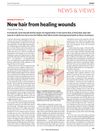
May 2007 in “Nature” Adult mice can grow new hair from skin wounds.
 4 citations
,
July 2021 in “bioRxiv (Cold Spring Harbor Laboratory)”
4 citations
,
July 2021 in “bioRxiv (Cold Spring Harbor Laboratory)” BLMP-1 is important for regular molting and gene expression cycles in worms.
April 2023 in “The journal of investigative dermatology/Journal of investigative dermatology” MEF2C is crucial for normal hair cycle progression.
January 2021 in “Research Square (Research Square)” Angio PRP speeds up skin wound healing by improving cell growth and blood vessel formation.
 September 2016 in “Journal of Dermatological Science”
 Certain factors can start hair growth in adult skin by making cells communicate and form new hair follicles.