 December 2008 in “The American Journal of Cosmetic Surgery”
 Multi-pass laser skin treatments improved healing, reduced pain, and had no major complications.
 1 citations
,
January 2025 in “Advances in Dermatology and Allergology”
1 citations
,
January 2025 in “Advances in Dermatology and Allergology” Platelet-rich fibrin helps heal stubborn wounds in rats by reducing inflammation and boosting tissue repair.
8 citations
,
January 2025 in “JADA Foundational Science” Photobiomodulation therapy can reduce pain and inflammation and help heal tissues, but more research is needed to improve its effectiveness and safety.
 December 2020 in “Nippon Laser Igakkaishi”
 Photobiomodulation therapy is beneficial in plastic surgery and dermatology.
2 citations
,
July 2023 in “Vrach” PRP therapy is effective and safe for treating various diseases.
 August 1995 in “Journal of The European Academy of Dermatology and Venereology”
 New therapy helps treat hair loss.
Medical Hair Restoration added a non-surgical hair therapy program to help people with early hair loss.
 February 2025 in “Journal of Biophotonics”
 Dual-wavelength laser therapy promotes better hair regrowth than single-wavelength treatments.
8 citations
,
August 2023 in “Journal of Investigative Dermatology” Corin speeds up wound healing by helping skin cells move and grow.
 November 2024 in “Journal of Investigative Dermatology”
 Reishi mushroom extract may help treat hair loss.
January 2024 in “Journal of Health Study and Medicine” Platelet-rich plasma helps heal and repair tissues, especially in gynecology and obstetrics.
 January 2024 in “Annals of Agricultural and Environmental Medicine”
 Red LED light therapy helps reduce hair loss and improves hair regrowth in long COVID patients.
 April 2018 in “International journal of nanotechnology and nanomedicine”
 Low-level laser therapy effectively reduces the size of pressure ulcers compared to placebo.
PRP is a safe, low-cost treatment used in dermatology for hair loss, skin rejuvenation, scar repair, and wound healing.
2 citations
,
January 2021 in “Springer eBooks” PRP is useful for hair restoration, facial rejuvenation, and wound healing.
35 citations
,
December 2014 in “Lasers in surgery and medicine” Red light promotes hair growth by directly stimulating hair cells and improving cell communication.
 April 2024 in “Lasers in medical science”
 Near-infrared LED light improves skin rejuvenation and hair growth better than white LED light.
39 citations
,
January 2021 in “BioMed Research International” PRP treatments need standardization for consistent results.
July 2024 in “International Journal of Molecular Sciences” RF-based therapies might help treat hair loss.
 36 citations
,
April 2016 in “Experimental Dermatology”
36 citations
,
April 2016 in “Experimental Dermatology” Photobiomodulation may help with hair growth and wound healing, but research is inconsistent and needs better quality studies.
 14 citations
,
July 2021 in “Biomedicines”
14 citations
,
July 2021 in “Biomedicines” Platelet-rich treatments can help improve wound healing and tissue repair.
2 citations
,
June 2024 in “Skin Research and Technology” Low-level laser therapy can boost hair growth and speed up wound healing.
 February 2023 in “Frontiers in Bioengineering and Biotechnology”
 Optical imaging and light therapy show promise for diagnosing and treating liver injury caused by surgery.
 60 citations
,
November 2020 in “International Journal of Medical Sciences”
60 citations
,
November 2020 in “International Journal of Medical Sciences” NIR light therapy may effectively treat eye diseases and improve brain function without side effects.
 November 2023 in “ACS Nano”
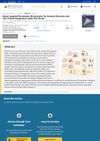
 The device helps restore sensation and grow new hair follicles after skin burns.
 December 1997 in “Proceedings of SPIE, the International Society for Optical Engineering/Proceedings of SPIE”
 Low-energy laser therapy can improve scalp alopecia treatment when combined with classical methods.
 1 citations
,
February 2023 in “International journal of research - granthaalayah”
1 citations
,
February 2023 in “International journal of research - granthaalayah” Electromagnetic energy from wound dressing paste can disrupt skin lipid droplets, possibly affecting cancer development.

Microneedling with exosome therapy may effectively regrow hair without side effects.
Low level laser or LED therapy combined with infiltrations may help hair growth.

Elastin-like recombinamers show promise for better wound healing and skin regeneration.