192 citations
,
October 1998 in “Experimental Dermatology” Androgenetic alopecia involves complex hair follicle changes and knowledge gaps remain.

Researchers found genes in sheep that may affect hair growth and wool quality.
9 citations
,
June 2014 in “Molecular biology reports” KAP9.2 and Hoxc13 genes are important for cashmere growth and vary in activity during different stages.
6 citations
,
October 2003 in “Journal of applied polymer science” A new method using poly(ethylene imine) improves hair dyeing at lower temperatures with better color retention.
 9 citations
,
April 2019 in “Journal of structural biology”
9 citations
,
April 2019 in “Journal of structural biology” Hair's internal fibers are arranged in a pattern that doesn't let much water in, and treatments like oils and heat change how much water hair can absorb.
 2 citations
,
January 2015 in “Sen'i Gakkaishi”
2 citations
,
January 2015 in “Sen'i Gakkaishi” Washing permed hair after using thioglycolic acid helps reform strong bonds, making hair stronger.
4 citations
,
June 1983 in “The Journal of dermatologic surgery and oncology” Synthetic fiber hair implants often cause complications and are not very successful.
 35 citations
,
April 2014 in “Journal of proteomics”
35 citations
,
April 2014 in “Journal of proteomics” Feed restriction in sheep leads to finer wool fibers but may reduce wool quality.
 8 citations
,
November 2019 in “Journal of Natural Fibers”
8 citations
,
November 2019 in “Journal of Natural Fibers” Adding human hair to clayey soil makes it stronger, even after freeze-thaw cycles, and is eco-friendly and cheap.
4 citations
,
July 2024 in “Pharmacology Research & Perspectives” Ritlecitinib is safe and may effectively treat alopecia areata.
 13 citations
,
January 1995 in “Journal of the American Institute for Conservation”
13 citations
,
January 1995 in “Journal of the American Institute for Conservation” Researchers developed a less damaging way to extract red dyes from wool using EDTA and DMF, preserving the fiber's strength for further analysis.
 11 citations
,
January 2006 in “International Journal of Cosmetic Science”
11 citations
,
January 2006 in “International Journal of Cosmetic Science” Some oils can penetrate hair and reduce the stickiness between fibers, but mineral oil cannot.
27 citations
,
September 1994 in “The journal of investigative dermatology/Journal of investigative dermatology” Small amounts of Vitamin D3 can boost hair growth, but too much can stop it.
January 2010 in “EPub Bayreuth (University of Bayreuth)” Polyquaternium-87 reduces hair friction the most among tested polymers.
 18 citations
,
January 2008 in “Sen'i Gakkaishi”
18 citations
,
January 2008 in “Sen'i Gakkaishi” Thioglycolic acid and L-cysteine change hair structure differently during perms, affecting hair strength and curling efficiency.
 2 citations
,
December 2019 in “Textile Research Journal”
2 citations
,
December 2019 in “Textile Research Journal” L-cysteine and ultrasound successfully improved rabbit hair fibers for industrial use.
6 citations
,
December 2019 in “International Journal of Cosmetic Science” White hair has weaker tryptophan fluorescence than other unpigmented fibers, possibly due to UV exposure or unknown substances.
November 2025 in “Interdisciplinary materials” The new silk suture with silver and curcumin helps heal wounds faster and fights bacteria.
January 2008 in “Chinese Journal of Spectroscopy Laboratory” Cysteine formation on hair indicates damage, best detected at pH 4.5.
 January 2005 in “Seibutsu Butsuri/Seibutsu butsuri”
 Chemical treatments damage hair more than UV exposure, making it thinner and less flexible.
42 citations
,
January 2005 in “Applied spectroscopy” Hair from breast cancer patients shows changes in structure and composition, and a test using these changes detected cancer but also falsely identified some healthy samples as cancerous.
November 2022 in “International journal of trichology” Glyoxylic acid straighteners cause more protein loss but have similar hair strength effects as traditional alkaline straighteners.
 June 2021 in “Research Square (Research Square)”
 Dyed chitin nanofibers are strong, colorful, and water-resistant, enhancing resin strength and color.
12 citations
,
October 1947 in “Journal of the Society of Dyers and Colourists” Mercuric acetate makes wool unshrinkable by changing its elastic properties.
 3 citations
,
January 2004 in “Sen i Gakkaishi”
3 citations
,
January 2004 in “Sen i Gakkaishi” DTDG in hair treatments reduces damage and preserves hair structure.
Prussian Blue causes hair cuticles to detach, weakening the hair.
38 citations
,
May 2000 in “Livestock production science” Giving high-quality protein or methionine supplements helps improve hair growth in Angora goats and, to a lesser extent, in Cashmere goats.
 4 citations
,
August 2014 in “Journal of molecular structure”
4 citations
,
August 2014 in “Journal of molecular structure” Chemical treatments on bleached black hair change its internal structure by breaking and reforming bonds, and treatments with hydrolyzed eggwhite protein help repair it.
 11 citations
,
December 2010 in “Archives of Dermatology”
11 citations
,
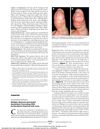
December 2010 in “Archives of Dermatology” A man with rare skin changes on his fingers was diagnosed with multiple myeloma-linked amyloidosis.
2 citations
,
January 2023 in “Biomedicines” The treatment combining laser and fetal fibroblasts effectively reduces scarring.