
Not having the gene PLAAT3 leads to fat loss, high insulin resistance, and abnormal fat levels in the blood due to a disruption in fat cell development and function.
July 2025 in “Frontiers in Medicine” Mutations in the LIPH gene cause woolly hair in a child.
1 citations
,
December 2016 in “Revista română de medicină de laborator” The NIPAL4 mutation c.527C>A is common in Romanian patients with autosomal recessive congenital ichthyosis.
35 citations
,
February 2003 in “Biochimica et Biophysica Acta (BBA) - General Subjects” Lead can help reveal and organize lipids in human hair.
12 citations
,
October 1978 in “PubMed” Ro 10-9359 is an effective treatment for severe psoriasis but can cause side effects.
 5 citations
,
July 2020 in “JAMA Dermatology”
5 citations
,
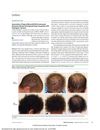
July 2020 in “JAMA Dermatology” Minoxidil solution applied twice daily improved hair growth in patients with Woolly Hair/Hypotrichosis due to LIPH gene issues, with mild side effects.
25 citations
,
May 2016 in “Molecular biology of the cell” A protein in plants needs to bind two lipids to help with root hair growth, and this process is similar across different plant species.
41 citations
,
September 2021 in “Materials” Lipid-based delivery systems can improve tissue repair and regeneration when combined with cell-based therapies.
October 2025 in “Our Dermatology Online” Tranexamic acid and oral retinoids may effectively treat lichen plan pigmentosus.
 January 2019 in “Springer eBooks”
 Modified HDL can better deliver drugs and genes, potentially improving treatments and reducing side effects.
 20 citations
,
December 1995 in “International Journal of Pharmaceutics”
20 citations
,
December 1995 in “International Journal of Pharmaceutics” Liposomes can make the antiandrogen RU 58841 more effective for skin application by reducing absorption, increasing skin retention, and targeting sebaceous structures.
 53 citations
,
June 2012 in “Annales d'Endocrinologie”
53 citations
,
June 2012 in “Annales d'Endocrinologie” The document concludes that recognizing and properly diagnosing lipodystrophy syndromes is crucial for effective management and treatment.

Optimized liposomes can improve drug delivery and effectiveness.
 36 citations
,
August 2011 in “Journal of dermatological science”
36 citations
,
August 2011 in “Journal of dermatological science” Human hair has a protective lipid layer that can be damaged by moisture and treatments, affecting hair growth and health.
 1 citations
,
February 2009 in “Journal of Investigative Dermatology”
1 citations
,
February 2009 in “Journal of Investigative Dermatology” Lipase H is important for hair follicle function and shaping hair fibers.
258 citations
,
July 2005 in “Journal of lipid research” DGAT1 enzyme helps make diacylglycerols, waxes, and retinyl esters.
26 citations
,
January 2005 in “PubMed” RUM-loaded SLN shows promise for treating acne and hair loss topically.
Liposomes with minoxidil and PEP penetrate skin slowly but reach deeper layers than foam.
September 2025 in “Indian Journal of Dermatology” A Turkish woman has a hair condition caused by a LIPH gene mutation.
1 citations
,
September 2020 in “Journal of dermatology” Researchers found a new mutation in the LIPH gene of a woman with a rare hair condition.
 3 citations
,
October 2021 in “Brain Sciences”
3 citations
,
October 2021 in “Brain Sciences” Long-term use of Risperidone may be linked to a serious skin condition in bipolar patients, affecting their overall well-being.
 20 citations
,
October 2008 in “European journal of endocrinology”
20 citations
,
October 2008 in “European journal of endocrinology” Lower lipin 1β in belly fat is linked to insulin resistance in people with polycystic ovary syndrome.
30 citations
,
November 2005 in “The journal of investigative dermatology. Symposium proceedings/The Journal of investigative dermatology symposium proceedings” The lipid in human hair follicles acts as a barrier, similar to the skin's lipid layer.
13 citations
,
November 1996 in “International Journal of Dermatology” Liposomes can improve the effectiveness of skin treatments.
January 2005 in “Life sciences” Targeting LPA could help treat skin disorders.
1 citations
,
January 2019 in “Archives of Clinical and Medical Case Reports” Changing hair's surface and structure can help protect its natural oils from being washed away.
 61 citations
,
June 2010 in “European Journal of Pharmaceutics and Biopharmaceutics”
61 citations
,
June 2010 in “European Journal of Pharmaceutics and Biopharmaceutics” Cationic polymers improved liposome stability and increased skin absorption of aciclovir and minoxidil.
43 citations
,
July 2005 in “Journal of Chromatography B” A new method accurately measures hair lipids, revealing individual differences.
 January 2020 in “International Journal of PharmTech Research”
 A man with severe leprosy developed painless ulcers and numbness, treated successfully with multiple drugs and vitamins.
 August 2016 in “Journal of Investigative Dermatology”
 Researchers found a new genetic mutation linked to a hair condition in a Japanese boy.