 June 2026 in “bioRxiv (Cold Spring Harbor Laboratory)”
 Controlled microtrauma can help skin heal with hair growth instead of scars.
 47 citations
,
July 2013 in “Pharmacological Reviews”
47 citations
,
July 2013 in “Pharmacological Reviews” Regenerative pharmacology, which combines drugs with regenerative medicine, shows promise for repairing damaged body parts and needs more interdisciplinary research.
59 citations
,
August 2024 in “Cell stem cell” 4 citations
,
May 2009 in “Wound Repair and Regeneration” Genetically modified cells can regenerate skin and hair in rats.
 January 2026 in “Archives of Internal Medicine Research”
 PRP, exosomes, and physical therapies show promise for hair and tissue repair, but need more research for optimization.
 2 citations
,
July 2005 in “International Joint Conference on Artificial Intelligence”
2 citations
,
July 2005 in “International Joint Conference on Artificial Intelligence” EREG therapy may help treat hair loss by promoting hair growth.

The new biomimetic skin heals wounds faster and better than traditional treatments, without scarring.
RCS-01 cell therapy is safe and improves skin gene expression.
August 2023 in “bioRxiv (Cold Spring Harbor Laboratory)” Axolotls regenerate their spinal cord through a signal that recruits cells, influenced by cell sensitivity and signal spread.
 September 2025 in “International Journal of Innovative Technologies in Social Science”
 Red light therapy may help rejuvenate skin and regrow hair.
 June 2024 in “Stem cell research & therapy”
 Regenerative medicine shows promise for treating skin disorders like hair loss and vitiligo.
 February 2025 in “Stem Cell Research & Therapy”
 Hair follicle regeneration is advancing but still faces challenges in stability and clinical use.
2 citations
,
September 2025 in “Journal of Clinical Medicine” Regenerative medicine could revolutionize aesthetic surgery, but needs careful validation and ethical use.
 2 citations
,
January 2022 in “Stem cell biology and regenerative medicine”
2 citations
,
January 2022 in “Stem cell biology and regenerative medicine” The book "Hair Follicle Regeneration" discusses the potential of regenerating human hair follicles or activating dormant ones as a possible cure for baldness, and the promising role of new technologies like 3D printing in this field.
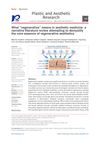 February 2026 in “Plastic and Aesthetic Research”
 Regenerative aesthetic medicine aims to restore tissue function, but needs more consistent evidence and standardized practices.
 188 citations
,
March 2018 in “Frontiers in Immunology”
188 citations
,
March 2018 in “Frontiers in Immunology” Regulatory T-cells are important for healing and regenerating tissues in various organs by controlling immune responses and aiding stem cells.

Regenerative cosmetics can improve skin and hair by reducing wrinkles, healing wounds, and promoting hair growth.
 January 2016 in “Springer eBooks”
 New materials and methods could improve skin healing and reduce scarring.
16 citations
,
January 2025 in “Burns & Trauma” Nanomedicine-based immunotherapy shows promise in improving tissue repair and regeneration.
 28 citations
,
December 2012 in “The American Journal of Cosmetic Surgery”
28 citations
,
December 2012 in “The American Journal of Cosmetic Surgery” Proteins from stem cells improved hair growth in patients with hair loss.
 1 citations
,
January 2021 in “Journal of Cancer Therapy”
1 citations
,
January 2021 in “Journal of Cancer Therapy” Regenerative medicine may help reduce radiotherapy side effects like skin cancer, fibrosis, pain, and hair loss.
4 citations
,
August 2024 in “Dermatological Reviews” Stem cells, PRP, and exosomes help skin heal and rejuvenate, but more research is needed.
 252 citations
,
February 2018 in “npj Regenerative Medicine”
252 citations
,
February 2018 in “npj Regenerative Medicine” Understanding different species' regeneration can improve mammalian healing.
November 2025 in “International Journal of Innovative Research and Scientific Studies” Regenera Activa AMT effectively improves hair growth and reduces hair loss in androgenetic alopecia.
 2 citations
,
June 2022 in “Cosmoderma”
2 citations
,
June 2022 in “Cosmoderma” Regenerative medicine shows promise for improving hair and skin but needs more research for standard use.
 85 citations
,
December 2017 in “Developmental Biology”
85 citations
,
December 2017 in “Developmental Biology” Mammals might fail to regenerate not because they lack the right cells, but because of how cells respond to their surroundings, and changing this environment could enhance regeneration.
 64 citations
,
August 2013 in “Mayo Clinic Proceedings”
64 citations
,
August 2013 in “Mayo Clinic Proceedings” Wound healing insights can improve regenerative medicine.
Autologous Regenerative Therapy may improve hair restoration by using stem cells from fat.
 September 2025 in “PubMed”
 Mechanical stimulation and new therapies show promise for hair regrowth.
January 2018 in “International Educational Applied Scientific Research Journal” The Rigenera method improved hair thickness and reduced hair loss in patients.