 December 2024 in “Deleted Journal”
 Herbal hair oils can reduce hair loss and improve scalp health.
December 2024 in “Skin Appendage Disorders” More rigorous and diverse research is needed to improve diagnosis and treatment of Lichen Planopilaris.
November 2024 in “Revista fisio&terapia.” JAK inhibitors show promise for treating Alopecia Areata, but more research is needed for better, accessible treatments.
 September 2024 in “Health of Man”
 Low-dose dutasteride effectively and safely promotes hair growth in men with androgenetic alopecia.
 September 2024 in “Journal of Cosmetic Dermatology”
 Robotic hair transplants are easier and quicker to learn than traditional methods.
September 2024 in “Revista Foco” Platelet-Rich Plasma (PRP) is a safe and effective tool for facial rejuvenation and scar treatment.
 August 2024 in “Nihon Ika Daigaku Igakkai Zasshi”
 The study made scar tissue transparent to better understand its structure.
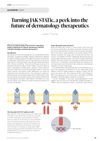 August 2024 in “New Zealand Medical Student Journal”
 JAK inhibitors show promise for treating skin diseases effectively and safely.
 July 2024 in “Journal Of Stem Cell Research”
 Mesenchymal stem cells improve skin appearance and structure in dermatology and aesthetic medicine.
 June 2024 in “British Journal of Dermatology”
 Hidradenitis suppurativa has had many names, but its naming is still not agreed upon.
June 2024 in “Regenerative Therapy” iPSCs show promise for hair regeneration but need more research to improve reliability and effectiveness.
 January 2024 in “Endocrine and metabolic science”
 Different types of PCOS need specific diagnosis methods and treatments.
January 2024 in “Updates in clinical dermatology” Photobiomodulation effectively stimulates hair growth and reduces hair loss.
 December 2023 in “Sains Malaysiana”
 The enzyme Rand protease works well for leather dehairing and its stability is important, with Leu75 playing a key role.
 November 2023 in “Computational and Structural Biotechnology Journal”
 A single robotic system can accurately harvest and implant hair grafts, showing promise for real-world use.
 November 2023 in “The journal of investigative dermatology/Journal of investigative dermatology”
 The document concludes that a new questionnaire to assess mental health in alopecia patients shows low rates of seeking mental health services and support groups.
August 2023 in “Zenodo (CERN European Organization for Nuclear Research)” PRP therapy may improve healing in children's surgical wounds.
 August 2023 in “International journal of medical science and clinical research studies”
 PRP therapy helps heal pediatric surgical wounds faster and with fewer scars but needs more research for safety and cost.
 July 2023 in “Revista Ibero-Americana de Humanidades, Ciências e Educação”
 Combining ultrasound and vacuum therapy effectively reduces cellulite and improves skin texture.
A new image-based method improves accuracy in measuring hair loss in mice.
April 2023 in “Journal of Investigative Dermatology” A new image-based method improves accuracy in measuring hair loss in mice.
ILC1-like cells may contribute to hair loss in alopecia areata.
October 2022 in “The Laryngoscope” The InCISE score is a promising tool for assessing wound healing in head and neck surgery but needs more research for broader use.
The Breast Utility Instrument was developed to assess quality of life in breast cancer patients.
 January 2021 in “Clinical dermatology open access journal”
 Dermatologists in Western Rajasthan often prescribe doxepin for elderly patients with skin and mental health issues.
November 2019 in “Journal of Vertebrate Biology” QIA-64 software can measure straight wire lengths accurately but needs improvement for curved wires and width measurements.
 April 2019 in “Journal of Investigative Dermatology”
 The search scheme SMRI is faster and more secure for retrieving encrypted data from the cloud.
 December 2018 in “Lasers in Surgery and Medicine”
 Science improves peace by advancing medical treatments, like laser therapies and non-invasive imaging.
 October 2018 in “InTech eBooks”
 Better tools are needed to assess alopecia effectively.
 February 2018 in “British Journal of Dermatology”
 We need better research to improve alopecia treatment and patient care.