 126 citations
,
April 2010 in “Seminars in Cancer Biology”
126 citations
,
April 2010 in “Seminars in Cancer Biology” Deregulation of stem cell function is central to the development of some cancers.
69 citations
,
January 2005 in “The Journals of Gerontology Series A” Short telomeres may cause symptoms like hair loss and osteoporosis, offering insights into aging.
 53 citations
,
May 1987 in “The Lancet”
53 citations
,
May 1987 in “The Lancet” The document suggests a possible link between Crohn's disease and Johne's disease and calls for more research.
49 citations
,
August 2022 in “Materials Today Bio” 3D bioprinting shows promise for creating functional organs and models for urological diseases.
46 citations
,
June 2015 in “American Journal Of Pathology” Diabetes causes lasting cell dysfunctions, leading to serious complications even after blood sugar is controlled.
 44 citations
,
May 2012 in “Endocrinology”
44 citations
,
May 2012 in “Endocrinology” High levels of androgens during early development may cause PCOS-like symptoms.
 43 citations
,
October 2013 in “Journal of Investigative Dermatology”
43 citations
,
October 2013 in “Journal of Investigative Dermatology” Organotypic culture systems can grow skin tissues that mimic real skin functions and are useful for skin disease and hair growth research, but they don't fully replicate skin complexity.
32 citations
,
August 2024 in “Journal of Investigative Dermatology” In vitro skin models are improving but still need more innovation to fully replicate human skin.
 32 citations
,
January 2005 in “Advances in Biochemical Engineering / Biotechnology”
32 citations
,
January 2005 in “Advances in Biochemical Engineering / Biotechnology” Fetal wounds heal without scarring because of different biological factors, which could help improve adult wound healing.
30 citations
,
January 1994 Strain H61 may reduce some ageing symptoms like bone loss and hair loss.
28 citations
,
April 2021 in “Biomedicines” Creating fully functional in vitro hair follicles for alopecia treatment is still challenging.
26 citations
,
October 2020 in “Biomedicines” Bioengineered skin models help reduce animal testing and advance research in cosmetics and skin disease.
20 citations
,
November 2021 in “Frontiers in cell and developmental biology” Skin organoids from stem cells could better mimic real skin but face challenges.
 14 citations
,
May 2022 in “Asian Journal of Pharmaceutical Sciences”
14 citations
,
May 2022 in “Asian Journal of Pharmaceutical Sciences” New hair follicle-targeting treatments show promise for hair disorders but need more research on safety and effectiveness.
13 citations
,
July 2024 in “Circulation Research” The epicardium is vital for heart repair and regeneration, offering potential for new heart disease therapies.
13 citations
,
March 2024 in “Cell Transplantation” Engineered skin tissue is a promising tool for safer cosmetic testing.
13 citations
,
January 2012 in “Dermatologic surgery” The trichometer is a quick and reliable tool for measuring hair quantity.
12 citations
,
September 2024 in “JID Innovations” Skin-on-a-chip devices better mimic human skin for research.
9 citations
,
May 2014 in “BMC medical genetics” A woman with a unique syndrome similar to TRPS has a genetic change near the TRPS1 gene, affecting its regulation.
 2 citations
,
January 2023 in “Applied Science and Convergence Technology”
2 citations
,
January 2023 in “Applied Science and Convergence Technology” 3D bioprinting is useful for making tissues, testing drugs, and delivering drugs, but needs better materials, resolution, and scalability.
 2 citations
,
May 2021 in “Bioengineering”
2 citations
,
May 2021 in “Bioengineering” Blood stem cells are diverse, influenced by many factors, and understanding them is key for progress in regenerative medicine.
 2 citations
,
January 2008 in “Elsevier eBooks”
2 citations
,
January 2008 in “Elsevier eBooks” Humans have limited regenerative abilities, but new evidence shows the adult brain and heart can regenerate, and future treatments may improve this by mimicking stem cell environments.
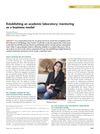 1 citations
,
October 2014 in “Molecular Biology of the Cell”
1 citations
,
October 2014 in “Molecular Biology of the Cell” Valentina Greco emphasizes the importance of combining business management with mentoring to run a successful academic lab.
 April 2026 in “Journal of Dermatological Science”
 Hair organoids are effective for testing hair loss treatments.
January 2026 in “Dermatologic Therapy” Current models for studying alopecia are inadequate, and more human-like systems are needed.
 July 2025 in “Advanced Science”
 Collagen VI and Semaphorin 3C are important for hair pigmentation and could help treat pigmentation disorders.
Testosterone's health effects are complex and not definitively understood.
May 2024 in “International journal of medicine and psychology.” Improving employee well-being boosts motivation and work engagement in the IT sector.
 August 2023 in “Frontiers in Endocrinology”
 Mutations in mitochondrial DNA might significantly contribute to the development of Polycystic Ovarian Syndrome.
November 2022 in “International journal of trichology” Glyoxylic acid straighteners cause more protein loss but have similar hair strength effects as traditional alkaline straighteners.