 127 citations
,
July 2002 in “EMBO journal”
127 citations
,
July 2002 in “EMBO journal” Normal skin cell renewal doesn't need RAR signaling, but vitamin A-related skin thickening does.
 May 2015 in “Journal of The American Academy of Dermatology”
 A heart transplant patient developed a skin condition called epidermodysplasia verruciformis after taking immune-suppressing drugs.
 17 citations
,
October 2006 in “Molecular and Cellular Endocrinology”
17 citations
,
October 2006 in “Molecular and Cellular Endocrinology” The L457(3.43)R mutation in the human lutropin receptor causes increased activity and hormone insensitivity, leading to precocious puberty.
June 2015 in “OhioLink ETD Center (Ohio Library and Information Network)” UVB exposure affects retinoid metabolism, which is important for skin cancer progression and treatment.
 December 2022 in “Research Square (Research Square)”
 Isotretinoin treatment increases p53 levels in the skin, which may explain its effectiveness against acne.
 May 2022 in “Research Square (Research Square)”
 Isotretinoin treatment increases p53 levels in the skin, which may explain its effectiveness against acne.
July 2026 in “Biochemical and Biophysical Research Communications” November 2025 in “The Journal of Immunology” A humanized IL-2 fusion protein boosts T regulatory cells and helps control hair loss in Alopecia Areata.
 12 citations
,
July 2014 in “International Journal of STD & AIDS”
12 citations
,
July 2014 in “International Journal of STD & AIDS” HIV patients with lower CD4 T cell counts often have more skin problems.
66 citations
,
June 2001 in “Gastroenterology” The keratin 19 promoter effectively targets genes in specific epithelial cells in mice.
22 citations
,
March 2017 in “Transplant Infectious Disease” Leflunomide successfully treated a rare skin condition in a liver transplant patient.
88 citations
,
August 1998 in “Carcinogenesis” High levels of ODC and a mutant Ha-ras gene cause tumors in mice.
18 citations
,
October 2009 in “Endocrinology” Different Hairless isoforms affect Vitamin D receptor activity in hair regulation, with one repressing and the other stimulating it.
 May 1995 in “Journal of Investigative Dermatology”
 Researchers developed a new way to measure gene activity in single hair follicles and found that a specific gene's activity changes with different amounts and times of treatment.
 9 citations
,
July 2016 in “The Journal of Dermatology”
9 citations
,
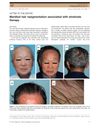
July 2016 in “The Journal of Dermatology” An 82-year-old man's white hair regained color after taking etretinate for psoriasis.
 January 1988 in “Inpharma (Balgowlah)”
 New retinoids are effective for various skin conditions and are being developed to have fewer side effects.
38 citations
,
January 2020 in “Cell Transplantation” Targeting ACE2 and TMPRSS2 may help prevent or treat COVID-19 in cancer patients.
 September 2025 in “Journal of Medicinal Chemistry”
 AR-27 E-Chol siRNA can effectively regrow hair by reducing androgen receptor gene activity.
 January 2017 in “Jikken doubutsu ihou/Jikken doubutsu/Experimental animals/Jikken Dobutsu”
 Mice with a changed Hr gene lose and regrow hair due to changes in the gene's activity.
 308 citations
,
September 2010 in “Nucleic acids research”
308 citations
,
September 2010 in “Nucleic acids research” Increasing mir-302 turns human hair cells into stem cells by changing gene regulation and demethylation.
September 1999 in “Molecular Carcinogenesis” Increased ODC expression makes normally tumor-resistant mice more prone to tumor development.
 14 citations
,
January 2024 in “Theranostics”
14 citations
,
January 2024 in “Theranostics” Intranasal delivery of gene therapy shows promise for treating ischemic stroke.
 45 citations
,
October 2009 in “Dermatology”
45 citations
,
October 2009 in “Dermatology” Half of the patients treated with a specific drug for skin cancer experienced hair loss not related to the drug's dosage.
4 citations
,
April 2007 in “Journal of Pediatric Gastroenterology and Nutrition” A liver transplant patient with APECED had a rare VZV recurrence and pneumonia, treated successfully, but later died from other infections.
22 citations
,
April 2010 in “Journal of Cellular Biochemistry” Certain mutations in the hairless protein disrupt its ability to regulate the hair cycle.
14 citations
,
October 2017 in “Gene Expression Patterns” A new mouse model helps study melanocyte cells using GFP expression.
60 citations
,
September 2004 in “Pediatric Dermatology” A girl developed vitiligo and psoriasis after hepatitis B treatment, and stopping the treatment didn't help.
IL-18 signaling helps mature Tregs move into the thymus.
 14 citations
,
January 2006 in “Skinmed”
14 citations
,
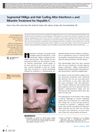
January 2006 in “Skinmed” A woman developed white patches on her skin and curly hair after hepatitis C treatment, likely due to the medication interferon alpha.
 51 citations
,
August 2021 in “Turkish Journal of Medical Sciences”
51 citations
,
August 2021 in “Turkish Journal of Medical Sciences” As of December 2021, the most effective COVID-19 treatments were monoclonal antibodies and possibly early-administered convalescent plasma, while several drugs were found ineffective or were still under evaluation.