 9 citations
,
August 2018 in “Biomedical dermatology”
9 citations
,
August 2018 in “Biomedical dermatology” A peptide called DPS-1 helps human scalp cells grow and stimulates hair growth in mice.
 9 citations
,
August 2013 in “Archives of Dermatological Research”
9 citations
,
August 2013 in “Archives of Dermatological Research” A gene called BMAL1 plays a role in controlling hair growth.
 8 citations
,
June 2019 in “Scientific Reports”
8 citations
,
June 2019 in “Scientific Reports” Increased PPARGC1α relates to hair thinning in common baldness.
 6 citations
,
January 2023 in “npj regenerative medicine”
6 citations
,
January 2023 in “npj regenerative medicine” Transplanting growing hair follicles into scars can help regenerate and improve scar tissue.
 5 citations
,
January 2022 in “Asian Pacific Journal of Cancer Prevention”
5 citations
,
January 2022 in “Asian Pacific Journal of Cancer Prevention” Certain VDR gene changes can affect melanoma risk.
 5 citations
,
January 2016 in “Dermatology”
5 citations
,
January 2016 in “Dermatology” No significant link between CAG repeat numbers and female pattern hair loss in Han Chinese population.
 4 citations
,
January 2017 in “Journal of pediatric endocrinology & metabolism/Journal of pediatric endocrinology and metabolism”
4 citations
,
January 2017 in “Journal of pediatric endocrinology & metabolism/Journal of pediatric endocrinology and metabolism” Two different mutations in the vitamin D receptor gene cause different symptoms and responses to treatment in Lebanese patients with hereditary rickets.
 4 citations
,
March 2014 in “The FASEB Journal”
4 citations
,
March 2014 in “The FASEB Journal” The HIF-2α/ARNT complex is important for hair follicle development by controlling cell growth.
 1 citations
,
March 2024 in “Signal transduction and targeted therapy”
1 citations
,
March 2024 in “Signal transduction and targeted therapy” NF-κB signaling is crucial in many diseases and can be targeted for new treatments.
 1 citations
,
January 2023 in “In vivo/In Vivo”
1 citations
,
January 2023 in “In vivo/In Vivo” Box A of HMGB1 can improve stem cell function, aiding anti-aging therapy.
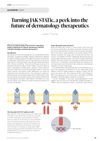 August 2024 in “New Zealand Medical Student Journal”
 JAK inhibitors show promise for treating skin diseases effectively and safely.
 December 2023 in “Communications biology”
 Targeting the HEDGEHOG-GLI1 pathway could help treat keloids.

The document concludes that the development of certain tumors is influenced by genetic background and that a specific gene modification can lead to tumor regression and reduced growth.
 April 2015 in “Plastic and Reconstructive Surgery”
 Activating TLR3 helps improve skin and hair follicle regeneration after wounds.
 June 2011 in “CRC Press eBooks”
 Low-Level Laser Therapy can stimulate healing and cell function, potentially leading to wider medical use.

Certain plasma proteins and genes are linked to obstructive sleep apnea, suggesting potential new treatments.
 April 2019 in “Journal of Investigative Dermatology”
 Differences in growth factors in platelet-rich plasma therapy for hair loss can vary between patients and can be influenced by the devices used, possibly leading to inconsistent results.
 224 citations
,
March 2006 in “Seminars in Cutaneous Medicine and Surgery”
224 citations
,
March 2006 in “Seminars in Cutaneous Medicine and Surgery” The document concludes that understanding hair follicle biology can lead to better hair loss treatments.
 178 citations
,
May 2006 in “Developmental Dynamics”
178 citations
,
May 2006 in “Developmental Dynamics” Jumonji genes are important for development and their mutations can cause abnormalities, especially in the heart and brain.
 36 citations
,
July 2014 in “Experimental Dermatology”
36 citations
,
July 2014 in “Experimental Dermatology” Skin and hair can regenerate after injury due to changes in gene activity, with potential links to how cancer spreads. Future research should focus on how new hair follicles form and the processes that trigger their creation.
 35 citations
,
January 2006 in “Journal of Dermatological Treatment”
35 citations
,
January 2006 in “Journal of Dermatological Treatment” Zinc can help with some skin problems, but its effectiveness varies depending on the condition.
 22 citations
,
June 2012 in “PLOS ONE”
22 citations
,
June 2012 in “PLOS ONE” Cholesterol-related compounds can stop hair growth and cause inflammation in a type of scarring hair loss.
 19 citations
,
September 2010 in “The American journal of pathology”
19 citations
,
September 2010 in “The American journal of pathology” High glucocorticoids cause pancreatic malfunction and malabsorption, reversible with enzyme supplements.
 11 citations
,
February 2021 in “Journal of Cosmetic Dermatology”
11 citations
,
February 2021 in “Journal of Cosmetic Dermatology” Oral tofacitinib helped regrow hair in over half of the patients with severe alopecia, but relapses and side effects were common.
 6 citations
,
January 2010 in “Springer eBooks”
6 citations
,
January 2010 in “Springer eBooks” SA linked to mitochondrial issues and oxidative stress, while AGA involves disrupted hair growth genes.
 1 citations
,
November 2025 in “Clinical and Experimental Medicine”
1 citations
,
November 2025 in “Clinical and Experimental Medicine” lncRNAs are important for understanding and treating skin diseases.
 1 citations
,
April 2016 in “Journal of Investigative Dermatology”
1 citations
,
April 2016 in “Journal of Investigative Dermatology” Blocking Prostaglandin D₂ may help treat hair loss.
 1 citations
,
January 2011 in “Springer eBooks”
1 citations
,
January 2011 in “Springer eBooks” Histone demethylases play a key role in the development of many diseases and may be targets for treatment.
 April 2016 in “Journal of Investigative Dermatology”
 Blocking Oncostatin M's role in the JAK-STAT pathway can stimulate hair growth in mice.
 April 2016 in “Journal of Investigative Dermatology”
 Blocking Prostaglandin D₂ (PGD₂) could help treat hair loss.