June 2026 in “British Journal of Dermatology” A rare genetic mutation in the EGFR gene caused severe skin issues and other health problems in a Slovakian girl, who is now 4 years old and receiving care.
January 2026 in “American Journal of Medical Genetics Part A” A new genetic variant causes trichothiodystrophy in two brothers, but their mother may carry it without showing symptoms.
 15 citations
,
December 2014 in “PLoS ONE”
15 citations
,
December 2014 in “PLoS ONE” A mutation in the iRhom2 gene causes hairless mice due to abnormal hair follicle development.
32 citations
,
April 2020 in “PLoS Biology” Rab5c is crucial for blood stem cell development by regulating Notch and AKT signals.
May 2023 in “Zenodo (CERN European Organization for Nuclear Research)” Pyoderma gangrenosum can occur in rheumatoid arthritis patients and may be mistaken for vasculitis.
June 2005 in “Journal of Investigative Dermatology” A bull with a gene mutation was asymptomatic, synthetic retinoids cause hair loss, and new therapeutic targets were identified for skin diseases.
January 2025 in “Fìzìologìčnij žurnal” PDRN may reduce inflammation and complications in revision rhinoplasty for patients with high fibrinogen levels.
128 citations
,
August 2020 in “Cell stem cell” Dermal fibroblasts have adjustable roles in wound healing, with specific cells promoting regeneration or scar formation.
1 citations
,
January 2025 in “Clinical Cosmetic and Investigational Dermatology” Higher levels of certain proteins may increase or decrease rosacea risk.
2 citations
,
July 2024 in “Bioengineering” PRF lysates reduce inflammation in cancer cells and boost immune response in healthy oral cells.
37 citations
,
June 2004 in “Human molecular genetics online/Human molecular genetics” The HCR gene contributes to psoriasis risk.
 46 citations
,
December 2001 in “Journal of Endocrinology/Journal of endocrinology”
46 citations
,
December 2001 in “Journal of Endocrinology/Journal of endocrinology” FLRG and follistatin have different roles in wound healing.
 April 2018 in “The journal of investigative dermatology/Journal of investigative dermatology”
 Double-stranded RNA helps regenerate hair follicles by increasing retinoic acid production and signaling.
125 citations
,
August 2003 in “Development” Mice with human-like EGFR had growth issues, skin defects, heart problems, and unusual bone development.
288 citations
,
January 2001 in “Journal of Biological Chemistry” Tgm2 helps stabilize dying cells and aids fibroblast attachment to the extracellular matrix.
 1 citations
,
December 2018 in “Journal of genetic medicine”
1 citations
,
December 2018 in “Journal of genetic medicine” A small change in the TRPS1 gene leads to a less severe form of a syndrome affecting hair, nose, and finger development.
 11 citations
,
August 2014 in “PLoS ONE”
11 citations
,
August 2014 in “PLoS ONE” GFRα2 is essential for controlling neuron size but not for target innervation in certain sensory neurons.
33 citations
,
January 2018 in “Blood” Ruxolitinib helps protect skin stem cells and keeps skin healthy in mice with skin GVHD.
 18 citations
,
July 2008 in “Current Oncology Reports”
18 citations
,
July 2008 in “Current Oncology Reports” EGFR cancer drugs often cause a rash, which can lead to distress and isolation, but may also improve outcomes for some cancer patients. Current treatments for the rash are limited, but a compound called menadione shows promise.
 35 citations
,
January 2013 in “The Journal of experimental medicine/The journal of experimental medicine”
35 citations
,
January 2013 in “The Journal of experimental medicine/The journal of experimental medicine” CD98hc's role in skin health decreases with age.
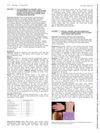
A TNFAIP3 gene mutation can cause unusual and varied symptoms of lupus and Sjogren's syndrome.
 2 citations
,
November 2017 in “PloS one”
2 citations
,
November 2017 in “PloS one” Some vitamin D analogs can thicken skin and reduce pore size like a common acne treatment, with one analog also affecting skin growth factors.
Using regulatory T cells and Rapamycin together improves chronic graft-versus-host disease treatment outcomes in mice.
 2 citations
,
July 2005 in “International Joint Conference on Artificial Intelligence”
2 citations
,
July 2005 in “International Joint Conference on Artificial Intelligence” EREG therapy may help treat hair loss by promoting hair growth.
20 citations
,
June 2024 in “Journal of Autoimmunity” Inflammation in rheumatoid arthritis increases steroid activation in cells, reducing inflammation.
July 2025 in “Journal of Investigative Dermatology” Resident memory T cells and necroptosis may drive fibrosis in eosinophilic fasciitis and morphea.
 January 2025 in “Dermatology Reports”
 Early and accurate diagnosis is crucial for managing rare genetic disorders like this localized variant of junctional epidermolysis bullosa.
 1 citations
,
April 2023 in “Science Advances”
1 citations
,
April 2023 in “Science Advances” High levels of ERK activity are key for tissue regeneration in spiny mice, and activating ERK can potentially redirect scar-forming healing towards regenerative healing in mammals.
TNFα and interleukin-1 blockers reduce skin inflammation from EGFR antibody therapy.
 10 citations
,
July 2021 in “Archiv für Pathologische Anatomie und Physiologie und für Klinische Medicin”
10 citations
,
July 2021 in “Archiv für Pathologische Anatomie und Physiologie und für Klinische Medicin” LRIG1 is linked to better survival in Merkel cell carcinoma.