43 citations
,
April 2010 in “Clinical genetics” Truncating mutations in the C2orf37 gene cause Woodhouse–Sakati syndrome.
September 2023 in “Journal of the American Academy of Dermatology”  9 citations
,
July 2019 in “Folia Morphologica”
9 citations
,
July 2019 in “Folia Morphologica” Brandt's hedgehog has thick skin on its back and many glands near its nostrils.
August 2004 in “Veterinary Dermatology” A Brittany spaniel's skin issues from cephalexin improved with treatment, showing drug-induced pemphigus foliaceus.
 November 2022 in “Van Sağlık Bilimleri Dergisi”
 Turkish Van cats' genotypes don't affect traits like eye color or hair length.
1 citations
,
January 2016 in “Acta histochemica” Black sheep have higher levels of Gnαs and Gnα11 proteins, which may affect their coat color.
 1 citations
,
January 2013
1 citations
,
January 2013 About 20% of red foxes and jackals in western Iran have at least one type of ectoparasite, with fleas being the most common.
November 2024 in “Rheumatology Advances in Practice” Visceral leishmaniasis can mimic rheumatoid arthritis symptoms, especially in immunocompromised patients.
14 citations
,
February 2015 in “Journal of the American Animal Hospital Association” Dogs exposed to their owners' hormone therapy developed hair loss, but symptoms resolved after stopping the therapy.
37 citations
,
August 2011 in “Journal of Bone and Mineral Research” A girl had rickets due to a gene mutation affecting vitamin D response.
60 citations
,
January 2021 in “BMC Genomics” The study mapped genetic variations in sheep, linking them to traits like milk production and growth.
 January 2020 in “Veterinary world/Veterinary World”
 The natural topical treatment improved rabbits' skin and hair condition.
97 citations
,
March 2010 in “The American Journal of Human Genetics” A mutation in the KRT74 gene causes tightly curled hair.
10 citations
,
November 1964 in “Zentralblatt für Veterinärmedizin Reihe A” Benign epithelial tumors in dogs don't spread or become cancerous.
 July 2018 in “Kidney international”
 Genetic testing for EGFR mutations is crucial in similar cases.
 4 citations
,
December 2012 in “Human Biology”
4 citations
,
December 2012 in “Human Biology” The most different genetic segment between Africans and East Asians is the EDA2R/AR region, with two main types influenced by population changes and natural selection, and linked to baldness.
6 citations
,
January 2003 in “Dermatology” Men with X-linked recessive ichthyosis often experience male-pattern baldness.
 January 2025 in “International Journal of Veterinary Science”
 Hibiscus leaf ointment helps hair growth and reduces UV skin damage in rats.
 October 2025 in “Buletin Veteriner Udayana”
 Early diagnosis and treatment of Notoedres cati in cats is crucial for recovery and preventing reinfestation.
 January 2026 in “Animal Advances”
 Genes linked to coat color and fiber length in Chinese goats were identified.
48 citations
,
August 1998 in “Journal of the American Academy of Dermatology” Retinoids help manage skin conditions in black individuals.
2 citations
,
January 2017 in “Journal of veterinary emergency and critical care” A dog's facial chemical burn healed in 84 days with conservative treatment.
10 citations
,
October 2021 in “Animal nutrition” Vitamin B6 helps increase hair growth and density in rabbits by affecting certain cell signaling pathways.
 1 citations
,
January 2021 in “Pakistan journal of zoology”
1 citations
,
January 2021 in “Pakistan journal of zoology” Red fox, golden jackal, and gray wolf hairs have similar features but differ in length, thickness, and inner structure.
1 citations
,
January 2013 in “INTAS POLIVET” Cephalexin effectively treats canine bacterial dermatitis, showing improvement within 72 hours.
2 citations
,
November 2018 in “Veterinary Dermatology” Poodles' hair changes aren't always linked to calcium, and special staining is needed to detect true calcium deposits.
June 2018 in “Journal of the American Veterinary Medical Association” Three related Persian cats have a rare, likely hereditary skin condition causing hair loss and poor coat quality, with limited treatment options.
3 citations
,
May 2017 in “BMJ Case Reports” A 15-year-old boy's skin and hair condition worsened due to improper treatment, leading to severe health issues.
57 citations
,
August 1997 in “Pediatrics International” VDDR I and II are genetic disorders affecting vitamin D use, causing rickets, with VDDR I treatable by vitamin D supplements and VDDR II needing high doses and calcium.

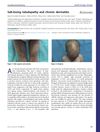
A 12-year-old girl was misdiagnosed with alopecia areata but actually had a nevus sebaceus with a genetic mutation.