13 citations
,
September 1997 in “Archives of Dermatology” The boy likely has a fungal infection causing hair loss.
 55 citations
,
May 2014 in “Journal of feline medicine and surgery”
55 citations
,
May 2014 in “Journal of feline medicine and surgery” Combining systemic and topical treatments, guided by weekly fungal cultures, effectively treats cat ringworm.
 6 citations
,
May 1941 in “Science”
6 citations
,
May 1941 in “Science” Ducks can get the Rous sarcoma virus if infected shortly after birth, leading to tumors and disease spread.
April 2026 in “Research Square” RXR and RAR proteins in skin may help with cell growth, hair growth, and gland function.
 11 citations
,
April 2019 in “Bioscience Reports”
11 citations
,
April 2019 in “Bioscience Reports” Certain genetic variations in the RAB5B gene are linked to a higher risk of polycystic ovary syndrome in Chinese Han women.
16 citations
,
October 2013 in “Irish Veterinary Journal” Oral feline interferon-omega improved symptoms in diabetic cats with gingivostomatitis.
June 2024 in “Indian Journal of Veterinary Medicine” The dog's skin disease was successfully treated with medication and supplements.
1 citations
,
January 1987 in “Veterinary Dermatology” Topical 0.1% tacrolimus improved a rare ear condition in cats.
2 citations
,
August 2022 in “Animals” Different versions of the KRTAP6-2 gene in goats can lead to thinner cashmere fibers.
January 2006 in “Zhongguo bijiao yixue zazhi” A new method efficiently isolates and cultures rat hair follicle cells.
The KRT84 gene is linked to better wool quality in Gansu Alpine Fine-wool sheep.
February 2026 in “Small Ruminant Research” The IRF2BP2 gene affects sheep fleece quality by influencing fiber traits.
18 citations
,
November 1989 in “Clinical and experimental dermatology” Griseofulvin is the best treatment for severe scalp infection caused by Microsporum canis.
10 citations
,
January 2003 in “Dermatology” The E413K mutation in the hHb6 gene causes monilethrix, a hair disorder, but doesn't show consistent symptoms.
14 citations
,
September 2017 in “Hereditas” Genes influence horse coat color and may help understand human skin conditions.
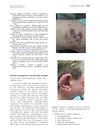
A 72-year-old man was diagnosed with a rare skin form of Rosai-Dorfman disease after years of misdiagnosis.
6 citations
,
March 1975 in “The Journal of Dermatology” Ringworm from Trichophyton verrucosum mainly affects farm workers in Japan, spreading in families and peaking in winter.
9 citations
,
April 1985 in “Canadian Journal of Zoology” Moose have unique interdigital glands with green hairs and larger glands during mating season.
 July 2023 in “International Journal of Endocrinology”
 Centratherum anthelminticum seed extract effectively treats Polycystic Ovary Syndrome in rats.
 January 2022 in “Figshare”
 Melatonin affects when and how certain genes work during the different stages of goat hair growth.
 3 citations
,
July 2004 in “SKINmed/Skinmed”
3 citations
,
July 2004 in “SKINmed/Skinmed” A 4-year-old girl was diagnosed with erythrokeratodermia variabilis after other treatments failed.
January 2014 in “China Feed” Higher expression of the keratin-associated protein 8.1 gene in Liaoning cashmere goats is linked to finer cashmere fibers.
 April 2023 in “Jurnal Sain Veteriner”
 A young Persian cat had a skin infection and low platelets, treated with various medications.
January 2024 in “Animals” Circular RNA ERCC6 helps activate stem cells important for cashmere goat hair growth by interacting with specific molecules in an m6A modification-dependent way.
 172 citations
,
December 2004 in “Journal of The American Academy of Dermatology”
172 citations
,
December 2004 in “Journal of The American Academy of Dermatology” Demodicosis is common and often missed, needing more recognition and treatment in skin care.
25 citations
,
April 2008 in “Clinical and experimental dermatology” EFFC might be common but underreported.
1 citations
,
January 2025 in “Veterinary Medicine International” PRP shows promise for eye disease in animals but needs more research before being standard care.
 December 2014 in “Berkala Ilmu Kesehatan Kulit dan Kelamin”
 Griseofulvin effectively treats tinea capitis kerion type.
 1 citations
,
May 2019 in “Veterinarski arhiv”
1 citations
,
May 2019 in “Veterinarski arhiv” The yeast found in a sea lion's skin lesion was almost identical to that on healthy skin, suggesting environmental factors may affect fungal growth and the cause of the lesion is unclear.