2 citations
,
March 2010 in “Acta Biochimica Polonica” Raltitrexed conjugates are less potent than the free drug but more effective at high concentrations.
 January 2022 in “bioRxiv (Cold Spring Harbor Laboratory)”
 Skin lesions in Carney complex are likely caused by a specific group of skin cells that promote pigment production due to a genetic mutation.
A KRT32 gene variant causes loose anagen hair syndrome.
2 citations
,
January 1989 Tay syndrome is a unique genetic disorder causing skin, hair, and developmental issues.
April 2025 in “The Journal of Dermatology” Janus kinase inhibitors may help treat cutaneous T-cell lymphoma, but more research is needed.
 April 2024 in “Current Rheumatology Reviews”
 MCTD should be considered in children with recurring muscle issues, lupus-like symptoms, and edema.
 February 2025 in “The Indian Journal of Animal Sciences”
 Sarcoptes scabiei caused mange in Goa goats, but they fully recovered with treatment.
4 citations
,
August 2013 in “Chinese Medical Journal” A specific gene mutation in KRT86 is linked to hair disorder in a Chinese Han family.
2 citations
,
January 2018 in “International Journal of Trichology” Two sisters had a rare hair condition without other usual symptoms.
September 2015 in “Pediatrics in review” The baby's rash and hair loss were cured with zinc supplements and better skin care.
 1 citations
,
December 2022 in “Pediatric dermatology”
1 citations
,
December 2022 in “Pediatric dermatology” A boy developed a rare skin condition after recovering from a severe skin reaction, and it improved with lotion treatment.
6 citations
,
October 2023 in “JAAD Case Reports” Risankizumab may help manage symptoms of dissecting cellulitis of the scalp.
3 citations
,
June 2001 in “Journal of Zoo and Wildlife Medicine” The lemur's testicular tumor was removed, improving its coat and behavior, with no signs of cancer spread.
 9 citations
,
November 2000 in “Journal of the American Academy of Dermatology”
9 citations
,
November 2000 in “Journal of the American Academy of Dermatology” A woman with a rare type of dermatomyositis improved with low-dose prednisone and methotrexate.

Posaconazole successfully treated a resistant skin infection in a Spitz dog when other antifungals failed.
 February 2023 in “JAAD case reports”
 Reducing immunosuppression and using antiviral creams improved the woman's skin condition.
 3 citations
,
May 2022 in “The journal of investigative dermatology/Journal of investigative dermatology”
3 citations
,
May 2022 in “The journal of investigative dermatology/Journal of investigative dermatology” Skin lesions in Carney Complex are caused by a gene change in some skin cells that leads to increased pigmentation and may lead to tumors.
 47 citations
,
June 2011 in “Movement Disorders”
47 citations
,
June 2011 in “Movement Disorders” The LRRK2-G2019S mutation in Parkinson's disease has a lifetime penetrance of 25-35%, and finasteride may help reduce symptoms in adult male Tourette syndrome patients.
November 2023 in “Veterinary Science and Medicine Journal” A mixed breed dog's skin condition improved with combined therapy and supportive care.
 January 2025 in “Clinical Dermatology Review”
 Trichoscopy helps accurately diagnose Netherton syndrome, often mistaken for atopic dermatitis.
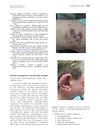
A 72-year-old man was diagnosed with a rare skin form of Rosai-Dorfman disease after years of misdiagnosis.

This rare genetic disorder causes permanent hair loss and skin bumps from birth.
April 2026 in “Reviews in Medical Virology” Trichodysplasia spinulosa is a rare skin condition linked to weakened immune systems, mostly in organ transplant patients.
11 citations
,
March 2016 in “PubMed” Tinea capitis in adults is best treated with oral terbinafine, but other medications may be needed for resistant infections, and family and pets should be checked to prevent reinfection.
 April 2026 in “Frontiers in Medicine”
 Syphilis can cause hair loss even without penetrative sex, but treatment can fully restore hair.
 80 citations
,
March 2004 in “Neuropediatrics”
80 citations
,
March 2004 in “Neuropediatrics” Coats' Plus is a genetic disorder with eye abnormalities, brain calcification, poor growth, bone and skin issues, and movement disorders.
 October 2023 in “Microorganisms”
 Nirmatrelvir/Ritonavir treatment may lead to a weaker immune response to COVID-19, but doesn't affect the chance of rebound.
 2 citations
,
August 2017 in “British Journal of Dermatology”
2 citations
,
August 2017 in “British Journal of Dermatology” Hair loss in Cronkhite-Canada syndrome may be due to an autoimmune response.
8 citations
,
September 2013 in “Molecular carcinogenesis” Rapamycin reduces skin cell growth and tumor development by affecting cell signaling in mice.
October 2025 in “OPAL (Open@LaTrobe) (La Trobe University)” Early genetic testing and zinc therapy are crucial for managing acrodermatitis enteropathica in infants.