 February 2024 in “Skin research and technology”
 The research suggests that immune cells and a specific type of cell death called ferroptosis are involved in Frontal fibrosis alopecia.
 11 citations
,
November 2019 in “Clinical Case Reports”
11 citations
,
November 2019 in “Clinical Case Reports” A Brazilian teenager with severe hair loss had total hair regrowth with no side effects after using tofacitinib.
 October 2023 in “arXiv (Cornell University)”
 Human hair keratins might be good for filtering out harmful substances like diclofenac and PFBS from water.
26 citations
,
January 2005 in “PubMed” RUM-loaded SLN shows promise for treating acne and hair loss topically.
Ivarmacitinib effectively regrows hair in severe alopecia areata.
 1 citations
,
January 2023 in “Cutis”
1 citations
,
January 2023 in “Cutis” You might not need to stop cancer treatment if you get a rare skin reaction from EGFR inhibitors, as skin treatments can help manage it.

Tofacitinib helped a woman with total-body hair loss grow her hair back.
 June 2026 in “Zenodo (CERN European Organization for Nuclear Research)”
 Quercetin and kaempferol may be effective and safe natural treatments for hair loss.

Certain antiparasitics and antidepressants show promise for treating cryptococcosis, especially when combined with fluconazole.
 9 citations
,
April 2018 in “Journal of Dermatological Treatment”
9 citations
,
April 2018 in “Journal of Dermatological Treatment” Tofacitinib improves nail conditions in patients with severe hair loss and does not affect hair regrowth.
 August 2021 in “Case Reports”
 A woman thought to have rosacea was actually suffering from Frontal Fibrosing Alopecia, a hair loss condition. Despite treatment, her condition didn't change, showing the importance of accurate early diagnosis.
Dutasteride can stabilize hair loss in patients with frontal fibrosing alopecia, but its safety in women is unclear, so use it with caution.
 26 citations
,
May 2000 in “Journal of The American Academy of Dermatology”
26 citations
,
May 2000 in “Journal of The American Academy of Dermatology” Finasteride improves hair growth.
Fumai Paste helps heal skin damage from chemotherapy better than magnesium sulfate.
 March 2026 in “Korean Journal of Clinical Pharmacy”
 In 2024, the FDA approved 50 new drugs, including treatments for hair loss, anemia, high blood pressure, and Alzheimer's.
72 citations
,
June 1979 in “Biochemical Society Transactions” Flutamide and its metabolite can effectively reduce androgen effects.
2 citations
,
February 2025 in “Journal of the European Academy of Dermatology and Venereology” JAK inhibitors may effectively treat lichen planopilaris and frontal fibrosing alopecia with minimal side effects.
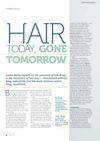 January 2016 in “Chemistry & Industry”
 Two drugs, tofacitinib and ruxolitinib, may help regrow hair by activating hair follicles.
January 2005 in “Psychoneuroendocrinology” Finasteride may affect brain chemistry and behavior, offering potential for treating certain mental health conditions.
 March 2005 in “Inpharma Weekly”
 China approved Sinovac's flu vaccine, Japan approved RiUP for female hair loss, and Nippon Kayaku's three cancer drugs.
 June 2018 in “Journal of Clinical Periodontology”
 Finasteride may cause gum side effects in some patients.
 10 citations
,
December 2014 in “Journal of Pharmaceutical and Biomedical Analysis”
10 citations
,
December 2014 in “Journal of Pharmaceutical and Biomedical Analysis” Finasteride's polymorphic form affects capsule quality and drug effect, requiring strict control.
 June 2024 in “Journal of Clinical Oncology”
 The combination of TACE and Donafenib is effective and tolerable for treating unresectable liver cancer.
 February 2025 in “Intisari Sains Medis”
 PDRN from salmon may slow skin aging by improving skin quality and reducing inflammation.
4 citations
,
July 2023 in “Nature Medicine” The FDA approved a new Pfizer drug for hair loss in teens.

The document explains how certain drugs block hormones to treat cancers like breast and prostate cancer.
 September 2025 in “Journal of the Pakistan Medical Association”
 Tofacitinib effectively and safely promotes hair regrowth in alopecia patients.
September 2024 in “Annals of Medicine and Surgery” Ritlecitinib is the first FDA-approved pill for treating significant hair loss in alopecia areata patients aged 12 and up.
October 2023 in “Journal of cystic fibrosis”  72 citations
,
November 2012 in “PloS one”
72 citations
,
November 2012 in “PloS one” The protein folliculin, involved in a rare disease, works with another protein to control how cells stick together and their organization, and changes in this interaction can lead to disease symptoms.