28 citations
,
February 2010 in “Experimental Dermatology” The frizzy mouse and hairless rat mutations are due to changes in the Prss8 gene.
 49 citations
,
December 2017 in “Journal of pharmaceutical and biomedical analysis”
49 citations
,
December 2017 in “Journal of pharmaceutical and biomedical analysis” The method effectively detects banned substances in urine for sports antidoping.
 4 citations
,
January 2014 in “RSC Advances”
4 citations
,
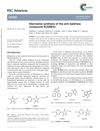
January 2014 in “RSC Advances” A new, less toxic and more efficient method to create the anti-baldness compound RU58841 was developed in 2014.
 January 2024 in “Ankara City Hospital Medical Journal”
 Rhupus is a complex syndrome that is hard to diagnose due to unclear clinical criteria.
 April 2019 in “Molecular Informatics”
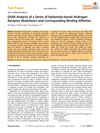
 Researchers developed reliable models to predict how well certain compounds bind to androgen receptors, emphasizing the importance of atomic electronegativity.
8 citations
,
January 1991 in “Soviet physics. Doklady” 
Reviewers criticized the study for its assumptions, social media data collection issues, and lack of comparison to existing methods.
July 2026 in “The Bioscan.” Drug repurposing speeds up drug development and addresses unmet medical needs.
 November 2025 in “Zenodo (CERN European Organization for Nuclear Research)”
 Drug repurposing finds new uses for old drugs quickly and cheaply.
 30 citations
,
October 2020 in “Nature Communications”
30 citations
,
October 2020 in “Nature Communications” Finasteride irreversibly affects human steroid 5α-reductase 2, providing insight into its catalytic mechanism and disease-related mutations.
 38 citations
,
February 2006 in “British Journal of Clinical Pharmacology”
38 citations
,
February 2006 in “British Journal of Clinical Pharmacology” The study found that combining different databases gives a better estimate of drug side effects in hospitals.
 8 citations
,
August 2020 in “PLOS Computational Biology”
8 citations
,
August 2020 in “PLOS Computational Biology” A machine learning model called CATNIP can predict new uses for existing drugs, like using antidepressants for Parkinson's disease and a thyroid cancer drug for diabetes.
September 2021 in “Assay and drug development technologies” Drug repurposing shows promise for treating many medical conditions.
The research shows how certain drugs can form stable structures with polymers, which is important for making new pharmaceuticals.
Drug repurposing finds new uses for existing drugs, saving time and money.
 November 2025 in “Zenodo (CERN European Organization for Nuclear Research)”
 Repurposing existing drugs can quickly and cheaply find new treatments.
 10 citations
,
July 2022 in “Journal of Medicinal Chemistry”
10 citations
,
July 2022 in “Journal of Medicinal Chemistry” Adding a second method to PROTACs could improve cancer treatment.
39 citations
,
September 2019 in “Materials & Design” Combinatorial drug treatments are more effective than single drugs for cancer therapy.
March 2026 in “Research Square” 33 citations
,
August 2024 in “Frontiers in Drug Discovery” Drug repurposing is a faster, cheaper way to develop new treatments using existing drugs.
7 citations
,
April 2024 in “Life Medicine” Standardizing and engineering organoids can improve their use in medicine and drug testing.
 April 2019 in “Biometrics”
 The new clinical trial design is promising but needs real-world trials to test its effectiveness and possible enhancements.
 1 citations
,
March 2022 in “bioRxiv (Cold Spring Harbor Laboratory)”
1 citations
,
March 2022 in “bioRxiv (Cold Spring Harbor Laboratory)” Low-coverage sequencing is a cost-effective way to identify genes related to wool traits in rabbits.
 138 citations
,
November 2015 in “Journal of Pharmacology and Experimental Therapeutics”
138 citations
,
November 2015 in “Journal of Pharmacology and Experimental Therapeutics” Protoporphyrin IX is useful in cancer treatment but can cause health problems if not properly regulated.
February 1989 in “PubMed” A genetic hair protein variant is more common in Japanese people and is inherited.

A few users dominate Reddit discussions on JAK inhibitors, highlighting social media's potential for tracking drug safety but needing expert oversight.
11 citations
,
July 2023 in “Applied Nanoscience” 5 citations
,
April 2023 in “Drug Design Development and Therapy” Drug repositioning can save time and money but needs more support.
 April 2017 in “The journal of investigative dermatology/Journal of investigative dermatology”
 QMSI is a valuable method for studying drug penetration in skin tissues.
 9 citations
,
September 2014 in “Cancer Epidemiology, Biomarkers & Prevention”
9 citations
,
September 2014 in “Cancer Epidemiology, Biomarkers & Prevention” Certain genetic variants in the androgen receptor are linked to higher PSA levels, potentially affecting prostate cancer screening outcomes.