
Regenerative cosmetics can improve skin and hair by reducing wrinkles, healing wounds, and promoting hair growth.
March 2019 in “SLAS TECHNOLOGY” New technologies show promise in healing wounds, treating cancer, autoimmune diseases, and genetic disorders.
June 2025 in “British Journal of Dermatology” An AI device for skin cancer was successfully integrated into the NHS, improving diagnosis accuracy and service capacity.
43 citations
,
December 1988 in “International Journal of Bio-Medical Computing” October 2025 in “Journal of Bahria University Medical and Dental College” Many dental professionals are aware of AI but need more education and support to use it effectively.
 September 2023 in “Research Square (Research Square)”
 The document concludes that the new expert system can assess the risk of PCOS effectively despite uncertainties in diagnosis.
7 citations
,
March 2018 in “Development” New imaging technologies help us see how stem cells work in living animals.
1 citations
,
December 2025 in “Journal of Investigative Dermatology” 3 citations
,
July 2025 in “Gels” Engineered protein hydrogels improve medical treatments by mimicking natural body structures.
February 2007 in “Technology in Society” 3 citations
,
March 2024 in “arXiv (Cornell University)” The new AI system improves remote skin condition diagnosis and access to care.
4 citations
,
January 2026 in “Micro” Bioinspired conductive materials and advanced bioprinting can improve tissue regeneration by creating smart, adaptable scaffolds.
 September 2013 in “Science”
 Undergraduate research experiences boost students' research skills, confidence, and career aspirations.
 December 2012 in “Regenerative Medicine”
 Latest articles show advancements in regenerative medicine.
 July 2025 in “E-methodology”
 AI can improve hair care but needs legal clarity and is not widely used in Poland yet.
 June 2026 in “International Journal of Innovative Technologies in Social Science”
 AI can help diagnose women's metabolic disorders earlier but must be used carefully to avoid bias.
March 2015 in “Institutional Repositories DataBase (IRDB)” 5 citations
,
March 2025 in “Tissue Engineering and Regenerative Medicine” 2 citations
,
June 2024 in “Advanced Healthcare Materials” Computational technology advances nanocatalysis by improving design, synthesis, and detection methods.
180 citations
,
February 2023 in “Journal of Chemical Information and Modeling” Chemistry42 effectively creates and optimizes new molecules for drug discovery.
 December 2022 in “Research Square (Research Square)”
 The QuantAnts machines can find cancer markers and create CRISPR targets for them.

Proper niche formation in Drosophila requires Slit-Robo signaling for cell migration.
 December 2025 in “Journal of AI”
 The USA, China, Italy, and Türkiye lead in diverse PRP research, focusing on healing and pain management.
2 citations
,
September 2025 in “Journal of Clinical Medicine” Regenerative medicine could revolutionize aesthetic surgery, but needs careful validation and ethical use.
70 citations
,
April 2020 in “Journal of Molecular Cell Biology” Organoid technology helps create mini-organs for studying diseases and testing drugs.
 1 citations
,
October 2014 in “Molecular Biology of the Cell”
1 citations
,
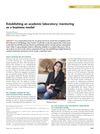
October 2014 in “Molecular Biology of the Cell” Valentina Greco emphasizes the importance of combining business management with mentoring to run a successful academic lab.
198 citations
,
May 2021 in “Advanced Materials” Triboelectric nanogenerators can use body movement to power therapeutic treatments, potentially transforming personalized healthcare.
January 2026 in “SSRN Electronic Journal”  7 citations
,
August 2023 in “Therapeutic Innovation & Regulatory Science”
7 citations
,
August 2023 in “Therapeutic Innovation & Regulatory Science” A new method uses expert reviews of home videos to objectively assess children's developmental milestones in single-arm trials.
 August 2016 in “Regenerative Medicine”
 Experts have pointed out key research in the area of regenerative medicine.