42 citations
,
December 2011 in “The journal of immunology/The Journal of immunology” RANKL causes lymph nodes to grow by making certain cells multiply.
 September 2024 in “Journal of the American Academy of Dermatology”
 Oxytocin receptors are found in skin cells near touch and pain neurons.
 5 citations
,
March 2019 in “Experimental dermatology”
5 citations
,
March 2019 in “Experimental dermatology” Activating TLR3 may help produce retinoic acid, important for tissue regeneration.
18 citations
,
April 2010 in “Journal of steroid biochemistry and molecular biology/The Journal of steroid biochemistry and molecular biology” The vitamin D receptor helps regulate skin and hair health independently of its usual vitamin D ligand.
5 citations
,
November 2013 in “Journal of Investigative Dermatology” The glucocorticoid receptor helps protect skin from tumors and other issues.
22 citations
,
April 2010 in “Journal of Cellular Biochemistry” Certain mutations in the hairless protein disrupt its ability to regulate the hair cycle.
5 citations
,
September 2011 in “Biochimica et Biophysica Acta (BBA) - Molecular Basis of Disease” Hairless protein helps control hair growth by regulating vitamin D receptor activity.
 25 citations
,
May 2016 in “Progress in Biophysics & Molecular Biology”
25 citations
,
May 2016 in “Progress in Biophysics & Molecular Biology” R-spondins and their receptors help increase bone growth and may be used to treat bone loss diseases.
 4 citations
,
June 2017 in “Anais Brasileiros De Dermatologia”
4 citations
,
June 2017 in “Anais Brasileiros De Dermatologia” Aryl hydrocarbon receptor overexpression found in miniaturized hair follicles in female hair loss.
 12 citations
,
December 2012 in “Current Drug Targets”
12 citations
,
December 2012 in “Current Drug Targets” The Androgen Receptor could be a target for treating diseases like cancer, but more research is needed to confirm the effectiveness of potential treatments.
14 citations
,
March 2022 in “Plant Cell & Environment” The protein AtRXR3 limits root hair growth in Arabidopsis, affecting phosphorus uptake.
May 2026 in “Chemical Engineering Journal” 5 citations
,
January 1993 in “PubMed” Retinoic acid can change skin structures in vertebrates, like turning scales into feathers or hair buds into glands.
January 2016 in “Texas ScholarWorks (Texas Digital Library)” DORN1 receptor affects eATP-induced stomatal changes but not eADP in Arabidopsis thaliana.
16 citations
,
November 1994 in “Developmental Biology” Retinoic acid causes gland formation instead of hair in mouse skin by altering epidermal and dermal interactions.
41 citations
,
February 2021 in “Translational research” Non-coding RNAs could help detect and treat radiation damage.
January 2008 in “OhioLink ETD Center (Ohio Library and Information Network)” SARMs work differently in tissues due to unique interactions and structures.
 24 citations
,
August 2017 in “Prostaglandins & Other Lipid Mediators”
24 citations
,
August 2017 in “Prostaglandins & Other Lipid Mediators” CRTH2 antagonists might be useful for treating many conditions because they play a role in immune and inflammation responses.
 February 2025 in “Journal of Clinical Investigation”
 RNase L hinders hair growth by altering immune signals.
 3 citations
,
August 2021 in “Research Square (Research Square)”
3 citations
,
August 2021 in “Research Square (Research Square)” The most common sign of aging at the gene level is more Ectodysplasin A2 Receptor (EDA2R) being made.
 4 citations
,
November 2024 in “Cell Biology and Toxicology”
4 citations
,
November 2024 in “Cell Biology and Toxicology” Blocking certain receptors in the lungs might help treat a specific type of asthma.
January 2026 in “Journal of Dermatological Science” DcR3 helps heal wounds and regrow hair by changing macrophages to a repair-focused type.
 17 citations
,
October 2006 in “Molecular and Cellular Endocrinology”
17 citations
,
October 2006 in “Molecular and Cellular Endocrinology” The L457(3.43)R mutation in the human lutropin receptor causes increased activity and hormone insensitivity, leading to precocious puberty.
12 citations
,
September 2014 in “Bone” A vitamin D receptor mutation causes rickets and affects immune responses.
 May 2026 in “Discover Oncology”
 Targeting LGR4 may help treat cancer by reducing cancer stem cell traits and drug resistance.
PDGF signaling is crucial for cell development, wound healing, and fluid regulation in the body.
9 citations
,
October 2014 Vitamin D receptor helps prevent skin tumors.
 47 citations
,
June 2019 in “Nature Communications”
47 citations
,
June 2019 in “Nature Communications” Noncoding dsRNA boosts hair growth by activating TLR3 and increasing retinoic acid.
 11 citations
,
September 2021 in “Journal of molecular endocrinology”
11 citations
,
September 2021 in “Journal of molecular endocrinology” ERβ has potential in treating prostate cancer and neurodegenerative diseases, but human studies are needed before clinical use.
 10 citations
,
November 2015 in “Experimental Dermatology”
10 citations
,
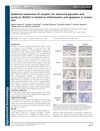
November 2015 in “Experimental Dermatology” Skin RAGE levels are linked to inflammation and cell death.