Search
for
Sort by
Research
150-180 / 1000+ resultsresearch Navigating Rhupus Complexity
Rhupus is a complex syndrome that combines rheumatoid arthritis and lupus, making diagnosis challenging.
research High‐Potency Topical Steroids: An Effective Therapy for Chronic Scalp Inflammation in Rapp–Hodgkin Ectodermal Dysplasia
Strong skin creams work well for long-term scalp inflammation in Rapp-Hodgkin Ectodermal Dysplasia.
research Platelet-Rich Plasma for Degenerative Spine Disease: A Brief Overview
PRP shows promise for spinal pain but needs more guidelines before widespread use.
research Erosive pustular dermatosis of the scalp: A neutrophilic folliculitis within the spectrum of neutrophilic dermatoses
Erosive pustular dermatosis of the scalp is a type of skin inflammation often confused with other conditions, requiring continuous treatment.
research Mouse models with a disrupted PTHrP gene or a disrupted PTH gene (PTH−/− mice)
PTHrP is important for bone formation and may be targeted for osteoporosis treatment and longevity therapies.
research PLA2R1 Overexpression Causes Podocyte Injury by Inhibiting the Cell Cycle: A Clinical Cross-Sectional Investigation and Cellular Study
PLA2R1 overexpression harms kidney cells by stopping their growth cycle.
research Erosive pustular dermatosis of the scalp and multiple sclerosis: just a coincidence?
EPDS and MS might share an immune-related cause.
research Expanding the Clinical and Mutational Spectrum of Recessive AEBP1-Related Classical-Like Ehlers-Danlos Syndrome
The study concludes that mutations in the AEBP1 gene can cause a form of Ehlers-Danlos syndrome and should be considered in diagnosis.
research Vitamin D‐dependent rickets type I and type II
VDDR I and II are genetic disorders affecting vitamin D use, causing rickets, with VDDR I treatable by vitamin D supplements and VDDR II needing high doses and calcium.
research Chronic Crusted Scalp Lesion of an Elderly Male
An elderly man's non-healing scalp lesion was successfully treated with a strong topical steroid.
research 092 Novel biallelic RIPK4 mutations cause ectodermal dysplasia with cutaneous syndactyly
New RIPK4 gene mutations were found to cause a type of skin and limb birth defect.
research An essential role for Rxrα in the development of Th2 responses
RXRα is crucial for proper immune response and links diet to immune function.
research Targeted overexpression of parathyroid hormone-related peptide in chondrocytes causes chondrodysplasia and delayed endochondral bone formation.
Overexpression of PTHrP in chondrocytes causes short-limbed dwarfism and delayed bone formation in mice.
research CRISPR/Cas9-Mediated Generation of COL7A1-Deficient Keratinocyte Model of Recessive Dystrophic Epidermolysis Bullosa.
Scientists created a cell model to study and find treatments for a skin disease called RDEB.
research Hereditary 1,25-dihydroxyvitamin D-resistant rickets (HVDRR): clinical heterogeneity and long-term efficacious management of eight patients from four unrelated Arab families with a loss of function VDR mutation
Patients with the same genetic mutation for vitamin D-resistant rickets showed different symptoms but all improved with treatment except for hair loss.
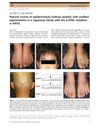
research Natural course of epidermolysis bullosa simplex with mottled pigmentation in a Japanese family with the p.P25L mutation in KRT 5
The p.P25L mutation in the KRT5 gene causes a rare skin condition that worsens over time and may lead to hair loss starting in young adulthood.
research Protein Kinase C Downregulation upon Rapamycin Treatment Attenuates Neuroinflammation and Mitochondrial Disease
Rapamycin treatment helps reduce brain inflammation and symptoms of mitochondrial disease by blocking specific pathways in mice.

research Exome-wide age-of-onset analysis reveals exonic variants in ERN1, TACR3 and SPPL2C associated with Alzheimer’s disease
Certain genetic variants in ERN1, TACR3, and SPPL2C are linked to when Alzheimer's disease starts.
research Porokeratotic eccrine ostial and dermal duct nevus: A noteworthy presentation
PEODDN is a rare skin disorder with limited treatment options, best treated with laser therapy.

research Increased expression of Ectodysplasin A2 Receptor EDA2R is the most remarkable and ubiquitous aging-related transcriptional hallmark
The most common sign of aging at the gene level is more Ectodysplasin A2 Receptor (EDA2R) being made.
research GP85 The irish experience in paediatric parry romberg syndrome- a case series highlighting management and surgical outcomes
Children with Parry Romberg Syndrome had successful facial fat-grafting surgeries after disease stabilization with no complications.

research Parry–Romberg Syndrome: Radioclinical Dissociation in a Paucisymptomatic Form and a Proposed Diagnostic Framework
Parry–Romberg Syndrome can involve the brain even without obvious symptoms, and a new diagnostic framework is suggested for early detection.
research Novel associations of VPS13C with phenotype and conversion of idiopathic REM sleep behavior disorder
VPS13C variants are linked to more severe REM sleep disorder and faster progression to Parkinson's disease.
research Reticular Erythematous Mucinosis Syndrome
Reticular erythematous mucinosis syndrome can occur with minimal mucin deposition.
research Pyoderma gangrenosum presented as generalized pustules in a patient with Crohn’s disease
Recognizing unusual symptoms in Crohn's disease is crucial for proper treatment.
research Epidermal expression of receptor for advanced glycation end products (RAGE) is related to inflammation and apoptosis in human skin
Skin RAGE levels are linked to inflammation and cell death.
research CRISPR/Cas9-mediated Generation ofCOL7A1-deficient Keratinocyte Model of Recessive Dystrophic Epidermolysis Bullosa
Scientists created cell lines to study a genetic skin disorder using CRISPR technology.
research A General Paediatric Approach to Ankyloblepharon–Ectodermal Dysplasia–Cleft Lip/Palate Syndrome in Infancy: A Case Report
Genetic analysis is crucial for diagnosing ectodermal dysplasia syndromes, and new therapies may help improve skin issues.

research Erosive Pustular Dermatosis of the Scalp: A Clinicopathologic Study of Fifty Cases
The conclusion is that Erosive Pustular Dermatosis of the Scalp is a rare condition best treated with strong topical steroids and sometimes systemic treatment.