 July 2022 in “The journal of investigative dermatology/Journal of investigative dermatology”
 Blocking mTORC1 activity with rapamycin could help increase hair pigmentation and growth, potentially reversing gray hair.
13 citations
,
January 2022 in “Microvascular Research” LSCI-HR is reliable for monitoring blood flow in wound healing in mice.
1 citations
,
August 2024 in “British Journal of Dermatology” Ritlecitinib effectively promotes hair regrowth in alopecia areata patients, even with extensive hair loss.
January 2026 in “Dermatologic Therapy” Ritlecitinib is effective and safe for treating severe alopecia areata, showing significant hair regrowth and improved mental health.
 3 citations
,
March 1932 in “Journal of the American Medical Association”
3 citations
,
March 1932 in “Journal of the American Medical Association” Radium exposure causes severe health issues, so strict safety measures are essential.
 2 citations
,
January 2024 in “Pakistan Journal of Life and Social Sciences (PJLSS)”
2 citations
,
January 2024 in “Pakistan Journal of Life and Social Sciences (PJLSS)” The hair treatment materials are safe to use.
 June 2026 in “World Journal of Clinical Pediatrics”
 Early diagnosis and tailored treatment improve outcomes for non-nutritional rickets.
 January 2022 in “Figshare”
 Melatonin affects when and how certain genes work during the different stages of goat hair growth.
 17 citations
,
June 2019 in “BMC genomics”
17 citations
,
June 2019 in “BMC genomics” Non-coding RNAs help control hair growth in cashmere goats.
 1 citations
,
July 2022 in “Frontiers in Microbiology”
1 citations
,
July 2022 in “Frontiers in Microbiology” MSM supplementation in kittens improves hair quality and growth rate without harming their health.
 27 citations
,
August 2018 in “Frontiers in Plant Science”
27 citations
,
August 2018 in “Frontiers in Plant Science” High levels of auxin increase root hair growth by activating RSL2 and producing ROS, while high phosphate levels hinder growth by repressing RSL2.
 5 citations
,
January 2006 in “Journal of veterinary medical science”
5 citations
,
January 2006 in “Journal of veterinary medical science” RNA can be extracted from horsehair roots for analysis.
 January 2022 in “Figshare”
 Melatonin affects when and how certain genes work during the different stages of hair growth in goats.
A low dose of rapamycin increases inner ear hair cell creation by boosting SOX2+ cell numbers.
January 2015 in “UNIFESP Institutional Repository (Universidade Federal de São Paulo)” A 30 Gy radiation dose effectively causes severe radiodermatitis in rabbits.
November 2025 in “SKIN The Journal of Cutaneous Medicine” Ritlecitinib is generally safe for adolescents with alopecia areata over 5 years.
97 citations
,
January 1999 in “International Journal of Dermatology” Pityriasis rubra pilaris is a rare skin disorder with reddish-orange patches and thickened skin, needing better treatment understanding.
 January 2022 in “Figshare”
 Melatonin affects when and how certain genes work during the growth of goat hair follicles.
November 2022 in “Munich Personal RePEc Archive (Ludwig Maximilian University of Munich)” Phosphatidylinositol 4-kinases are crucial for root growth, defense, and immunity in Arabidopsis thaliana.
26 citations
,
January 2005 in “PubMed” RUM-loaded SLN shows promise for treating acne and hair loss topically.
February 2017 in “Cancer Research” Topical calcitriol appears safe and may reduce hair loss during chemotherapy.
 January 2022 in “Figshare”
 Melatonin affects when and how goat hair follicle genes turn on and off during growth cycles.
 October 2025 in “Zenodo (CERN European Organization for Nuclear Research)”
 Rosemary extracts promote hair growth better than minoxidil.
 October 2025 in “Zenodo (CERN European Organization for Nuclear Research)”
 Rosemary extracts promote hair growth better than minoxidil.
February 2026 in “The Journal of Dermatology” Ritlecitinib effectively regrows scalp, eyebrow, and eyelash hair in Asians with alopecia areata and is safe.
 March 2025 in “SKIN The Journal of Cutaneous Medicine”
 Certain patient characteristics can help predict hair regrowth success with ritlecitinib in alopecia areata.
January 1997 in “Purdue e-Pubs (Purdue University)” Whole hair strands can reliably measure gamma ray exposure using ESR techniques, but samples should be analyzed quickly or stored in liquid nitrogen.
23 citations
,
October 2024 in “British Journal of Dermatology” Ritlecitinib effectively treats alopecia areata and is safe for long-term use in people 12 and older.
 11 citations
,
October 2020 in “Plant biotechnology journal”
11 citations
,
October 2020 in “Plant biotechnology journal” Overexpressing SIMK in alfalfa boosts root hair growth, nodule clustering, and shoot biomass.
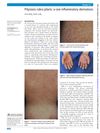 February 2018 in “BMJ case reports”
 An 18-year-old woman was diagnosed with a rare skin condition called Pityriasis rubra pilaris.