Sox13 is a marker for early hair follicle development but not essential for skin and hair growth.
November 2023 in “SKIN The Journal of Cutaneous Medicine” Ritlecitinib effectively maintains hair regrowth in alopecia areata patients.
 2 citations
,
January 1992 in “Neurologia medico-chirurgica”
2 citations
,
January 1992 in “Neurologia medico-chirurgica” The new therapy effectively targets brain tumors while minimizing damage to healthy tissue.
1 citations
,
January 2008  January 2024 in “OPAL (Open@LaTrobe) (La Trobe University)”
 TRPV3 channels are involved in skin processes and are affected by shear stress, influencing itch and mechanotransduction.
 7 citations
,
November 2010 in “Genesis”
7 citations
,
November 2010 in “Genesis” Mouse Scube3 affects teeth, tongue, vibrissae, and eye development, but not facial structure or limb growth.
 December 2022 in “KSBB Journal”
 Activating TLR3 boosts autophagy gene expression in skin cells.
 4 citations
,
March 2018 in “Journal of labelled compounds & radiopharmaceuticals”
4 citations
,
March 2018 in “Journal of labelled compounds & radiopharmaceuticals” A new compound was effective for imaging prostate cancer in rats.
1 citations
,
September 2023 in “Journal of the American Academy of Dermatology” Ritlecitinib effectively regrows and maintains scalp, eyebrow, and eyelash hair in alopecia areata patients.
 128 citations
,
August 2015 in “Cell Stem Cell”
128 citations
,
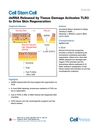
August 2015 in “Cell Stem Cell” Damage to skin releases dsRNA, which activates TLR3 and helps in skin and hair follicle regeneration.
January 2026 in “PLoS Biology” ARHGEF3 is essential for proper hair follicle development in mice.
1 citations
,
September 2023 in “Journal of the American Academy of Dermatology” Continued ritlecitinib treatment can lead to hair regrowth in some patients with alopecia areata who initially don't respond.
2 citations
,
June 2024 in “Dermatology” Ritlecitinib improves hair regrowth satisfaction in alopecia areata patients.
22 citations
,
August 2020 in “Cells” TGM3 is important for skin and hair structure and may help diagnose cancer.
January 2026 in “American Journal of Medical Genetics Part A” A new genetic variant causes trichothiodystrophy in two brothers, but their mother may carry it without showing symptoms.
July 2025 in “Journal of Investigative Dermatology” TRIV-509 quickly improves skin barrier and cell health in atopic dermatitis.
Ritlecitinib significantly regrows scalp hair in people with alopecia areata.
20 citations
,
December 2013 in “PTR. Phytotherapy research/Phytotherapy research” Ginsenoside Rg3 may help hair growth by increasing a growth-related protein in hair cells.
 December 2023 in “Journal of Ayub Medical College Abbottabad”
 Ritlecitinib effectively treats alopecia areata in patients 12 and older with fewer side effects.
188 citations
,
June 1998 in “Molecular cell” Researchers created a mouse with the same mutation as humans with trichothiodystrophy, showing similar symptoms and confirming the condition is due to defects in DNA repair and gene activity.
 February 2016 in “The journal of allergy and clinical immunology/Journal of allergy and clinical immunology/The journal of allergy and clinical immunology”
 A new TP63 mutation was found in a baby with EEC syndrome, showing the need for TREC testing to check for immune issues.
49 citations
,
February 2022 in “Drug Design Development and Therapy” Ritlecitinib shows promise for hair regrowth in alopecia areata patients.
24 citations
,
December 2013 in “Archives of Dermatological Research”  105 citations
,
May 2011 in “The journal of investigative dermatology/Journal of investigative dermatology”
105 citations
,
May 2011 in “The journal of investigative dermatology/Journal of investigative dermatology” Activating TRPV3 stops human hair growth.
 61 citations
,
April 2014 in “Radiation Research”
61 citations
,
April 2014 in “Radiation Research” RTA 408 cream protects mice from radiation skin damage.
 May 2023 in “Frontiers in Endocrinology”
 Blocking CRF1 receptors improved male hormone levels and reduced testicular tumor size in men with a specific adrenal condition.
 105 citations
,
February 1996 in “Journal of biological chemistry/The Journal of biological chemistry”
105 citations
,
February 1996 in “Journal of biological chemistry/The Journal of biological chemistry” The TGM3 gene's promoter region is key for skin and hair cell function and may aid gene therapy.
July 2025 in “SKIN The Journal of Cutaneous Medicine” Ritlecitinib effectively improves hair regrowth and physician satisfaction in severe alopecia areata over time.
February 2026 in “International Journal of Dermatology” Ritlecitinib shows promise in improving hair regrowth in adolescents with alopecia areata.
 January 2024 in “American journal of clinical dermatology”
 Ritlecitinib is safe and well-tolerated for treating alopecia areata in patients aged 12 and older.