Search
for
Sort by
Research
240-270 / 1000+ results
research Sacituzumab tirumotecan (sac-TMT/MK-2870/SKB264): a novel antibody–drug conjugate in breast cancer
Sacituzumab tirumotecan shows promise in treating breast cancer with manageable side effects.
research It's elemental!
Selenium is important for health but must be consumed in the right amount to avoid health issues.
research Formulation and optimization of folate-bovine serum albumin-coated ethoniosomes of pterostilbene as a targeted drug delivery system for lung cancer: In vitro and in vivo demonstrations
The new drug delivery system effectively targets lung cancer cells.
research 75810 Long-term efficacy, complete scalp hair regrowth, and normal body hair and nails in patients with alopecia areata (AA) receiving ritlecitinib 50 mg once daily up to 3 years in the ALLEGRO clinical trial program
research Recent advances in X-ray microanalysis in dermatology.
Trace elements like calcium, iron, and zinc are unevenly distributed in hair, while sulfur is even, and increased phosphorus and potassium levels are linked to skin reactions.
research Updated Integrated Safety Analysis of Ritlecitinib Up to ~5 Years in Patients With Alopecia Areata From the ALLEGRO Clinical Trial Program
Ritlecitinib is generally safe for long-term use in treating alopecia areata.
research Raman investigation of in vivo radiation exposure on melanin in murine hair
Raman spectroscopy can detect radiation exposure in mouse hair with high accuracy for up to 7 days.
research Solubilization and Solid‐State Characterization of a Poorly Soluble 5‐α Reductase Inhibitor
GI197111X is best dissolved in Capmul MCM for trials.
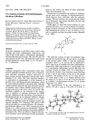
research 17α-Acetoxy-6-bromo-16β-methylpregna-4,6-diene-3,20-dione
A new compound with strong antiandrogenic effects was found, potentially useful for treating conditions like acne and prostate cancer.
research Alopecia areata: Ritlecitinib generates substantial re-growth of scalp hair
Ritlecitinib significantly regrows scalp hair in people with alopecia areata.
research Discovery of an Androgen Receptor Degrader Featuring a Pyridazinyl Glutarimide CRBN-Binding Motif for Transdermal Treatment of Androgenetic Alopecia
dAR-6–1 is a promising new treatment for hair loss that works better than minoxidil.
research Preliminary toxicity profile of arotinoids SMR-2 and SMR-6 in male B6D2F1 mice*1
SMR-2 and SMR-6 are much more toxic than retinoic acid, causing severe side effects.
research Zinc and copper levels in rat hair following nickel administration.
research Trichoscopic Markers and Clinical Response Patterns With Ritlecitinib in Severe Alopecia Areata: 24‐Week Outcomes From a Prospective Real‐World Cohort
Ritlecitinib is effective and safe for treating severe alopecia areata, showing significant hair regrowth and improved mental health.
research 710 BIOMARKERS OF SUNITNIB CLINICAL RESPONSE IN METASTATIC RENAL CLEAR CELL CARCINOMA PATIENTS
research Preclinical Challenges in Proton Minibeam Radiotherapy: Physics and Biomedical Aspects
Proton minibeam radiotherapy shows promise for sparing healthy tissue in cancer treatment but needs further research and technological development.

research Case of thallium intoxication
Thallium poisoning can be treated successfully with the right antidote.
research Oral ruxolitinib induces hair regrowth in patients with moderate-to-severe alopecia areata
Ruxolitinib effectively regrows hair in most patients with severe hair loss.
research Establishing a robust preclinical model to investigate early and late radiation-induced skin reactions
The model effectively mimics radiation-induced skin damage for future research.
research A controlled study of the effects of RU58841, a non-steroidal antiandrogen, on human hair production by balding scalp grafts maintained on testosterone-conditioned nude mice
research Optimization of X-ray microplanar beam radiation therapy for deep-seated tumors by a simulation study
Using 100–300 keV X-ray energy is best for treating deep-seated tumors with microplanar beam radiation therapy.
research Establishment and characterization of a radiation‐induced dermatitis rat model
Researchers created a rat model to study skin damage caused by radiation, which could help develop new treatments.
research Finasteride 98319‐26‐7
research TRACE ELEMENTS IN MEDICINE
Trace elements can impact health, causing issues like zinc deficiency, copper-related diseases, mercury and lead toxicity, and more.
research Characterization of Cutaneous Photoxicity Induced by Topical Alpha-Terthienyl and Ultraviolet A Radiation
Low-dose topical alpha-terthienyl may be a safer option for treating skin conditions with light therapy.
research A Case of Rhupus with Rowell Syndrome
A woman with Rhupus and Rowell syndrome was treated successfully with medication adjustments.
research 316 Specialized ribosomes in human dermal fibroblast senescence
Specialized ribosomes affect aging in human skin cells.

research 24 ARQ-234: a high affinity CD200-Fc fusion protein for the treatment of atopic dermatitis
ARQ-234, a protein designed to treat atopic dermatitis, shows increased effectiveness in early testing.
research The Processed Radish Extract Melanogenesis in Humans and Induces Anti-Photoaging Effects in Ultraviolet B-Induced Hairless Mouse Model
Heated radish extract may help lighten skin and reduce aging signs.