10 citations
,
January 2015 in “European journal of pharmacology” Ginsenoside Rb1 may help remodel hypertrophic scars effectively at a dose of 0.56 mg.
 April 2023 in “Journal of Investigative Dermatology”
 The study created special nanoparticles that effectively deliver an anti-inflammatory drug to treat skin inflammation in psoriasis.
 10 citations
,
June 2005 in “The journal of investigative dermatology/Journal of investigative dermatology”
10 citations
,
June 2005 in “The journal of investigative dermatology/Journal of investigative dermatology” FP-1 is a key protein in rat hair growth, active only during the growth phase.
 June 2022 in “Journal of Dermatology Research”
 Using 448-kHz Capacitive-Resistive Electrothermal Therapy can help increase hair density and prevent hair loss in women.
16 citations
,
February 2019 in “Journal of Cellular and Molecular Medicine” Researchers created a rat model to study skin damage caused by radiation, which could help develop new treatments.
 1 citations
,
April 2026 in “Aesthetic Plastic Surgery”
1 citations
,
April 2026 in “Aesthetic Plastic Surgery” Radiofrequency microneedling is safe and effective for improving various skin conditions.
 December 2024 in “Journal of Biophotonics”
 Dual wavelength LEDs may help reduce hair loss by lowering DHT levels.
 January 2026 in “Frontiers in Pharmacology”
 Wedelolactone may help treat inflammation, infections, cancer, bone loss, and organ damage.
September 2002 in “Oncology Times” Promising cancer treatments were found, but the manufacturer closed.
 August 2025 in “International Journal of Contemporary Pediatrics”
 HLD10 can include increased body hair and Mongolian spots.
29 citations
,
January 2021 in “Journal of nanobiotechnology” Tiny particles from brain cells help hair grow by targeting a specific hair growth pathway.
22 citations
,
October 2018 in “Molecular Medicine Reports” Classic PDRN improves wound healing quality by enhancing cell migration.
 140 citations
,
November 2018 in “Pharmacology & Therapeutics”
140 citations
,
November 2018 in “Pharmacology & Therapeutics” Using drugs to activate the Wnt/β-catenin pathway has potential for treating diseases but also presents challenges.
 178 citations
,
October 2001 in “Genes & Development”
178 citations
,
October 2001 in “Genes & Development” The mutated hairless gene causes hair loss by acting as a new type of corepressor affecting thyroid hormone receptors.
 57 citations
,
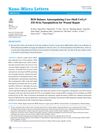
March 2024 in “Nano-Micro Letters”
57 citations
,
March 2024 in “Nano-Micro Letters” The nanoplatform helps heal wounds by balancing bacteria-killing and inflammation-reducing functions.
 May 2015 in “Journal of Investigative Dermatology”
 Wnt-3a helps grow more skin stem cells, which could lead to new hair loss treatments.
 January 2025 in “BMC Genomics”
 Long non-coding RNAs help regulate wool fineness in Gansu alpine fine-wool sheep.
3 citations
,
May 2018 in “The Indian Journal of Animal Sciences” The KAP 7 gene affects wool traits in Rambouillet sheep, with the BB genotype showing the best wool characteristics.
 June 2023 in “British Journal of Dermatology”
 A person with Werner syndrome was initially thought to just have female pattern hair loss.
April 2008 in “Faculty Opinions – Post-Publication Peer Review of the Biomedical Literature” The vitamin D receptor helps control hair growth and may protect against certain skin tumors.
 36 citations
,
June 2021 in “Experimental & Molecular Medicine”
36 citations
,
June 2021 in “Experimental & Molecular Medicine” Targeting Hedgehog signaling may help treat ligamentum flavum fibrosis.
97 citations
,
March 2010 in “The American Journal of Human Genetics” A mutation in the KRT74 gene causes tightly curled hair.
43 citations
,
October 2006 in “Journal of Cell Science” Keratin 10 end domains may increase skin cancer risk by reducing cell death.
28 citations
,
August 2019 in “BMC Genetics” miR-148a and miR-10a affect hair growth in Hu sheep.
 March 2026 in “Zenodo (CERN European Organization for Nuclear Research)”
 Ratanjot root oil helps hair grow and conditions and colors it naturally.
August 2023 in “Zenodo (CERN European Organization for Nuclear Research)” January 2016 in “프로그램북(구 초록집)” LED light promotes hair growth by stimulating cell proliferation and reducing cell death.
June 2025 in “British Journal of Dermatology” Ruxolitinib helped a woman with a genetic mutation regrow her hair and improved her health.
 November 2023 in “The journal of investigative dermatology/Journal of investigative dermatology”
 ARQ-234, a protein designed to treat atopic dermatitis, shows increased effectiveness in early testing.
The KRT84 gene is linked to better wool quality in Gansu Alpine Fine-wool sheep.